


Yes, an all-paper child-resistant retail pack is possible, but only when the project starts with the access requirement. The material does not create protection on its own. The opening action, board structure, instructions, and shelf format must all work together, making an early physical review a crucial step. In practice, all-paper child-resistant packaging works best when teams first define the risk, the user, and the retail setting, and then shape the paper concept around that brief.
• Start with the product requirements, because controlled access comes before material choice.
• A paper look does not guarantee child resistance, so the opening route must be designed and reviewed carefully.
• Adult usability still matters, especially for people with lower grip strength or limited dexterity.
• Folds, tabs, creases, glue areas, and print space all affect how the pack opens and performs on the shelf.
• A sample helps teams review the opening feel, board behavior, and shelf presentation early in the process.
Why all-paper child-resistant packaging starts with the product requirement
When teams explore all-paper child-resistant packaging, the first question should focus on the product rather than the board. Does the pack need controlled access because the contents may be harmful if handled by a young child? This often applies to selected household products, DIY items, garden supplies, and automotive goods sold through normal retail channels. In these cases, the pack must manage access in a practical way, meaning the function must lead the design process.
The material choice comes next. A team may prefer a paper route for shelf appeal or material goals, but that preference still needs to follow the access brief. That is why it helps to begin with child-resistant functionality, defining how the pack should open before discussing finishes, print styles, or board types. This approach keeps the project clear and helps avoid the common mistake of treating child-resistant paper packaging as a simple material switch.
It also helps to separate appearance from function early on. A pack can look paper-based and still fail to support the correct opening path. Therefore, early concept work should focus on how the user interacts with the format, where their fingers go, and what must happen first, second, and third.
The design tension inside all-paper child-resistant packaging
What the pack must do
The central challenge in all-paper child-resistant packaging is simple to describe yet difficult to solve. The opening action should be hard for a young child to perform by accident, but an adult must still be able to understand and complete it in a normal shopping or home setting. This tension shapes almost every design decision, as the paper packaging opening mechanism must control access without making daily use frustrating.
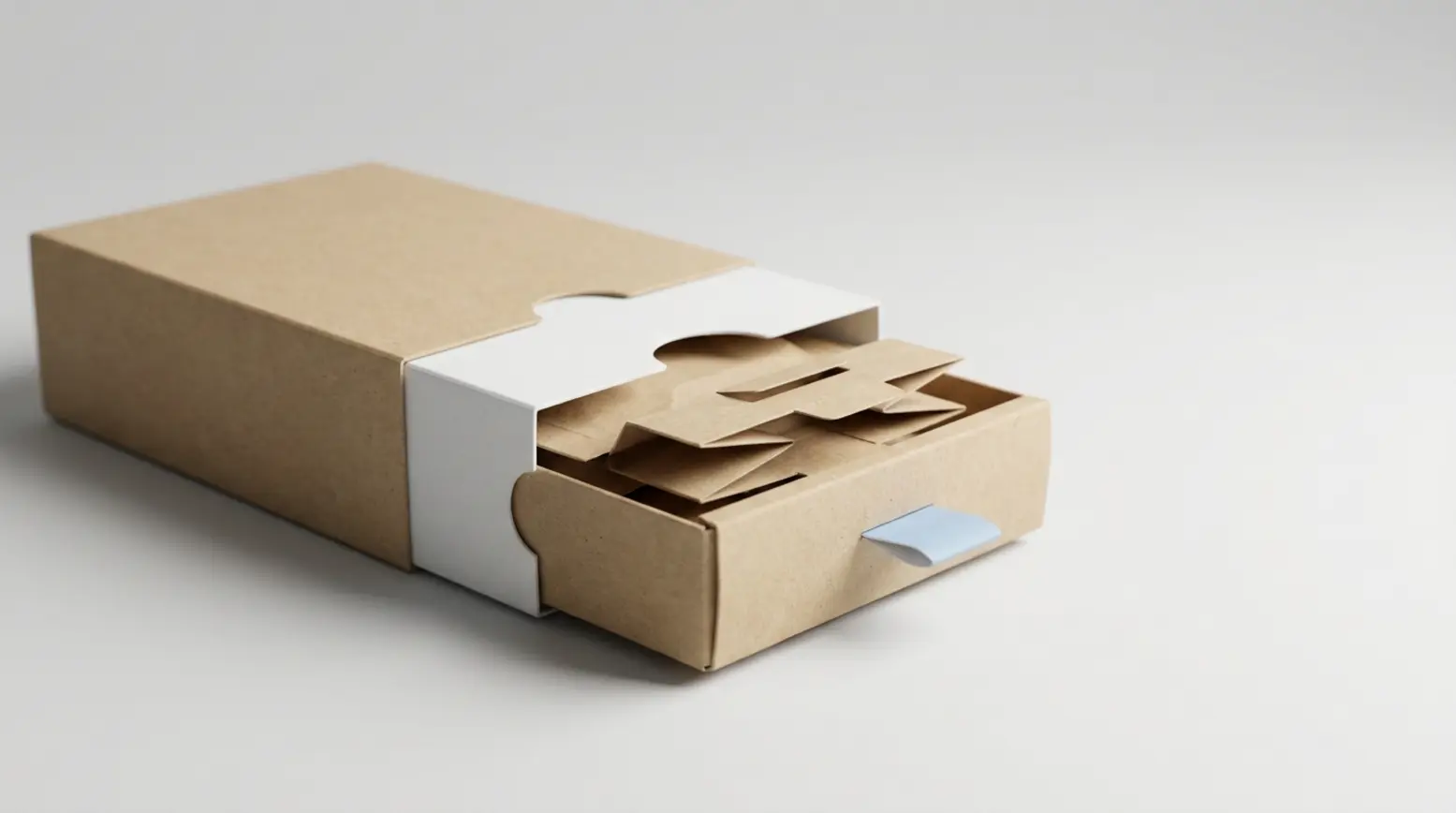
In practice, that often means a set sequence, such as press, slide, lift, or release. The steps need to make sense to an adult, and the structure must support those movements reliably. A child-resistant carton design may seem straightforward from the outside; however, the internal logic is typically more complex because the tabs, sleeves, and flaps must all react in the intended order.
Why adult usability still matters
Adult usability matters because the pack has to work in real life, not just in a drawing or a sample photo. Some adults have limited grip strength, while others may struggle with very small instructions or low-contrast text. Therefore, senior-friendly packaging and easy-opening child-resistant principles should be integrated into the concept from the start. This does not mean the pack becomes easily opened by default; rather, it means the design should guide the adult clearly and reduce avoidable confusion.
We often see projects focus entirely on blocking access at first, which can result in a pack that feels awkward or unclear. A better route is to develop both goals together and review them by hand. If you want to explore a live brief, our child-resistant packaging solutions page offers a practical view of how this type of challenge can be approached.
How all-paper child-resistant packaging changes the paper construction
Opening sequence and carton structure
The opening path affects the entire format because each step requires structural support. If the user must press a panel before sliding a sleeve, the board has to keep its shape during that movement. If a hidden tab needs to release, the fold and lock points must work in unison. Because of this, structure often comes before graphics in all-paper child-resistant packaging.
This is where the design becomes more specific. A sleeve may need to stay firm while another panel moves, and a flap might need to return cleanly to its closed position. Likewise, a tab may need to stay protected until pressure is applied in the correct place. These structural details influence the full carton construction, the available print area, and the final pack depth. They also demonstrate why child-resistant retail packaging cannot be judged solely by its appearance.
Board strength, creases, and support
Board strength is critical because the mechanism must remain stable during handling, transport, and repeated opening attempts. If the board bends too easily, the opening route may become unclear. Conversely, if it is too rigid in the wrong place, an adult may struggle to activate the mechanism. This is why all-paper child-resistant concepts often require a careful balance of stiffness, fold response, and local support.
Crease placement matters for the same reason. A crease controls where the board naturally folds, so even a minor change can alter how a tab releases or how a flap settles back into place. In some child-resistant carton retail concepts, local reinforcement can help key areas stay firm without significantly changing the overall pack. This becomes especially relevant when the package will be opened more than once or handled frequently on the shelf.
Adhesive and seal areas
Glue paths and seal zones deserve close attention because they support the intended movement of the structure. If the wrong panel releases first, the user experience can fail, making the format feel broken after just one use. If a fixed area tears, the pack can lose its shape or become confusing to reopen. Therefore, adhesive planning is an active part of the mechanism, not merely a step in assembly.
This is one reason physical reviews are so useful. On a screen, a fold line may look fine, but in the hand, the real story becomes clear. Board flex, friction, and seal behavior are much easier to judge physically. The same principle applies whether the pack is a standard carton or a more specific concept, such as a paper child-resistant blister pack used in a retail format.
Why a simpler pack may become more complex
A standard carton often becomes more layered once controlled access is added. The closure may require extra locking points, a nested sleeve, added support panels, or a highly guided opening route. As a result, sustainable child-resistant packaging can still use more structure and material than a simpler retail box for the same product. This does not negate the value of a paper route, but it does mean teams should judge the concept based on full function and usability, rather than on material claims alone.
Retail presentation in all-paper child-resistant packaging
Printable area and instructions
Retail packs still need to sell the product on the shelf, so the structural mechanism must leave enough space for branding, product details, and opening guidance. This is critical because adults need clear instructions, especially when the opening route involves more than one movement. If the guidance is too small or hidden, the pack will likely feel much harder to use than necessary.
Paper offers excellent print options, but the lock and closure mechanisms may take up valuable surface area. A panel used for instructions might also serve as a functional part of the mechanism. Therefore, teams should decide early where key messages will sit and how visible they will remain both before and after opening. If you are also exploring broader material routes, all-paper packaging can provide helpful context for paper-based retail formats without implying child resistance by default.
Shape, hanging display, and shelf visibility
Shape affects how a pack is perceived and handled. A wider front can improve branding, while a deeper profile can support the opening system and help accommodate the product. If the pack is designed to hang, the hole position and top panel must work harmoniously with the mechanism so the display format does not weaken the closure. Ultimately, these choices influence both shopper visibility and structural clarity.
For many brands, the shelf story also involves transitioning toward more paper-based formats. While this can strongly support a sustainable message, the pack still needs to feel stable, understandable, and practical in the store. In this way, child-resistant carton retail design connects mechanics, branding, and merchandising into one cohesive format.
Sustainability in all-paper child-resistant packaging without vague claims
Sustainability is a perfectly valid reason to explore paper, especially when teams want to review alternatives to heavier plastic structures wherever possible. However, that goal does not replace the fundamental need for usability or functional review. A pack that is hard to understand, weak during handling, or visually poor on the shelf will not succeed simply because it uses paper.
The better route is to treat all-paper child-resistant packaging as a specific design path built around the product's requirements. First, define the access need. Then, review whether a paper format can properly support the opening logic, adult handling, product protection, and shelf presentation. Following this method, teams can discuss sustainable child-resistant packaging in highly practical terms and avoid broad claims that fail to help the decision-making process.
Questions teams often ask about all-paper child-resistant packaging
Can a paper pack be both child-resistant and practical for adults?
Yes, it is entirely possible in principle, but both goals must be designed together from the outset. The opening action, tab position, board feel, printed guidance, and grip points all heavily impact adult use. A pack does not automatically become practical just because the graphics are clear, nor does it become child-resistant simply because it features more folds or added steps.
Does an all-paper concept prove child-resistant performance?
No. A concept sample is incredibly useful for design reviews, but it is not proof of compliance on its own. It can help teams assess stiffness, opening feel, instruction visibility, and overall handling long before any deeper specialist route is considered.
When should you evaluate a physical sample?
As early in the project as possible. A sample quickly reveals whether the board feels right, whether the opening path is logical, and whether the pack still functions well on the shelf. Problems with tabs, creases, grip points, or a hanging layout often only become apparent when someone actually holds the format and opens it several times.
Which retail products typically need this kind of pack?
Typical examples include selected household cleaners, DIY repair items, garden care goods, and automotive maintenance products. The exact need always depends on the product brief and the specific access risk, which is why the fundamental requirement must be defined first.
Where does a specialist route fit later on?
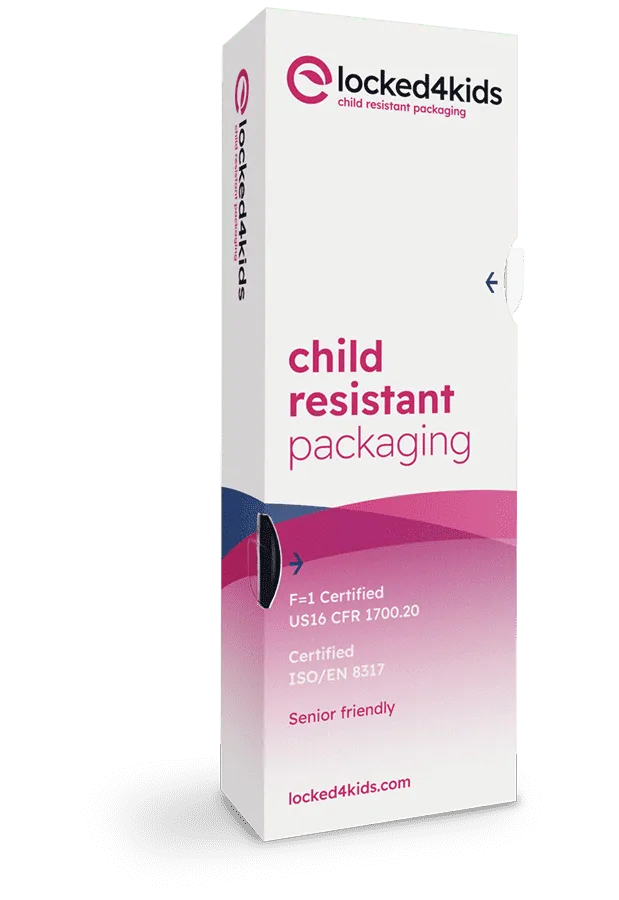
Once the concept direction becomes clearer, a deeper specialist route, such as Locked4Kids, can help teams discuss the child-resistant aspects in much greater detail. Taking that step makes the most sense after the basic format, opening logic, and user handling have already been thoroughly reviewed.
Early evaluation steps for concept review
An early review should remain practical and highly visual. Hold the pack, open it, close it, and look at it exactly as if it were already in the store. Check where fingers need to go, how the board reacts, whether the printed steps are easy to follow, and whether the shape continues to support the brand message. This kind of hands-on evaluation can save significant time because it reveals physical problems that flat drawings often hide.
Implementing a simple review structure can keep the discussion focused. The opening path matters because it controls user interaction and can heavily affect front print space. Board strength matters because it changes the effort required, the grip feel, and overall shape stability. Tabs and folds matter because they guide access and can alter the pack's outline. Instructions matter because adults need clear direction, yet that necessary space often competes with branding. Finally, hanging presentation matters because the retail display style can affect balance, visibility, and the top structure.
It can also be incredibly helpful to sketch one simple visual for the team. Show the opening path, the main tabs and folds, the key print areas, and the hanging position if the pack will be displayed that way. This gives packaging engineers, brand teams, and procurement colleagues one shared, unified view of the concept.
If your team is ready to review a real format, it is often smarter to request a sample to assess the look, feel, opening logic, and shelf presentation in person. A sample supports early design decisions by making the structure tangible; however, it remains a design review tool and is not proof of certified child-resistant performance.
Request a free sample now!


