

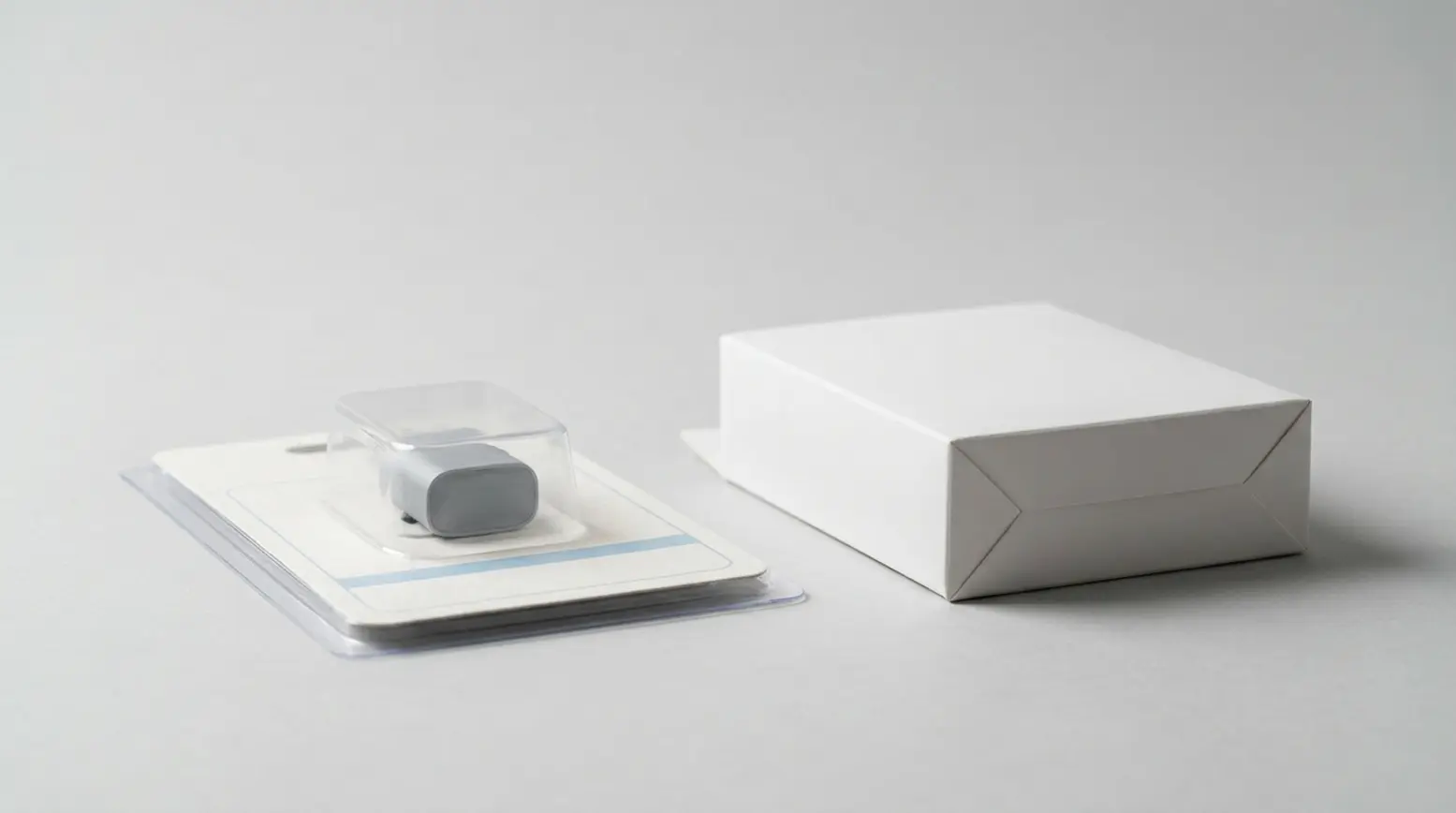

Choose a carton blister when shoppers need to see the real product before they buy. Conversely, opt for a folding carton when full coverage, more print space, and neat stacking are the priorities. This is the fastest way to answer the carton blister or folding carton question. If both needs are equally important, test a prototype first. If you require basic background information before making this comparison, we explain what carton packaging is in a separate article.
• Visibility is the main dividing line; a blister shows the product, while a closed carton hides it.
• Protection, material use, and recyclability depend on the complete design, meaning there is no universal winner.
• Folding cartons typically excel when print panels, enclosure, and easy stacking are key retail requirements.
• A carton blister is often ideal when product checking, shelf comparison, and visible product packaging help drive the sale.
• If your team is unsure, compare both formats with the physical product in hand before making a final approval.
Why choosing a carton blister or folding carton is a major retail decision
A carton blister and a folding carton can both hold the same retail product, but they create entirely different shopper experiences and require distinct packing processes. One format displays the item instantly, while the other keeps it fully enclosed and provides more controlled print space. Because of this, the right packaging choice depends entirely on what the pack must achieve in the store, on the production line, and after purchase. This article focuses specifically on that direct choice, rather than attempting to review every available paper packaging option. If your team is looking for a wider scope, you can review folding carton and rigid box differences in a separate article.
When choosing a carton blister or folding carton depends on product visibility
The biggest difference when comparing a carton blister or folding carton is visibility. A blister card or box format is often the better choice when shoppers need to inspect color, shape, finish, size, connector type, or authenticity before they buy. This is common with accessories, small electronics, beauty tools, DIY items, and other products where physical comparison matters. In these cases, visible product packaging can reduce doubt because the product itself acts as part of the front display.
Best fit for visible product packaging
A carton blister works beautifully when seeing the actual item helps close the sale. The formed plastic securely holds the product in place and makes it easy to inspect without opening the packaging. This supports buyer confidence, allowing customers to confirm exactly what is inside immediately. In a folding carton versus blister decision, this is often the strongest reason to choose the blister route.
When a closed carton helps brand presentation
A folding carton hides the product, which is incredibly useful when the front panel must deliver a prominent message. This design provides more room for branding, product claims, instructions, legal text, and brand storytelling. It also creates a clean face and a uniform shape, resulting in a more controlled shelf presentation. When full enclosure, message space, and neat stacking matter more than a direct product view, our carton packaging is often the stronger option.
When a window changes the construction choice
Adding a window can improve product visibility within a folding carton, but the result essentially becomes a hybrid. This distinction is important because the cutout, film choice, and window size can alter the pack's protection, material mix, and overall appearance. During a packaging construction comparison, it is best to define these elements clearly from the start so teams avoid comparing a standard closed box to a partly visible design as if they were identical.
How a carton blister or folding carton affects protection and retention
Protection is undeniably important, but there is no automatic winner when choosing a carton blister or folding carton. A folding carton provides full outer enclosure, whereas a blister holds the product more directly within a custom-shaped cavity. The better answer ultimately depends on the product's shape, the internal fit, and what happens during the journey from the packing line to the retail shelf. Therefore, teams should thoroughly review the actual design instead of relying on broad assumptions about carton or blister packaging.
Outer enclosure versus direct product holding
A folding carton can protect against light contact and keep multiple components securely together inside a closed pack. Conversely, a carton blister keeps an item firmly fixed in place because the cavity closely follows the product's shape. Sometimes, this direct hold is the best possible solution. In other cases, the enclosed surface of cartons proves far more useful because the product requires extra cover, additional printed area, or greater separation from the outside environment.
Why pack integrity should be tested, not assumed
Products that face frequent in-store handling must be tested in their chosen packaging format. Shoppers routinely pick packs up, compare them, and return them to the shelf; therefore, retention and overall pack integrity matter immensely. Both formats can perform exceptionally well, yet both can fail if the design is fundamentally weak. For that reason, a fair comparison between blister and carton packaging should involve the actual physical product, the final pack design, and a clear understanding of the expected retail route.
How a carton blister or folding carton changes shelf presentation and security options
Shelf presence matters significantly because space is limited and packaging must remain neat. Folding cartons typically support standard front-facing displays and stable stacking since they feature flat panels and a predictable footprint. On the other hand, a carton blister often supports a shaped presentation, as the visible item inherently becomes part of the sales message. In a decision between a carton blister versus a box, the better format depends entirely on whether the shelf display should present the physical product itself or a fully printed box face.
Stacking and front-facing display
Folding cartons frequently benefit retail packaging programs that rely on clean rows, organizing trays, and effortless shelf filling. Their uniform shape simplifies space planning, and the front panel maintains visual consistency from a distance. This is especially important for product ranges with several SKUs, allowing shoppers to scan the lineup quickly while helping store teams maintain order with ease.
Shaped presentation on the shelf
A carton blister can create a much stronger direct display effect when seeing the item helps explain its function. This is particularly useful for small consumer goods where size, color, texture, or connector type plays a pivotal role. A highly visible front also supports faster visual comparison, meaning the shopper does not have to rely on printed graphics alone.
Theft-resistant retail packaging depends on the full design
Theft-resistant retail packaging should always be judged by its complete structural design, not just by its format name. Neither format is inherently secure by default. The superior choice is simply the one that makes product removal harder, keeps the item firmly retained, and leaves enough surface area for the selected retail security method. Factors like closure style, board strength, formed part design, and overall store conditions all affect the final result.
What a carton blister or folding carton means for print, materials, packing, and end-of-life
Many final decisions are made at this stage because these elements directly affect operations, communication, and sustainability. A folding carton provides several fully enclosed print panels. Conversely, a blister format combines printed board graphics with a visible product area, meaning the text and the product share the front view. As a result, a comprehensive packaging construction comparison needs to carefully evaluate message space, total material usage, production line steps, and disposal after use.
Print surface and message space
Folding cartons generally offer much more room for instructions, legal information, multiple languages, and rich brand detail. This is crucial for products that feature extensive claims or complex usage steps. While a blister format can still communicate effectively on the surrounding board area, a significant portion of the front space is dedicated to product visibility. If the item requires long copy or several distinct information blocks, a folding carton versus blister comparison usually favors the carton.
Why full material comparison matters
Material usage should only be compared by looking at complete, finalized designs. A blister setup typically requires a formed cup. Meanwhile, a folding carton may demand internal inserts, added structural stiffness, or extra board just to hold that exact same item securely. Packaging weight can also fluctuate significantly based on size and structure. Because of this, any carton or blister packaging decision should be based strictly on the full specification, rather than on general assumptions about one specific material or format.
Filling and packing steps to review
These two formats typically involve completely different production line steps. A folding carton generally requires erecting, product loading, insert placement, and final closing. A blister format, however, may require card placement, product loading, cup placement, and a specialized sealing or closure step. Since we can supply both cartons and blister components, we prefer to compare these options in a neutral way, focusing heavily on proper production line fit rather than making broad claims about operating speed.
End-of-life depends on materials and local systems
A package's end-of-life depends largely on the materials used in the finished pack and how easily consumers can separate them after opening. Elements like windows, protective coatings, plastic cups, internal inserts, and local recycling systems all influence the environmental outcome. Therefore, one option is not automatically easier to recycle than the other. The most practical approach is to review the comprehensive material list alongside the actual disposal routes available within the target market.
Category guidance for a carton blister or folding carton
Some product categories point clearly toward one specific option, while others absolutely require physical prototypes because either format could work. Use basic category guidance as a quick filter, but always follow up by testing the real product. This approach keeps the decision highly practical and helps product managers, structural engineers, and buyers move much faster.
Good carton blister cases
A carton blister is frequently a strong choice for small, higher-value items that shoppers naturally want to inspect before making a purchase. Typical examples include electronic accessories, cosmetics tools, batteries, specialized connectors, and DIY hardware items. It also works exceptionally well when the product requires a peg display, or when visible product packaging helps establish immediate trust at the retail shelf.
Good folding carton cases
Folding cartons are often a better overall fit for products that demand extensive instructions, stronger branding elements, or retail shelf plans built entirely around neat, organized stacking. They also offer a clear advantage when the item must remain fully enclosed or when the front panel desperately needs more dedicated communication space. This is a common scenario for many beauty, home, office, and multi-part retail products.
How to judge multipacks
Multipacks can effectively go either way. If seeing the individually grouped items helps persuade the shopper, a blister style may work wonderfully. Conversely, if the pack requires full enclosure, expanded message areas, or easier stacking capabilities, a folding carton might be the better route. When making this kind of packaging choice, retail teams should carefully compare how the grouped items are held, how the pack physically opens, and how stably it will sit on the shelf.
Questions to ask before you choose
These crucial questions can help your team build a faster, more accurate shortlist. First, does the shopper truly need to see the real product before purchase? Second, does the item require full enclosure for branding, handling safety, or specific product reasons? Third, will the finished pack face repeated in-store handling? Fourth, do dedicated print panels and clean stacking matter more than direct visual visibility? Finally, what specific steps will your production and packing process require? When teams take the time to answer these points early on, the folding carton versus blister decision becomes significantly clearer.
Simple shortlist rule
Use this straightforward rule to make a faster decision. Choose a carton blister when real product visibility is a primary sales driver or a critical customer checking need. Choose a folding carton when complete enclosure, expansive print panels, and structured stacking matter more. If both needs remain equally strong, create a prototype first and compare the physical packaging in hand. Whenever your team wants to evaluate visibility, material stiffness, unboxing experience, and overall feel side by side, you can request a sample to review the best options before finalizing the specification.
FAQ
Is a carton blister always better for protection? No. While it can hold a product very securely, overall protection heavily depends on the exact structural design, the product's unique shape, and its specific route to retail.
Is a folding carton always more sustainable? No. The true answer depends entirely on the full material mix, the inclusion of any inserts or plastic windows, and the capabilities of local recycling systems.
Can a folding carton still show the product? Yes. Adding a window can instantly increase visibility, but the pack essentially becomes a hybrid design and should be specified exactly that way.
Which format is better for security? Neither format wins by default. The better design will always be the one that makes unauthorized removal harder while fully supporting the chosen store security method.
What is the main rule in a blister and carton comparison? Always start with visibility. If the shopper needs to see the physical item, a blister is often the better fit. Conversely, if the product demands more enclosure and additional print space, a folding carton will usually serve you best.
Request a free sample now!


