


Europe is moving toward more common packaging rules, but Extended Producer Responsibility (EPR) for packaging still operates on a country-by-country basis. This fragmentation is the main reason behind the differences in EPR packaging across Europe. While the Packaging and Packaging Waste Regulation (PPWR) can align parts of packaging law throughout the EU, local registrations, reporting, and fees still depend entirely on the country where the packaging ultimately becomes waste. For packaging teams, this means a single product can utilize a unified pack structure yet still generate several local compliance tasks.
• PPWR and national EPR are connected, but they remain distinct systems with very different day-to-day effects.
• A single SKU sold in multiple countries may still require several registrations, reports, and scheme contacts.
• Packaging teams can control the physical pack, including the material type, component weight, separability, and artwork discipline.
• A shared pack design can significantly reduce complexity, but it does not guarantee the same fee outcome in every market.
• We support the physical packaging side. The customer’s own compliance route must handle national EPR registrations and reporting.
What EPR packaging differences across Europe really mean for packaging teams
In simple terms, EPR packaging in Europe does not function as a single operating system. A common EU direction does not automatically result in one registration, one report, or one invoice for all countries. This is exactly why the differences in European EPR packaging matter so much in daily operations. If you sell the identical consumer product in multiple European markets, you can maintain a single pack concept while still facing varied local administration. Therefore, packaging teams must learn to separate what is legal and local from what is physical and controllable.
PPWR and national EPR are connected, but they are not the same
Because PPWR is EU legislation, it has the power to align important packaging rules across Member States. National EPR, however, is fundamentally different because it applies strictly where the packaging becomes waste. That is why EPR packaging registrations, local declarations, and financial obligations remain embedded within national systems. Additionally, while guidance on the PPWR's EPR producer concept can help standardize how cross-border roles are understood in common scenarios, companies still need to verify their obligations market by market through their own compliance routes.
Why one product can create several local tasks
Consider a mid-sized brand with a single SKU sold across six countries. The carton, blister, or paper-based retail pack may remain physically identical, but the business could still face six distinct local workflows. This often means separate registrations, varying reporting dates, distinct portals, and different scheme contacts. As a result, the differences in EPR packaging rules in Europe are not only a legal topic; they also represent a significant planning and packaging operations challenge.
Why differences in EPR packaging across Europe remain visible even when the pack stays the same
A shared structure is often a smart choice for multi-country packaging because it aids in sourcing, shelf consistency, and internal control. Even so, the exact same pack can trigger entirely different national processes. The physical packaging may be standardized, but the operational compliance route remains distinctly local. For this reason, companies must plan for both standardization and national variation simultaneously.
Different authorities, different national packaging schemes
European countries do not share a single EPR office. Instead, they rely on different authorities, distinct legal frameworks, and varied national packaging schemes. Therefore, while extended producer responsibility across these countries may look uniform from a distance, the practical realities differ greatly when teams actually need to take action. One market might require a specific structure for approvals, whereas another utilizes a completely different approach, making local verification absolutely essential.
Different reporting calendars and submission steps
Many companies first encounter these hurdles during the reporting phase. One country may demand a specific type of EPR reporting for packaging on a set schedule, while another might impose a completely different timeline or submission method. The same complications apply to EU packaging producer registrations. Consequently, compliance teams often require a country-by-country process, even when the packaging format remains entirely unchanged.
Different fee logic by market
European packaging fees vary because individual countries apply different fee logic within their respective systems. A specific material or format might be categorized one way in a given market and treated completely differently elsewhere. Future regulatory updates may also reward recyclability in diverging ways depending on the country. Ultimately, the identical physical pack does not automatically yield the same cost result, and that is a core part of the differences in EPR packaging across Europe.
How European EPR packaging differences affect pack design choices across Europe
This is where packaging teams exercise real control. While you may not dictate the local portal or the local fee model, you possess complete authority over the pack itself. This includes the selected materials, the weight of every individual part, the ease with which components separate, and the overall quality of the specification. If you need packaging solutions for a shared base design across multiple markets, the primary goal should be to establish a robust structure that remains clear and stable from the very beginning.
Material type travels with the pack into every market
Material choice follows the product everywhere it is sold. Whether a pack uses plastic, paper, carton, or a mixed-material structure, that foundational choice becomes a critical part of each market entry. This is especially important for EPR material reporting, as teams require a clear and consistent material specification. Although better material discipline will not eliminate every local administrative task, it provides the business with a much stronger foundation for managing packaging compliance work across Europe.
Component weight matters in every country
Weight is one of the most straightforward controls in pack design. A lighter component remains lighter everywhere it goes. If you remove an unnecessary insert, reduce a cavity, or simplify a structural layer, that reduction stays with the pack in every market. Consequently, weight control is one of the most practical strategies to minimize avoidable complexity across Europe, even while local reporting requirements continue to differ.
Separability helps create a clearer material specification
Separability means that the various parts of the pack can be split clearly by material type. For example, if a paper element and a plastic component are easy to identify and separate, the entire structure becomes much easier to describe and manage internally. This supports highly accurate reporting inputs and better packaging decisions. However, it still does not guarantee the same fee outcome in every country, as national systems continue to apply their own unique rules.
One robust pack is a better goal than one promised lowest fee
Many teams hope to discover a single design that guarantees the lowest cost everywhere. In practice, this is frequently the wrong target because local systems are simply too diverse. A much better goal is to create one robust pack featuring clear material logic, stable component weights, and highly reliable documentation. By taking this approach, companies can significantly reduce unnecessary variation while accepting that individual market outcomes will likely still differ.
Managing artwork despite differences in European EPR packaging without rebuilding the whole pack
Artwork is often where local regulatory pressure appears first. The underlying structure may remain the same, but the printed elements frequently change because languages, specific product information, and local instructions all require dedicated space. If this process is not managed well, teams can easily create too many artwork versions far too early. Good artwork control protects the shared pack design and helps avoid redesigns that are not genuinely necessary.
PPWR may reduce some future label differences
The PPWR is expected to align certain material composition labels over time. Once the rules fully apply, this alignment can reduce some of the differences in future print requirements, which should make certain artwork choices considerably easier. Nevertheless, companies should never assume that all local print variations will completely disappear.
Languages and product information can still create artwork variants
Most brands still require several language versions, local claims checks, and market-specific product details. Therefore, a single structural pack can still carry multiple distinct printed layouts. This is exactly why version control matters so much. We support this process through prepress for several market artwork versions, while the customer’s responsible team provides and approves all market-specific content.
When extra text creates space pressure
When additional languages or local instructions no longer fit within the available print area, the immediate answer does not have to be a brand-new pack for each country. Often, a much better option is to retain the base concept and simply add communication space in a controlled manner. An excellent example of this approach is multi-panel packaging, which can be highly effective when there is a clear functional need to carry extra content.
Building a common pack strategy despite European EPR packaging differences
The legal compliance route remains fundamentally local, but the physical pack itself can still be managed with far greater consistency. This is the main practical response to the differences in EPR packaging across Europe. If a business builds one sound base design and meticulously controls the key variables surrounding it, the entire project becomes significantly easier to manage for packaging, procurement, brand, and operations teams.
Define one shared material and structural specification where practical
Start with the elements you can safely standardize. Confirm the material type, the exact weight of each component, the separation logic, and the artwork version plan. Then, allow the customer’s own compliance route to verify what each specific country still requires locally. If you would like to discuss your multi-country packaging project, we can help you develop the physical pack around those agreed-upon requirements.
For many teams, utilizing a simple internal checklist helps keep decisions clear and consistent across different markets:
• Confirm the material specification for every component.
• Confirm the weight of each component.
• Confirm exactly how the parts separate by material.
• Confirm the artwork version control strategy by market.
• Confirm the correct local compliance route for each country.
Keep legal and reporting work with the customer’s own compliance route
Please note that this article is not a legal registration guide. National obligations still require thorough local verification because EPR packaging registrations, EPR packaging reporting, and fee processes differ vastly by country. Your internal compliance team, legal adviser, or designated national scheme route must confirm precisely what is required in each specific market. We do not register customers for EPR, nor do we submit national reports on their behalf.
Use one coordinated packaging partner for the physical pack
When a single product is sold in multiple countries, unnecessary local pack variants can generate a tremendous amount of extra work in design, sourcing, print, and operations. A shared base design is much easier to manage when the initial development, component selection, and final implementation remain tightly coordinated. You can explore how we operate by reviewing our integral approach, which covers the entire physical packaging chain, from concept design and component sourcing to printing and pack construction. If needed, we can also supply the packaging machinery as an optional final piece of that chain.
What PPWR can align, and what still stays national under EPR
The breakdown below helps explain why a single common rule does not eliminate every local administrative task. It gives teams a practical way to separate broad EU-level direction from strict national administration.
• What PPWR can align: common packaging rules, key definitions, design direction, and certain future material composition labels.
• What still stays national under EPR: local registrations, local reporting calendars, local scheme processes, and country-specific fee outcomes.
One SKU, six countries, one pack structure, several registrations
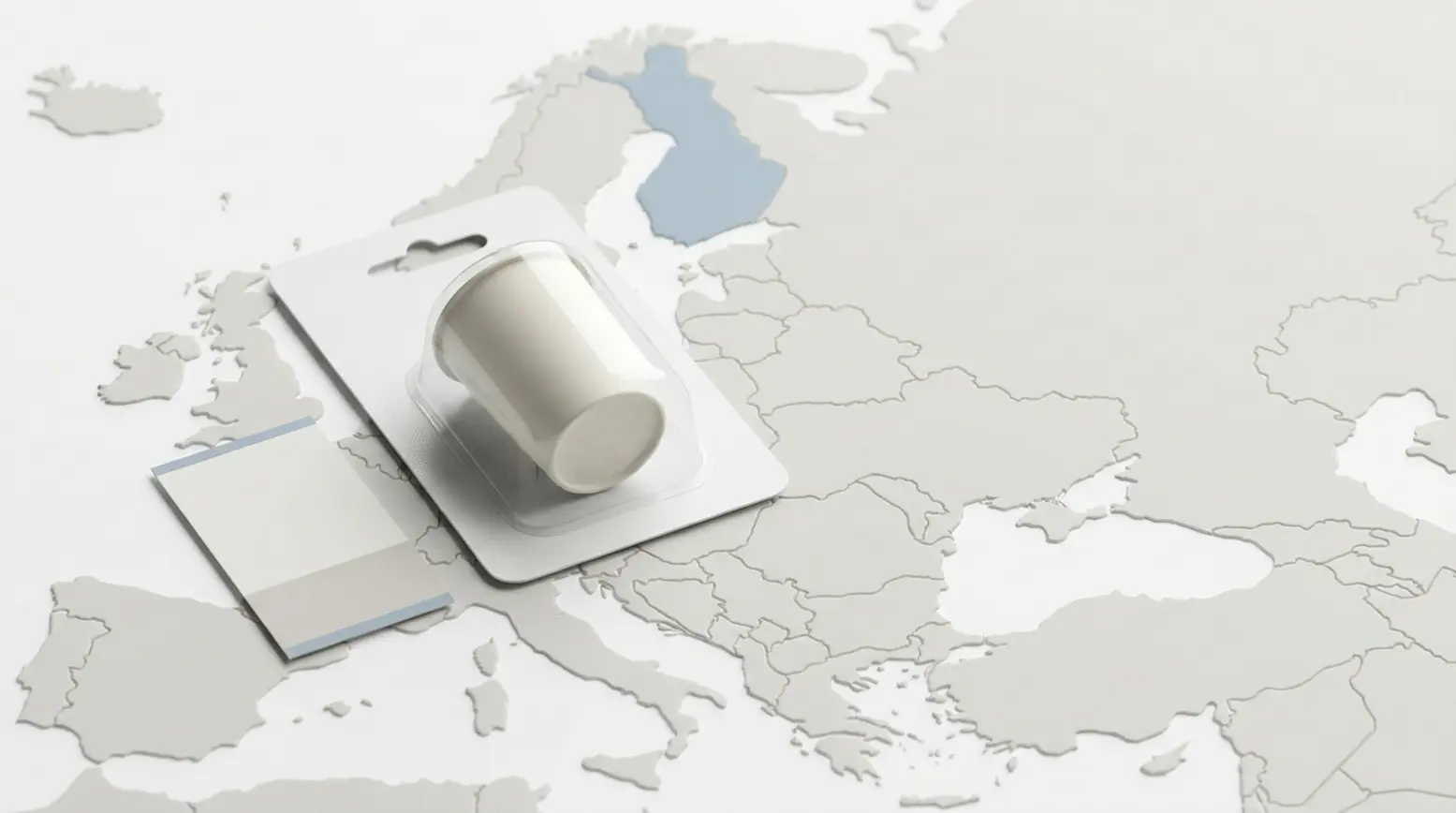
Imagine a consumer product being sold in France, Germany, Italy, Spain, the Netherlands, and Belgium. The brand might choose a single blister card or a standardized paper-based retail pack to ensure shelf consistency and maintain better supply chain control. Even then, the business can still face multiple registrations and diverse local reporting duties, simply because the packaging waste is generated in different countries. Therefore, the most practical move is often to simplify the physical pack wherever possible while keeping all national administration strictly within the customer’s own compliance route.
Questions packaging teams often ask about differences in EPR packaging across Europe
Does PPWR mean one EPR registration for all Europe?
No. While the PPWR aligns important packaging rules at the EU level, national EPR duties continue to apply in the specific country where the packaging becomes waste. As a result, companies may still require separate local registrations and localized reporting.
Can one packaging design work in several countries?
Yes, it frequently can. A highly robust structural design can remain common across multiple markets provided the material logic is clear and local market requirements are managed effectively. The underlying pack structure can often stay exactly the same, even when the printed artwork and compliance reporting differ.
Will the same pack always get the same fee result?
No. European packaging fees can differ drastically by country, and future regulatory fee adjustments will likely differ as well. Therefore, the best objective is to develop a robust pack with a crystal-clear specification, rather than expecting a uniform fee result everywhere.
Does Ecobliss handle national EPR reporting?
No. We solely support the physical packaging design and supply side of the project. The customer’s own compliance route must handle national registrations, reporting obligations, and all local legal verification.
Request a free sample now!


