


The Packaging and Packaging Waste Regulation (PPWR) does not dictate that every retail pack must become a single material. The practical answer is simpler: it pushes packaging teams to improve recyclability, reduce unnecessary materials, and assess the complete package earlier in the design process. Because major recyclability expectations are moving toward 2030, mono-material packaging under the PPWR gets more attention, but easy separation can still be a highly valid route when a pack requires specific visibility, protection, or structural integrity.
Teams should therefore review the entire packaging unit, not just the main card or cup. A sound decision usually comes from comparing mono-material packaging with separable alternatives, then checking local recycling routes, consumer habits, shelf impact, and product protection before a redesign is finalized.
• The PPWR encourages simpler packaging structures because sorting and recycling often work better when materials are easier to identify.
• Mono-material packaging is often highly effective, but a two-material pack can still work if the components separate easily and each piece has a viable end-of-life recycling route.
• Small parts matter. Labels, coatings, windows, adhesives, closures, and security details can all significantly impact recycling results.
• Blister packaging is an excellent test case because teams frequently compare a separable blister with a more paper-focused structure.
• The best next step is to compare physical samples, ensuring design choices are based on product requirements and realistic disposal routes.
Why mono-material packaging under the PPWR is not a simple rule
When professionals search for information on mono-material packaging and the PPWR, they often want a straightforward yes or no answer. The reality is much more practical. The PPWR creates regulatory pressure to make packaging easier to recycle, use only the necessary amount of material, and perform better as a complete unit after use. Consequently, simpler structures are receiving more attention as 2030 approaches, but there is no strict rule stating that every retail pack must be made from only one material family.
This fundamentally changes how packaging teams work. Engineers, brand managers, and procurement teams need to ask much earlier how a pack will be sorted, whether parts can be separated by the consumer, and what happens after the product is used. In this way, recyclability becomes an integral part of early design work instead of a late-stage compliance check.
What the PPWR really changes for packaging teams
Teams can no longer assess only the main substrate and stop there. They must evaluate the entire pack before finalizing the design. This includes understanding the likely recycling route, analyzing the separation of packaging materials, and mitigating the risk that small parts might remain attached after use. As a result, recyclable packaging design now requires a much broader structural review.
Why simpler structures get more attention
A package that stays within one material family is often much easier to identify and sort. This can support a clearer processing route after disposal. Still, simple is not inherently better if product protection, shelf impact, tamper evidence, or opening behavior becomes compromised. Therefore, a simpler structure should always be treated as a valuable design option, not as an automatic answer.
What mono-material packaging under the PPWR means in practical packaging design
In plain language, mono-material packaging means keeping the package within one material family as much as the design allows. Many teams also refer to this as single-material packaging. It draws significant attention because fewer material combinations can reduce downstream sorting problems and support a clearer end-of-life path. If you need a broader background, our guide to packaging materials explains the primary material families used in retail packaging.
The key point here is design logic. A package is not inherently good or bad just because of a single label. The focus on mono-material packaging under the PPWR is about how the full structure behaves after use, rather than just ensuring a single material name appears on the specification sheet.
A simple definition of mono-material packaging
Mono-material packaging keeps the vast majority of the structure within one material family, such as paper, PE, PP, or PET, as far as practical limits allow. The ultimate goal is a package that effectively protects the product while offering a clearer recycling route after consumer use.
Why one material family can help recycling
Sorting systems generally operate better when materials are easier to recognize. Processing can also be streamlined when fewer layers or integrated parts require different chemical or mechanical treatments. Therefore, single-material packaging often becomes a useful route when teams want a simpler disposal narrative and a more practical recycling path.
Why single-material packaging is not the only good answer
A mixed-material structure is not automatically a poor design. Mixed-material packaging recycling can still be a highly sensible choice when the parts separate easily and each component has a suitable processing route. Because of this, the total material count should never be the only score evaluated in a packaging review.
When mono-material packaging under the PPWR is less important than clean separation
The emphasis on mono-material packaging under the PPWR should not hide the immense value of separable packaging. In some cases, a clean separation route works far better than forcing a complete material conversion. This often happens when the product requires specific visibility, structural stiffness, cavity performance, or a formed shape that a single material family simply cannot provide in the same way.
What separable packaging looks like in real life
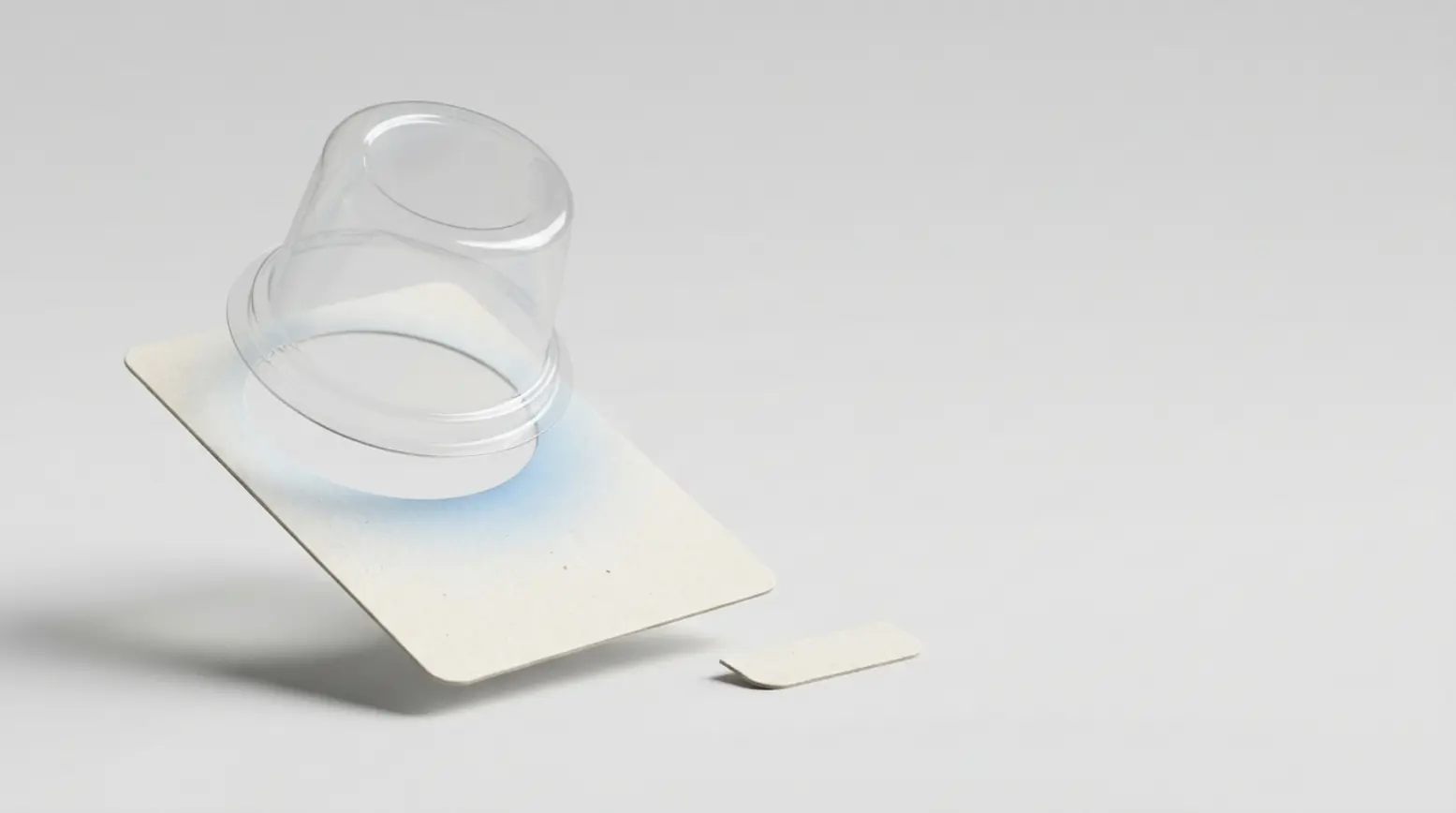
A common example is a carded blister featuring a formed plastic cup and a paper card. If the two parts can be separated cleanly after use, and each piece has a realistic recycling route in the market where the product is sold, the design may still be an excellent choice. The real issue is whether separation is genuinely easy in practice, because technical recyclability on paper is not enough on its own.
Questions to ask before changing a whole pack
Ask a few direct questions before initiating a redesign. Can the parts be separated easily by the end user? Do they stay stubbornly attached after opening or disposal? Will consumers actually take the time to separate them at home? Does each component have a viable recycling route where the pack is sold? Answering these questions helps teams effectively compare separable packaging with a full conversion to a single material family.
Where mono-material packaging under the PPWR gets difficult: small parts, coatings, and adhesives
Many packaging reviews become overly simplistic at this stage. Teams frequently describe a pack only by its main card and cup, but smaller components can drastically affect the final recycling result. Because of that, evaluating mono-material packaging for the PPWR should always include the full bill of materials, not just the largest visible parts.
Furthermore, the term "mono-material" is not a standalone sustainability claim. The entire structural design, recycled content choices, and local recycling infrastructure still matter heavily. Our page on sustainability provides a much broader context, while this article focuses strictly on practical packaging design choices.
Map the full bill of materials
Thoroughly review every single component of the package before deciding on a redesign, as overlooked parts frequently create processing problems down the line.
• Card
• Cup
• Labels
• Inks, when relevant to the design
• Windows
• Coatings
• Metallized layers
• Closures
• Security parts
• Decorative parts
• Adhesive areas
Why the recycling of packaging coatings and packaging adhesives needs attention
Coatings and adhesive areas may look small on a specification sheet, but they strongly affect how a package behaves after disposal. The same holds true for labels, clear windows, and decorative details. If a team only names the main substrate material, it may entirely miss the real environmental issue. The recycling of packaging coatings and packaging adhesives both depend heavily on the complete structure, which is exactly why hidden layers deserve an early, rigorous review.
Consumer behavior is part of the design
Even the best technical recycling route can fail if the user is unlikely to separate the parts. Many consumers only perform simple, intuitive actions after opening a package. Therefore, a good design should match real-world human behavior and avoid making assumptions about perfect sorting at home. This is especially crucial when separable packaging relies on an extra manual step after use.
How mono-material packaging under the PPWR applies to blister packaging
Blister packaging is a highly useful case study because it clearly highlights the design trade-offs involved. A standard carded blister combines a formed plastic cup with a paper-based card. Consequently, the primary design question is often whether to focus on clean separation and sensible material choices, or to move more of the structure into a single material family. This is precisely where the concept of a mono-material blister becomes practical rather than purely theoretical.
The usual blister structure
In a standard retail blister pack, the cup provides shape, product visibility, and physical protection. The card offers a printable area, vital branding space, and structural support on the shelf. Both components serve essential functions, so a redesign rarely focuses on just one feature. Instead, teams must simultaneously balance visibility, cavity strength, opening behavior, and the product's end-of-life journey.
The design question behind a mono-material blister
With a mono-material blister, the core issue goes well beyond just the name of the primary material. You must review the entire physical structure, examine exactly how the parts are joined, and consider what happens after consumer use. This is where the separation of packaging materials and a fuller material conversion emerge as two distinct, realistic design paths.
When an all-paper mono-material blister route can help
An all-paper structure eliminates the plastic cup entirely, keeping more of the package strictly within the paper family. This can actively support a simpler material narrative and a much clearer recycling route in certain municipal systems. We provide all-paper packaging solutions for teams that want to compare this route directly against a separable blister in a realistic retail setting.
Comparing mono-material packaging routes under the PPWR: separable blisters or all-paper designs
For many design teams, this represents the central decision. One route keeps the blister pack mixed but ensures it is exceptionally easy to separate. The alternative moves much further toward a heavily paper-focused structure. The correct answer depends entirely on the product, its retail shelf requirements, and the local recycling infrastructure; therefore, comparing physical samples is usually much more beneficial than relying on theory alone.
| Separable blister | All-paper |
|---|---|
| Can retain a formed cup for visibility and product protection | Keeps more of the package within the paper family |
| Relies on clean separation by the consumer after use | Can simplify the overall material sustainability narrative |
| May suit products requiring strong cavity performance | May reduce full product transparency |
| Consumer separation habits play a critical role | May alter protective performance for specific sensitive products |
| Highly useful when each component has a realistic recycling route | Valuable when expanded print areas and paper structures align with shelf goals |
What all-paper designs gain
Transitioning to an all-paper format can significantly reduce reliance on plastic cups. It also creates a much larger printable area, which enhances branding opportunities, usage instructions, and product information. In this way, paper-based mono-material blister formats can champion a clearer material family while still performing exceptionally well on the shelf, provided the structure is engineered carefully.
What all-paper designs give up
Some products benefit immensely from full transparency, and paper simply cannot replicate that feature in the exact same way. Protective qualities can also change depending on the shape, weight, and sensitivity of the items enclosed. Because of this, paper should always be reviewed as a realistic design option with inherent limits, rather than treated as an automatic, universal upgrade.
How cutouts and print can support shelf impact
Despite these material limits, paper packs can still present the product clearly through strategic cutouts, structural openings, and stronger graphic design. A larger printable surface area helps explain the product faster to busy consumers on the shelf. Ultimately, shelf impact relies on more than just a clear plastic front; the print, shape, and overall structural design heavily influence how quickly shoppers understand the package.
Cold seal as one construction choice within the mono-material packaging and PPWR discussion
Cold sealing is an excellent example of how construction choices fundamentally shape the final package. In our case, cold seal technology utilizes highly recycled cardboard paired with a water-based, solvent-free adhesive. Having invented the cold seal process and amassed over 25 years of experience with it, we know firsthand that the joining method strongly affects how a retail blister is built and how a paper-focused route is ultimately assessed.
What cold seal means in this context
The process matters immensely because it joins structural layers together without the use of heat. This naturally supports various blister constructions and paper-focused formats. Because it functions as a versatile construction tool, it should always be judged as an integrated part of the complete package design, rather than treated as a standalone sustainability claim.
Why this can support a paper-focused structure
When a paper cup is securely held between paper layers, the package keeps much more of its overall structure within the paper family. This can actively support a paper-focused route in the broader mono-material packaging and PPWR discussion. Even then, the full list of materials requires a thorough review, as the final environmental result always depends on the entire structural composition.
What it does not prove by itself
Using a water-based adhesive does not automatically make a package fully recyclable. The same holds true for cold sealing on its own. The complete structural design and the local recycling infrastructure remain the true tests of sustainability, meaning teams should carefully avoid overstating the impact of any single material or joining method.
Questions teams should ask before finalizing a redesign
Before you fundamentally change a package, slow down and evaluate the full impact. A redesign might improve one specific metric while inadvertently weakening another. The most successful projects simultaneously compare product protection, realistic recycling routes, shelf appeal, consumer usability, and practical sourcing capabilities.
Protection and shelf questions
Does the new package still protect the product effectively during transport and retail handling? Does it maintain necessary theft prevention, tamper evidence, and easy-opening features? Does the product still look appealing on the shelf if transparency, cavity shape, or the front presentation changes? These questions are critical because any losses in functional performance can quickly cancel out the gains made in material simplicity.
Recycling route questions
What is the specific local recycling route for each component of the package? Does the pack require a separation step after use, and is that step intuitive enough for everyday consumers? Do smaller parts tend to stay attached, and could that negatively affect downstream sorting or processing? These are foundational questions for any reliable recyclable packaging design review.
Procurement questions
Is the newly proposed structure practical to source at a commercial scale? Can the material supply remain stable over time? What happens to existing tooling, production line setups, filling speeds, and secondary packaging requirements? Procurement teams should be involved very early in the process, as even the most promising concepts must function flawlessly across the entire packaging system.
A highly practical next step is to evaluate physical samples long before the final specification is locked in. You can easily request a sample so your team can tangibly review transparency, structural stiffness, available print areas, opening behaviors, and exact product fits against real-world shelf and protection demands.
FAQ about mono-material packaging and the PPWR
Does the PPWR require every retail pack to be mono-material?
No. The PPWR increases regulatory pressure toward better recyclability, packaging minimization, and more rigorous whole-pack assessments. While that framework often favors simpler structures, it certainly does not mandate that every retail package must use only a single material.
Is mixed packaging always worse than mono-material packaging?
No. A mixed-material package can still be an excellent design if the components separate easily and each piece has a realistic recycling route. In many cases, designing for clean separation can be far more beneficial than forcing a full conversion to a single material.
Can paper always replace a plastic blister cup?
No. While paper can successfully support a simpler material family, it will inherently reduce full product transparency and may alter the protective qualities for certain sensitive products. The right choice depends entirely on the product's shape, its vulnerability, and its specific retail shelf requirements.
Does a water-based adhesive automatically make a pack recyclable?
No. The environmental performance of an adhesive depends entirely on the complete package structure and the capabilities of local recycling routes. While the type of adhesive is an important factor, it is never the sole determinant of recyclability.
How should packaging teams compare their options?
Teams should compare separable blister formats and all-paper samples against the genuine needs of the product in question. Carefully evaluate protection levels, visual impact, consumer usability, and the most likely route after disposal. Taking this comprehensive approach yields a much better answer than simply looking at the total material count.
One highly useful visual aid for any design review is an exploded blister pack diagram. This type of illustration can clearly highlight the card, cup, labels, coatings, adhesive areas, and any specific closures or security details. By making these hidden components easier to discuss before final decisions are made, teams can proactively spot risks earlier and choose the most practical, sustainable route moving forward.
Request a free sample now!


