


The transition from Directive 94/62/EC to the PPWR means packaging teams must verify compliance much earlier in a project's lifecycle. Directive 94/62/EC was the older EU framework governing packaging and packaging waste. The PPWR, formally Regulation (EU) 2025/40, entered into force on 11 February 2025 and generally applies from 12 August 2026. From that date onward, the old directive is largely repealed, although some earlier rules will continue to apply during a transition period. In simple terms, the shift from the Packaging Directive to the PPWR changes daily packaging work because design, materials, labeling, and reporting now connect more directly from the very start. This article serves as a practical update for packaging teams; however, it does not constitute legal advice.
• The PPWR is Regulation (EU) 2025/40, and it generally applies from 12 August 2026.
• A regulation applies directly across the EU, so teams can work from a more unified legal baseline.
• Packaging design decisions now matter earlier because recyclability, material composition, and future informational needs directly affect the package itself.
• Brand managers, engineering, procurement, and suppliers should review materials, weights, separation logic, and artwork space before the final design freeze.
• Retail packaging still needs to protect, present, and function well, meaning material reduction must remain carefully balanced.
The Transition from the Packaging Directive to the PPWR: The Exact Move from Directive 94/62/EC to Regulation (EU) 2025/40
What Directive 94/62/EC Was
Directive 94/62/EC was the previous EU framework for packaging and packaging waste. Many teams still refer to it as the European packaging waste directive they relied on for years. It established goals at the EU level, and each member state then translated those targets into national law. Consequently, companies often had to track both broad EU policies and specific local regulations. This explains why the history of the Packaging Directive still frequently surfaces in internal briefs, supplier documents, and project reviews today.
What the PPWR Is
The PPWR is the new EU packaging regulation, formally known as Packaging Regulation 2025/40 or Regulation (EU) 2025/40. It establishes a more direct legal framework for packaging across the EU. For packaging teams, this is crucial because regulatory discussions now happen much closer to the initial design and development phases. When professionals ask whether the Packaging Directive being replaced by the PPWR changes project planning, the short answer is a definitive yes.
Key Dates Readers Need to Know
These dates are essential because they dictate project timelines. The PPWR entered into force on 11 February 2025 and will generally apply from 12 August 2026. The older directive is largely repealed as of that 2026 date, though certain earlier provisions will remain active during the transition period. Further milestones will follow. For example, sorting labels are planned for 2028, while major recyclability and recycled plastic content requirements are slated for 2030. Therefore, teams beginning development now must actively think ahead.
Why This Article Focuses on Packaging Work, Not Legal Interpretation
Most readers do not need a lengthy legal summary. Instead, they need to know exactly what has changed and what steps to take next in a real-world packaging project. That is why this article focuses on practical retail packaging work, exploring design choices, materials, labeling space, data management, and supplier timelines. It serves as a practical guide rather than legal advice.
The Move from the Packaging Directive to the PPWR: Why a Regulation Changes the Daily Packaging Conversation
Directive Versus Regulation in Simple Words
Understanding the difference between a directive and a regulation explains why this shift is so significant. A directive sets overarching goals, which individual EU countries must then transpose into their own national laws. Conversely, a regulation applies directly across the entire EU. This distinction is the core of the EU Packaging Regulation versus the previous directive debate. Because the PPWR applies directly, teams can now operate from a more unified set of EU packaging rules, even though certain practical details will continue to evolve over time.
Why EU Packaging Rules Now Feel More Harmonized
Under the old system, many packaging teams treated compliance as a checklist item to confirm later for each specific market. Now that the legal foundation is more aligned across the EU, shared challenges surface much earlier in the development process. As a result, brand managers, packaging engineers, and procurement teams must discuss regulatory impacts sooner. This is one reason the transition from the Packaging Directive to the PPWR is now a practical project topic and not solely a legal one.
Why the Picture Is Still Phased and Not Fully Identical on Day One
Being more harmonized does not mean everything becomes completely identical overnight. There are transition periods, subsequent measures, and additional implementation details to navigate. Therefore, teams should not assume that a single meeting will resolve every market-specific question for every product. A much better approach is to build robust material data, maintain clear records, and allocate sufficient project time for ongoing updates. This allows companies to make well-informed decisions as the new framework gradually phases in.
The Transition from the Packaging Directive to the PPWR: What Now Changes in Retail Packaging Design
The Shift from Waste Management to Design Decisions
The most significant change is that packaging design itself now receives much more direct attention. The old conversation typically focused on what happened after the packaging became waste. The new dialogue starts far earlier, as updated packaging design regulations now more directly impact structure, materials, labels, components, and overall pack size. For packaging teams, this means that initial design briefs must already account for recyclability, material usage, and precise data requirements.
Recyclability, Recycled Plastic Content, Minimization, Composition, and Labeling
Several crucial topics now require earlier review. These include recyclability, recycled plastic content, minimization, material composition, and labeling. A package might look simple on the shelf, but it quickly becomes complex once windows, coatings, labels, inserts, or closures are added. This is especially important for retail packaging under the PPWR, where visibility, theft resistance, tamper evidence, and shelf impact frequently compete with strict recycling needs. Consequently, teams must evaluate how all these elements work together before finalizing the concept.
Why Packaging Design Regulation Now Reaches Upstream into Development
When tooling, dimensions, and artwork are already fixed, making changes becomes significantly slower and more expensive. That is why the shift from the Packaging Directive to the PPWR affects development work much earlier than many teams expect. A late-stage review might uncover issues with the material mix, empty space, panel dimensions, or the separation of various parts. If this occurs close to the approval phase, the project can easily hemorrhage time and budget. Early reviews effectively mitigate this risk because the team still retains flexible options.
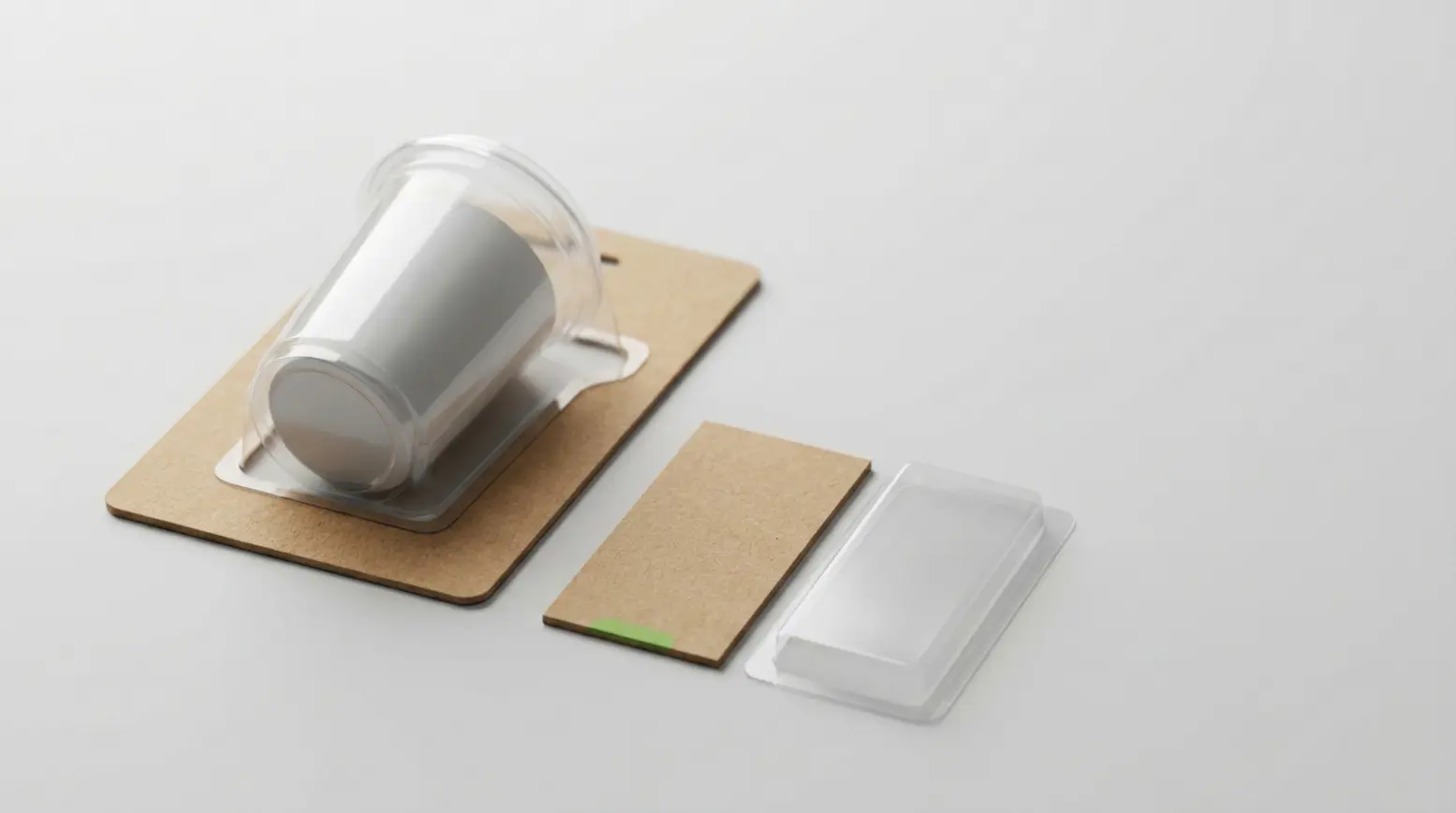
When teams compare different routes, it is often helpful to review more than one packaging format simultaneously. For example, a carded blister, a carton, a paper-based blister, or a clamshell can each address visibility and protection in distinctly different ways. We provide retail packaging solutions designed to help teams evaluate these alternatives early on, ensuring the project remains open to the best possible technical fit.
The Shift from the Packaging Directive to the PPWR: What Brand, Engineering, and Procurement Teams Should Do Earlier
Record Materials and Component Weights During Development
Do not wait until the end of the project to rebuild the bill of materials. Instead, record every material and part during the development phase, along with the precise weight of each component. This breakdown can include the card, cup, carton, label, insert, coating, window, and any closure elements. Because this data is compiled earlier, subsequent reporting and design reviews become much easier. Ultimately, this represents one of the most practical changes created by the transition from the Packaging Directive to the PPWR.
Check Whether Parts Separate Easily
Ask a simple question early in the process: can the packaging components separate easily within the expected recycling route? This is vital for blisters, cartons with windows, and other multi-part packs. A design might look efficient yet still pose significant recycling challenges if the components are difficult for consumers to separate. Therefore, assessing part separation must become a core aspect of the concept review rather than just a last-minute compliance check.
Review Coatings, Labels, Windows, and Other Added Elements
Small additional elements frequently trigger larger technical issues. A coating might enhance shelf appearance, but it can also negatively impact recyclability. A window can improve product visibility, but it introduces another distinct material to the mix. Similarly, a large label, an extra liner, or an inserted leaflet can entirely alter the broader material narrative. Because of this, every added component must be rigorously reviewed for its overall function, material impact, and genuine necessity to the project.
Challenge Unnecessary Volume Before Final Pack Dimensions Are Approved
While minimization is critical, the package must still function properly. Teams should critically review card sizes, cavity depths, carton widths, and empty spaces before granting final approval. Doing so helps reduce unnecessary material usage while protecting overall project quality, ensuring the product retains proper support, presentation, and safe handling. Essential packaging functionalities must remain clearly outlined in the brief, encompassing protection, tamper evidence, theft resistance, dispensing, and optimal opening performance wherever relevant.
Reserve Artwork Space for Future Information Needs
Available artwork space often becomes restricted very quickly. If planning for future informational needs is left too late, the design team may struggle to fit everything clearly and legally. It is much better to review panel space, content hierarchy, and label logic early in the prepress packaging process, since print layouts and final production files heavily depend on these crucial decisions.
Add Market Placement and Reporting Responsibilities to the Packaging Brief
Ownership matters; unclear responsibilities inevitably lead to significant gaps later on. Procurement and category teams should clearly define who is responsible for recording materials, confirming component data, and managing the reporting inputs required for market placement. Under the old approach, these tasks typically occurred toward the end of a project. Under the new approach, however, these critical questions must move much closer to the initial concept work.
How the Move from the Packaging Directive to the PPWR Affects Retail Pack Choices in Practice
Card, Carton, Blister, and Clamshell Decisions Now Connect to Future Obligations
Selecting a retail packaging format now carries far more consequences than it did previously. A carded blister may provide excellent visibility and support a hanging display, but the specific cup, backing card, adhesive system, and print area all deeply matter. A carton with a window might seem straightforward, but the window's material and fixing method can significantly affect recycling outcomes. A clamshell can deliver robust protection and a clear product view, yet it still requires careful review regarding material use, functional performance, and ease of separation. This is exactly why the PPWR replacing the directive is much more than a simple legal update; it fundamentally changes practical packaging decisions.
A simple example helps illustrate this shift. A brand team might request a carton with a large window to keep the product highly visible on the retail shelf. Later in the process, the technical team may discover that the window film, glue application area, and available artwork panel space create compounding pressures on both recyclability and information layout. If that review happens early enough, the team can actively compare a smaller window, an alternative structure, or an entirely different format well before the tooling is permanently fixed.
Why Function Still Matters When Material Is Reduced
Material reduction is incredibly important, but the package must still protect the product and perform reliably in a retail environment. If a package fails during transport, opens far too easily, or presents the product poorly, the underlying business challenges do not simply disappear. The optimal path forward is balanced design. Teams must systematically remove what is unnecessary while retaining everything that supports the core function of the package.
Why Supplier Input Should Come Earlier in the Project
Supplier input must arrive earlier in the timeline because format, material, and component choices now impact a wider array of future obligations. If the supplier only joins the conversation after the dimensions, artwork, and format are locked in, many highly beneficial options may have already vanished. Our integral approach seamlessly brings design, materials, components, packaging production, and subsequent decisions into a single, cohesive discussion. Whenever necessary, even the machinery requirements can be properly integrated into that chain later.
Directive 94/62/EC Versus the PPWR at a Glance
This table provides a straightforward comparison tailored for packaging teams. It serves as a practical summary and does not replace the need for formal legal review.
| Topic | Directive 94/62/EC | PPWR | Packaging project impact |
| Legal form | Directive, transposed into national law | EU regulation, applies directly | Teams operate from a more unified EU framework |
| Main focus | Packaging and packaging waste framework | Stronger, direct focus on packaging design, reuse, and recycling | Design choices require earlier review |
| Timing | Older, long-term framework | Entered into force on 11 February 2025; generally applies from 12 August 2026 | Projects require future-ready planning |
| Recyclability and content | Less direct pressure at the project stage | More direct, phased requirements, with major steps beginning in 2030 | Material choices and pack structures matter earlier |
| Labeling | Less aligned at the EU level | More unified direction, with sorting labels planned for 2028 | Artwork space must be allocated sooner |
Checklist for Your Next Packaging Project
Use this checklist during the concept stage or right before the final design freeze. It effectively helps teams translate broad regulatory discussions into practical, actionable steps.
| Checkpoint | What to check early | Why it matters |
| Material list | Document every single material and part | Supports accurate reporting and design reviews |
| Component weights | Record the exact weight of each part during development | Prevents late-stage rebuild work |
| Separation | Verify whether components separate easily | Influences critical recycling route decisions |
| Coatings and windows | Evaluate every added layer or material | Can significantly alter recycling performance |
| Pack volume | Challenge any empty space before final approval | Directly supports material reduction goals |
| Artwork space | Reserve adequate room for future informational needs | Prevents intense, last-minute prepress pressure |
| Responsibilities | Clearly define who owns data and reporting inputs | Substantially reduces overall project risk |
| Supplier involvement | Bring the supplier into the discussion before final lock | Keeps a wider variety of design routes open |
FAQ
Has the Packaging Directive been replaced?
In general, yes. When professionals ask about the Packaging Directive being replaced, they are typically referring to the shift from Directive 94/62/EC to the PPWR. Directive 94/62/EC served as the earlier framework, whereas the PPWR is Regulation (EU) 2025/40. The PPWR entered into force on 11 February 2025 and generally applies from 12 August 2026. The older directive is mostly repealed from that date onward, although certain rules will continue to apply during the transition period.
What is the difference between the EU Packaging Regulation and the previous directive?
A directive sets goals that individual EU countries must transpose into their own national laws, whereas a regulation applies directly across the entire EU. Therefore, the PPWR establishes a much more unified legal baseline for packaging teams. However, because some practical details are being introduced in phases, local reviews may still be necessary in specific cases.
When does Regulation (EU) 2025/40 apply?
The regulation entered into force on 11 February 2025 and generally applies from 12 August 2026. Several subsequent measures will follow that date, including planned sorting labels expected in 2028 and major recyclability and recycled plastic content mandates scheduled for 2030.
Does the PPWR mean every packaging rule is identical across Europe immediately?
No. While the regulation creates a significantly more harmonized EU framework, not every practical detail becomes identical on day one. Transition periods, subsequent regulatory measures, and additional implementation details still play a major role. That is precisely why teams should maintain meticulous records and always leave room in their schedules for future updates.
Why does the PPWR affect packaging design earlier than before?
The new regulation impacts design much earlier in the process because recyclability, material composition, minimization efforts, labeling requirements, and future reporting metrics now connect directly to the physical package itself. If teams wait until the artwork, tooling, or dimensions are permanently fixed, making necessary changes becomes exponentially harder and more expensive.
What should a retail packaging team document during development?
Teams must proactively document all materials, part weights, separation logic, coatings, windows, labels, pack dimensions, and spatial requirements for artwork. Furthermore, they should clearly define exactly who owns the data and the reporting inputs. Doing so provides the project with a much stronger foundation well before final approval and ultimately supports better cross-functional decision-making.
A Practical Next Step for Your Next Packaging Project
Bring Design, Materials, Artwork, and Function Together Earlier
If your team still uses the old Packaging Directive as its primary reference point, now is the ideal time to update your internal processes. Bring regulatory questions directly into the initial concept work rather than treating them merely as final checks. This proactive approach helps brand, engineering, and procurement teams make better, more informed decisions, resulting in fewer late-stage changes and much clearer ownership.
Where an Integrated Packaging Discussion Can Help
If you want to confidently compare different routes before fixing your specifications, having a physical example often makes a tremendous difference. You can request a sample to explore structural integrity, shelf impact, and overall functionality in a highly practical way. While a sample alone does not prove regulatory compliance, it empowers your team to make smarter, more strategic packaging choices much earlier in the journey.
Request a free sample now!


