


Yes, a paper blister pack can still show the product well. When considering product visibility in paper blisters, the best approach is to decide which single product detail the shopper must check first, then choose the right tool for that job. This could be a cut-out, a film window, strong print, touch access, or a double-sided structure. Full transparency is often not necessary, because many buying decisions depend on one clear detail such as color, size, shape, finish, or fit.
When brands move from clear plastic to paper, direct visibility naturally goes down. That is the real trade-off between transparent and paper packaging. The good news is that many packs do not actually need a full view of the item. If the shopper only needs proof of one important feature, paper can work very well. If you are exploring all-paper packaging, this is usually the best place to start because the right visibility choice depends on the actual product and the real shelf task.
• Start by defining the minimum product detail the shopper must verify.
• Use a cut-out when one visible feature is enough to support the buying decision.
• Use a film window when the product needs more protection or a larger visible area.
• Use print-led design when shoppers choose mainly by brand, image, instructions, or written details.
• Test the structure, shelf effect, and handling before you decide on the final format.
Product visibility in paper blisters: what must the shopper really see?
Moving from a clear PET blister cup to a paper component changes how the product appears on the shelf. The key question is simple: what must the shopper really see to feel confident enough to buy? In many cases, the answer is smaller than teams expect. A shopper may only need to check the color of a lip balm, the shape of a connector, the finish of a home item, or the size of a DIY part. When that key detail is clear, the rest of the decision can come from the pack's structure and communication.
This is why packaging designed for product visibility should be planned around the buying moment, not around the idea of copying full transparency. If one visible detail answers the main question, then a paper format can still work beautifully. If more proof is needed, the visibility method can be expanded with a paper packaging window, a film layer, or stronger printed communication.
Shaped cut-outs for product visibility in paper blisters
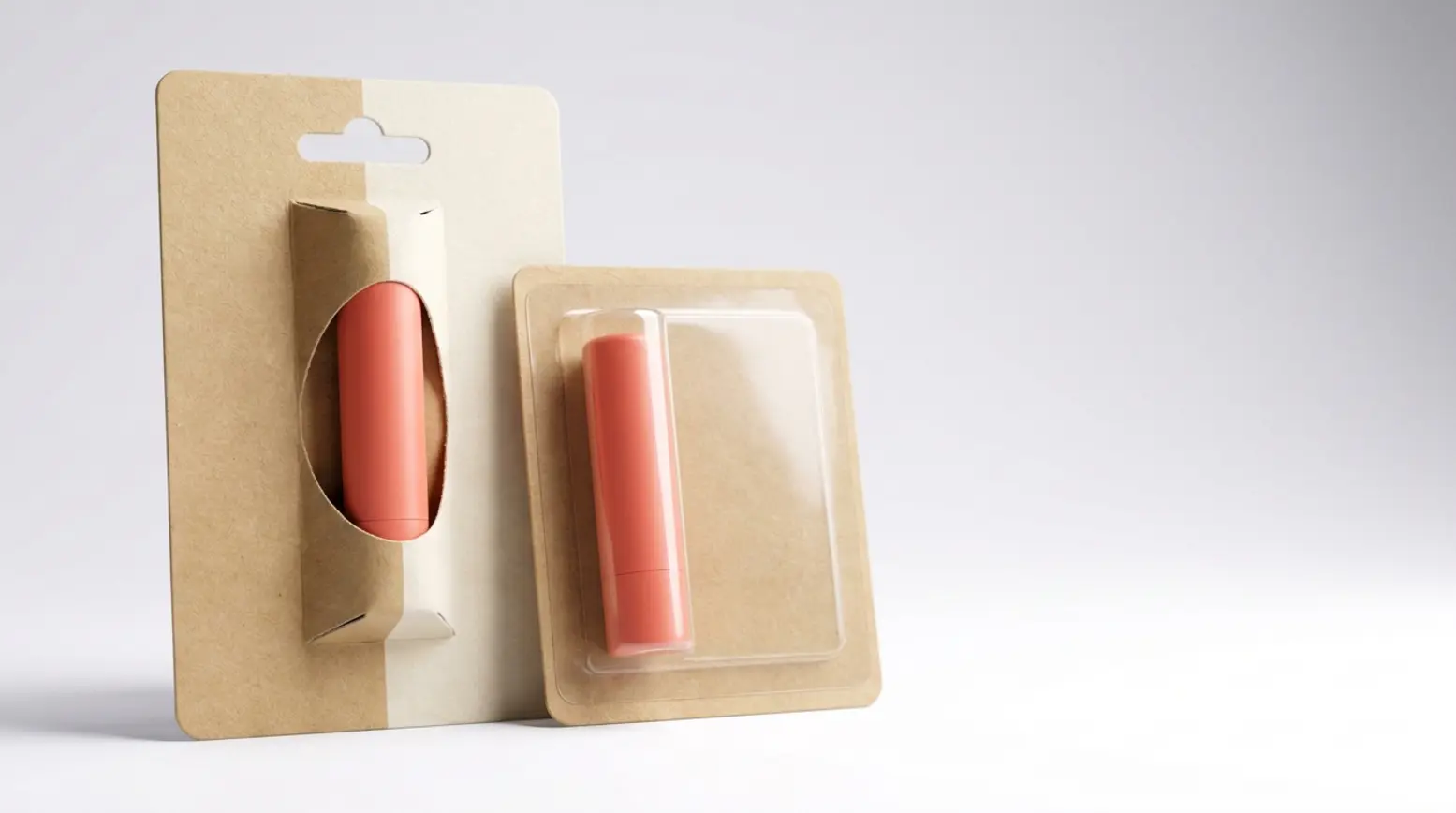
A cut-out is an opening in the card or paper blister area that reveals one selected part of the product. A blister card cut-out or paper blister cutout works well when a single visible feature carries most of the buying decision. This could be color, connector shape, texture, a size cue, or surface finish. Because there is no extra film over the opening, this route can seamlessly support a simple all-paper material build.
Cut-outs are often a strong choice for cosmetics, office products, electronics accessories, and some small DIY items. They offer quick proof without needing to reveal the entire product. At the same time, the opening must be designed with care. If it is too large, or if it is placed in the wrong area, pack strength can drop and retention can suffer. Therefore, the cut-out should always be shaped around the product, considering its weight and likely retail handling.
A cut-out also has a clear limitation. It does not replace the broad view of a transparent blister cup. Instead, it provides focused visibility, making it ideal when a single reveal point is enough. If the shopper needs to inspect more of the item, another format may be a better fit.
Windows as a choice for product visibility in paper blisters
An open cut-out and a window are different tools. While an open cut-out is simply a shaped hole, a paper blister window or die-cut packaging window adds clear film over the opening. This allows the shopper to see more while the product stays securely covered. This feature proves incredibly useful when the visible area needs protection from dust, touch, or damage.
A film-covered paper packaging window helps when shape, color, or finish is important and the item must remain enclosed. It can also be beneficial when the product sits close to the opening and an uncovered cut-out would expose too much of it. In that sense, a paper blister window can balance visibility and protection more effectively than an open hole.
The trade-off should be explained clearly. A film window adds another material, meaning that disposal after use becomes less straightforward than with a fully open paper construction. That does not make the format wrong. Rather, it means the choice should be deliberate, as visibility and protection may matter more for some products than achieving a fully paper-based result.
Print-led product visibility in paper blisters for items that need less reveal
Some products do not require much direct visibility. Shoppers may already know the item, trust the brand, or choose mainly based on written specifications. In these cases, packaging without a plastic window can be a strong route because the paper surface provides more space for explanation. Printed packaging, instead of transparent alternatives, can showcase product images, instructions, compatibility notes, variant coding, and shelf messages more clearly than a large clear area ever could.
This works especially well for familiar products, accessories chosen by technical details, and items where the exact real-life appearance is less important than usability information. The paper surface can do more work because it can explain what the item is, how to use it, and exactly which version the shopper is holding. If you want broader inspiration after this step, our packaging design ideas can help you explore how visibility and communication work together.
Good print also dramatically affects shelf impact. Clear hierarchy, readable information, and well-planned finishes help the shopper understand the product much faster. We support this with packaging printing and finishing, ensuring the larger paper surface becomes a practical communication tool rather than empty space.
Tactile and double-sided options for product visibility in paper blisters
Sometimes, touch matters more than a wide visual reveal. Tactile retail packaging can let the shopper feel a texture, grip point, or surface without seeing the whole item. This can be highly effective in personal care, office, home, or tool-related products where hand feel influences trust. However, this format needs careful evaluation because the item still has to stay protected, secure, and suitable for normal store handling.
Double-sided blister packaging solves a completely different challenge. It allows one side of the pack to focus on the product reveal while another side carries instructions, brand information, or product details. This is incredibly useful when a single front face cannot do every job well. We use double-sided packaging as a structural option for this exact reason. While it does not create full transparency, it does organize the shopper experience in a much more useful way.
Both of these approaches are selective tools. They are usually most effective when the product does not need a full front view, yet still benefits from either touch access or a split communication structure.
How to approach product visibility in paper blisters by product type
Some products inherently require a real reveal. This is common when color is critical, fit is essential, or shoppers naturally compare physical details on the shelf. Examples include cosmetic shades, hardware pieces that must match another part, connectors that need shape confirmation, and small home or DIY items where finish or form builds trust. In these cases, one reveal point should definitely stay visible through a cut-out, a film window, or a mixed format.
Other products are significantly easier to sell through graphics and text. This is often true for familiar items, strongly branded items, and products selected mainly by specification. Here, packaging built for product visibility can rely more heavily on photography, usage explanations, compatibility details, and clear version coding. The physical item matters less because the decision depends far more on information than inspection.
Many of the best results come from combining these tools. A cut-out paired with strong print can show one key feature and explain the rest. A window combined with instructions can support both confidence and clarity. A double-sided structure can split the reveal and communication into separate surfaces, ensuring each part of the pack has a clear role. When it comes to product visibility in paper blisters, the right answer is often a balanced mix rather than one fixed rule.
Comparison of visibility options
| Option | What the shopper sees | Material impact | Best use case | Main limit |
|---|---|---|---|---|
| Open cut-out | One selected part of the real product | Can support an all-paper build | When one feature answers the buying question | Less viewable area than a clear blister |
| Film window | A larger protected view of the product | Adds another material | When visibility and protection both matter | Makes disposal after use less simple |
| Print-led design | Product image, instructions, and product details | Supports paper-based communication space | Familiar products or products chosen by written details | Less direct proof of the physical item |
| Tactile opening | Limited touch access to the product | Depends on structure and exposure | When feel matters more than a full visual reveal | Needs careful checks for hold and damage risk |
| Double-sided structure | Reveal on one side, communication on another | Structural choice depends on pack type | When one face cannot do every job well | Does not create full transparency |
Common questions about product visibility in paper blisters
Can a cut-out replace a transparent blister cup? No. A cut-out gives selective visibility, meaning it shows one chosen part of the product. It does not provide the wide view of a clear blister cup.
Is a film window still a good option in paper packaging? Yes, sometimes. It is highly useful when visibility and protection matter more than keeping the pack fully paper-based.
When is packaging without a plastic window a strong choice? It works well when shoppers can confidently decide based on the brand, product image, instructions, or written details. This is common with familiar products and technically chosen items.
Does touch help more than sight in some packs? Sometimes it does. Tactile retail packaging can support the buying decision when feel matters, but only if the product remains secure and adequately protected.
What is the easiest rule for choosing a visibility method? Define the minimum product detail the shopper must verify. Then, match that need to a cut-out, a film window, print-led design, touch access, or a combined format.
The final decision rule for visibility
Start with one practical question: what is the minimum product detail the shopper must check before buying? If the answer is one feature, a cut-out may be perfectly sufficient. If the product needs clearer viewing and more protection, a film window may fit better. If the decision depends mainly on images, instructions, brand trust, or specifications, print may do most of the work.
A combined route is often the most useful approach because it balances the reveal, communication, and structure. The goal is to choose the visibility tool on purpose, based on the real shelf task. If you want to judge the reveal, print surface, and shelf feel with the actual product, you can request a sample and review the options with your team.
The short version is simple: define the detail that must be seen, then build the pack around that need. This straightforward rule leads to clearer decisions and helps teams evaluate paper packaging in a truly realistic way.
Request a free sample now!


