


The short answer is this: the PPWR empty space ratio does not place a 50 percent cap on every retail sales pack. Instead, the rule applies to grouped packaging, transport packaging, and e-commerce packaging that fall within its scope. Retail sales packaging certainly still matters under the PPWR, but the main question is quite different. For retail packs, teams must demonstrate that the package's weight and volume are strictly necessary for it to perform its intended job.
This distinction matters in practice because many packaging teams mix up shelf packs and outer packs. By separating these two issues early on, you can evaluate compliance risks more clearly and improve volumetric design without sacrificing product protection or on-shelf presence.
• The 50 percent cap targets grouped, transport, and e-commerce packaging rather than every individual retail sales unit.
• Retail sales packaging is still scrutinized under minimization rules regarding necessary weight and volume.
• Filler materials do not automatically resolve PPWR empty space issues, meaning the official measurement method remains crucial.
• Improved package geometry, vibrant printing, and smart structural choices can effectively support right-sized retail packaging.
• Shelf impact can be achieved through proper fit, clear visibility, and clever structure, often rendering unused volume unnecessary.
What the PPWR empty space ratio actually covers
Many teams hear about the 50 percent cap and naturally assume it applies to every package they sell. However, this is a common misunderstanding. Under the regulation, the PPWR empty space ratio is targeted specifically at grouped packaging, transport packaging, and in-scope e-commerce packaging. Consequently, it factors into discussions concerning empty space ratios and packaging void space rules for outer formats, rather than serving as a blanket rule for every single shelf pack.
Timing is also a critical factor. The empty space requirement belongs to a future framework linked to the 2030 period, so teams should always verify the latest wording in the legal text. For factual confirmation, the safest source remains the official text published on EUR-Lex, as the precise wording, scope, and timing will directly affect how a packaging review should be handled.
Why many teams confuse the rule with retail sales packaging
This confusion is easy to understand, primarily because a single product often moves through multiple packaging levels. It might require a sales pack for the retail shelf, a grouped outer box for multiple units, a robust transport format for distribution, and a dedicated shipper for online delivery. People often see the word "packaging" and assume every level is regulated in exactly the same way. In reality, each format serves a different purpose, meaning the legal questions surrounding them differ as well.
How the PPWR empty space ratio relates to retail sales packs
Retail sales packs are certainly still affected by the PPWR, though primarily through minimization rules. In simple terms, the weight and volume of the sales pack must be strictly necessary for its intended function. That function might include product protection, visibility, providing consumer information, specialized opening features, theft prevention, or another clear requirement. This is why the PPWR empty space ratio remains relevant to retail packaging teams, even when the 50 percent cap does not directly govern the individual shelf unit.
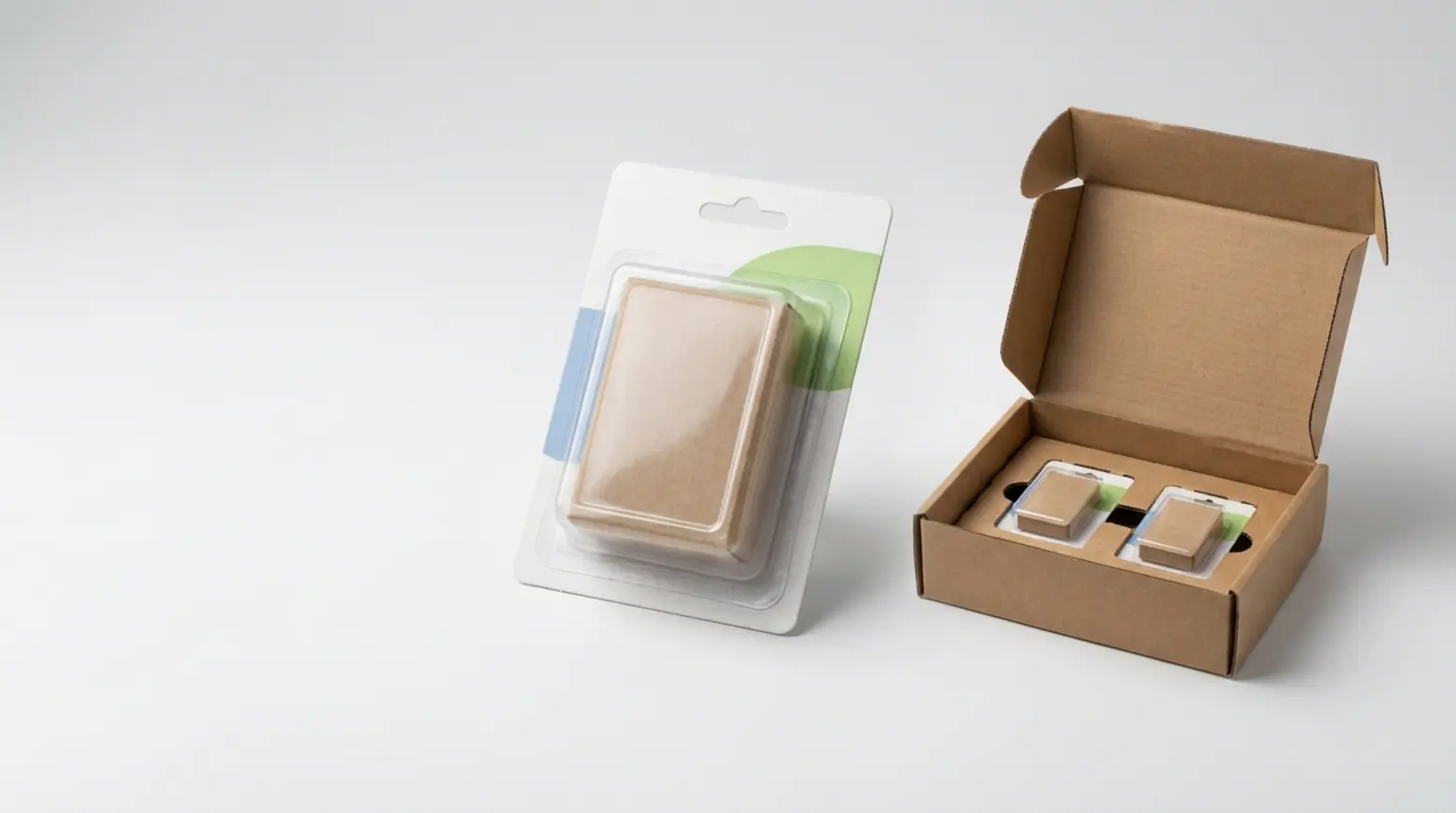
For a standard blister card sitting on the shelf, the compliance review typically focuses on whether the package size and material usage are justified. It is not automatically concerned with whether that specific unit stays below a fixed 50 percent void threshold. This distinction is crucial because it completely changes how teams approach oversized packaging regulations and how they define right-sized retail packaging.
The key difference between a sales pack and grouped, transport, or e-commerce packaging
A sales pack is the primary unit a shopper sees and purchases in a store. Grouped packaging bundles several of these sales units together. Transport packaging facilitates safe handling and movement throughout the broader supply chain. Finally, e-commerce packaging is the shipping format used to deliver goods to the end consumer. Because these formats perform distinctly different jobs, the regulatory review criteria for each are correspondingly different.
| Sales packaging | Grouped, transport, and e-commerce packaging |
| Scope: Shelf unit bought by the consumer | Scope: Outer formats used to group, ship, or deliver sales units |
| Key question: Is the weight and volume necessary for its function? | Key question: Does the empty space rule apply, and how is the void measured under the official method? |
| Design implication: Review the card area, cup shape, visibility, and structure | Design implication: Review the fit of packed units, the shipping cavity, and unused outer volume |
How to think about the PPWR empty space ratio without overclaiming the calculation
For grouped, transport, and e-commerce formats, the PPWR empty space ratio deals specifically with the space that is not occupied by the packaged sales units, as defined by the official PPWR measurement method. While that sounds straightforward, packaging teams must remain careful because the prescribed methodology matters greatly. A homemade formula might be useful for an early design review, but it will not hold up as a legal answer. This distinction is especially vital when teams attempt to assess void ratios for grouped packaging, transport packaging empty space, or e-commerce packaging empty space.
It is also important to avoid another common assumption regarding void fill. Fillers such as air cushions, crumpled paper, or bubble wrap can certainly protect products during shipping, but they should never be treated as an automatic fix under packaging void space rules. Product protection and legal volumetric measurement are related topics, but they are absolutely not the same thing.
What empty space means in practice
In practice, empty space usually refers to the unused cavity surrounding multiple sales units inside a master shipper. It can also refer to the gap left inside an e-commerce box after the purchased products are packed. That is exactly why grouped packaging, transport packaging, and e-commerce formats are typically the first places teams look when reviewing their PPWR empty space exposure and overall outer pack efficiency.
Why the official method still matters
Before making any definitive compliance statements, teams must consult the actual legal text and follow their standard internal compliance routes. While we can assist with optimizing pack geometry, format choices, and physical design logic, the final legal interpretation should always rest with your dedicated compliance and legal teams, as the official methodology will ultimately guide the final decision.
What the PPWR empty space ratio means for pack design choices
This is where the topic becomes incredibly useful for retail packaging teams. Some packages manufacture visual size using a large backing card, a deep blister cup, or an excessively wide outer construction. Even if the 50 percent cap does not technically apply to that specific sales unit, retail pack minimization still dictates that the package's weight and volume must be strictly necessary for its function. Consequently, package design should always begin with product fit and functional purpose, subsequently building strong shelf impact through smarter structural engineering and compelling graphics.
Adopting this approach helps teams review their volumetric packaging design in a highly practical way. It also supports robust shelf presence, proving that visual impact can stem from clear branding, enhanced product visibility, unique shapes, and smart format logic, rather than simply relying on unused air.
Example
While a large card and deep cup might create an illusion of visual size, a contour-fit cup paired with stronger graphics can deliver a similar shelf impact while drastically reducing unused volume.
Shelf impact does not need unused volume
A smaller front card can still work exceptionally well if the graphics are clear and easy to read. Strategic use of vibrant colors, high-quality printing, and a well-planned layout can significantly improve visibility, meaning the package does not need an extra cavity just to stand out. Ultimately, this supports right-sized retail packaging and helps teams prepare for closer regulatory scrutiny during minimization and oversized packaging discussions.
A formed cup can follow the product more closely
When utilizing cold seal blister packaging, the direct link between product size, cup depth, and card area is remarkably easy to see. A custom-designed cup can follow the product's contours much more closely, ensuring the item remains highly visible while simultaneously eliminating unnecessary space. The precise shape of that cup is achieved through advanced thermoforming packaging, a process that gives engineers complete control over the contour fit, depth, and overall viewing area.
When all paper can be the better route
In cases where transparency is not essential, adopting an all-paper principle can be an exceptionally strong option. A molded paper blister cup or another completely paper-based format can effectively support sustainability goals while keeping core packaging functions firmly in place. Strategic cut-outs, expanded print areas, and a clear physical structure can still highlight the product presentation on the shelf, allowing the design to remain highly practical without depending on extra volume.
Using the PPWR empty space ratio as a check for grouped and e-commerce packaging
Following the sales pack review, the outer packaging must undergo its own independent evaluation. This is where the PPWR empty space ratio becomes a direct and pressing question. Grouped packaging, transport packaging, and e-commerce shipping formats should always be checked separately, as their internal cavities, physical fit, and specific shipping needs are often vastly different from those of the retail sales units they contain.
Separate the sales pack review from the outer pack review
Splitting these evaluations keeps the entire project clear and focused. The first review asks whether the shelf pack truly needs its current size and material footprint to function properly. The second review asks whether the outer packaging contains unnecessary void space under the applicable regulatory rules. When teams mistakenly combine these two completely different questions, they frequently miss simple design improvements or create deep confusion regarding which packaging level is actually in scope.
Where packaging engineers should look first
Engineers should always start by analyzing the base product dimensions, the cup shape, the card size, and the overall package thickness. From there, they can review how individual units are grouped, how snugly they fit into a master shipper, and how they are physically arranged for transport or online delivery. In many projects, issues with void ratios in grouped packaging unexpectedly appear simply because the retail pack and the outer pack were designed in isolation, meaning the final system was never holistically optimized as one complete supply chain.
Design routes that support presence without extra volume
Good retail design can easily establish a strong visual presence without adding empty volume. This balance is critical because the package still needs to sell effectively in the store, protect the product safely, and communicate branding clearly. It is also important because any added material or physical size must have a clear, justifiable reason. Ultimately, a smarter, more efficient structure often yields far better results than simply opting for a larger cavity.
Multi-panel for communication space
Sometimes, a particular package genuinely needs more room for branding, detailed instructions, or a thorough product explanation. In those cases, multi-panel packaging can effectively create more communication space through its physical structure. This approach can be incredibly useful when a single flat front face is simply too limiting. However, the extra paperboard still requires a valid functional reason, so it should be used thoughtfully and reviewed carefully as part of any retail pack minimization effort.
Free-standing for a different shelf position
A package designed to stand on its own can fundamentally change how it appears in a retail environment. With free-standing packaging, dynamic shelf impact comes directly from the structural orientation and clever display logic, ensuring the design does not have to rely solely on sheer visible size. The ideal construction will always depend heavily on the product itself, specific retailer needs, and the exact display methods utilized in the store.
Geometry before size
We typically advise packaging teams to start purely with product fit and package function. Once those foundations are set, they can begin shaping the retail experience through graphics, visibility, and physical structure. Prioritizing geometry over sheer size helps significantly reduce unnecessary volume because the structural shape is doing the heavy lifting, an approach that invariably leads to a much more disciplined design review process.
Two design checks before you change a format
If you are currently reviewing a package because of empty space ratio concerns or broader PPWR questions, we strongly recommend splitting the project into two distinct checks. This methodology keeps the actual work highly practical and makes it much easier to align the engineering, brand, and compliance teams around the right questions.
Check one, sales packaging minimization
First, ask whether the weight and volume are strictly necessary for adequate protection, consumer information, product display, smooth opening features, reliable recloseability, theft prevention, or another legitimate function. Carefully review the card area, the blister cup depth, and the overall package shape. For retail sales units sitting in physical stores, this is quite often the main issue to resolve.
Check two, grouped, transport, and e-commerce packaging
Second, ask whether the outer format actually falls under the empty space requirement and determine precisely how the official measurement method applies. Thoroughly review the shipper fit, the grouping logic, the internal shipping cavity, and the final outer dimensions. Before ever making a concrete compliance claim, verify the testing methodology with your dedicated compliance team, as any legal interpretation should be based firmly on the approved route utilized by your business.
Checklist
• What is the actual product size, and what space does it truly require?
• What must the sales pack accomplish both on the shelf and during handling?
• Is the total card area genuinely necessary for function and communication?
• Does the blister cup shape follow the product's contours closely enough?
• Is there a separate grouped or e-commerce outer pack that requires its own dedicated review?
Questions teams often ask
Does the 50 percent cap apply to every blister card in retail?
No. The 50 percent cap applies specifically to grouped packaging, transport packaging, and e-commerce packaging that fall within the regulation's scope. A standard retail blister card is certainly still relevant under minimization rules, but the compliance review focuses entirely on its necessary weight and volume rather than a generalized 50 percent cap.
Can filler materials solve the void ratio by themselves?
No. While filler materials can certainly help protect products, they should not be treated as an automatic answer to PPWR empty space questions. The official measurement method and the resulting legal interpretations still matter greatly, meaning teams should avoid making quick assumptions too early in the process.
Does a smaller retail pack always mean less selling power?
No. A smaller package can still perform exceptionally well when the printed graphics are crisp, the product remains highly visible, and the overall structure supports a premium shelf presentation. In many cases, strong, deliberate design choices create far better shelf presence than simply adding extra, unused volume.
Can multi-panel or free-standing formats avoid minimization rules?
No. These specialized formats can be incredibly useful for expansive communication or distinct displays, but they still require a legitimate functional reason to justify their material usage and total volume. They remain specialized design options, meaning they must be rigorously reviewed just like any other packaging format.
Discuss your pack geometry
If you would like to review your product dimensions, your sales pack shape, or any grouped or transport outer pack, we can help you work through the design side in a highly practical manner. A truly useful discussion often starts with product fit, primary function, shelf visibility, and underlying shipping logic. If that approach sounds helpful, please contact us to discuss your packaging geometry and future format options.
Request a free sample now!


