


PPWR explained for retail packaging comes down to this: review the retail packs you already sell against the new EU rules, then translate those rules into practical design questions. Start with materials, separability, weight, recycled content in plastic parts, print space, and pack functionality. The PPWR regulation is broad, but a packaging team usually needs a simple starting point. This article explains what to check in blister packs, cartons, and paper-based retail formats. It serves as a practical guide rather than legal advice.
• The Packaging and Packaging Waste Regulation, formally Regulation (EU) 2025/40, entered into force on February 11, 2025, and generally applies from August 12, 2026.
• A single application date does not mean every rule takes effect simultaneously, as later delegated and implementing acts still play a critical role.
• For retail packaging, the primary review points include recyclability, recycled plastic content, packaging minimization, labeling, and reuse where relevant.
• A thorough initial review starts with your current SKU, as real packaging choices depend on materials, structure, artwork, and functionality.
• We can help redesign your retail packaging once your compliance team has defined the necessary requirements for the pack.
PPWR explained for retail packaging: the basic meaning and timeline
What does PPWR mean?
What does PPWR mean in simple terms? It stands for the Packaging and Packaging Waste Regulation. This is the new EU packaging regulation, formally known as Regulation (EU) 2025/40. It covers packaging placed on the EU market across various materials and pack types, affecting blister packs, cartons, paper packs, and other retail formats. When people search for the PPWR regulation, they often want a straightforward answer. Put simply, it is a new EU law governing packaging and packaging waste that impacts both design choices and business responsibilities.
The regulation entered into force on February 11, 2025, and generally applies from August 12, 2026. However, this date should not be treated as a single deadline for every packaging change. Some technical details still depend on subsequent delegated and implementing acts, which are follow-up rules outlining how specific provisions should work in practice.
Why retail packaging teams should care now
Packaging changes often take time because design, sourcing, testing, artwork, and production must all align. A packaging engineer may need to test a new structure, while procurement reviews new material options and brand teams work to preserve shelf impact. Therefore, early review is highly beneficial, even while some technical details are still in development.
In day-to-day operations, the Packaging and Packaging Waste Regulation translates into practical decisions. It can affect material choices, structure, weight, print area, and how consumers handle the pack after use. Consequently, retail packaging compliance must begin with the physical pack itself, rather than just legal summaries.
PPWR explained for retail packaging: which business role matters
Brand owner, manufacturer, importer, packer or filler, and EPR producer
Your legal role matters because responsibility depends on how your company places packaging or packaged products on the market. One company may act as a brand owner or manufacturer, while another functions as an importer. In certain cases, a packer or filler also plays a crucial role, especially when that entity first makes sales packaging available in an EU country.
You may also encounter the term EPR producer. EPR stands for extended producer responsibility. In simple terms, this refers to the party whose duties are linked to packaging waste systems. This role is not always identical to that of the brand owner or manufacturer, so teams must confirm who carries each responsibility before modifying a pack.
Important note on legal advice
While we explain packaging choices in practical terms, we do not provide legal compliance advice. Each company must confirm its specific role and duties with its own compliance specialists. The correct answer depends entirely on how the company operates and where its packaging is placed on the market.
PPWR explained for retail packaging: the five requirement families for a retail pack
Recyclability
One major topic regarding PPWR packaging requirements is recyclability. In simple terms, the pack must be compatible with actual recycling streams. For retail formats, this typically means taking a close look at structures and material combinations. A pack can appear simple on the shelf but still cause problems due to layers, coatings, glued components, formed parts, or mixed materials. This is why creating recyclable retail packaging is a practical design challenge, not just a sustainability claim.
Recycled plastic content
The use of recycled content in packaging is primarily a concern for plastic parts where the rule applies. If a retail pack includes a blister cup, tray, or another plastic component, the team must verify what recycled material is used and how it might impact supply, appearance, and performance. This review should be conducted part by part, as a single pack can contain multiple plastic elements with completely different specifications.
Packaging minimization
Packaging minimization means that a pack should not be larger or heavier than necessary to perform its job. That job might involve product protection, hanging display capabilities, theft prevention, tamper evidence, easy opening, or stability on the shelf. Every feature must have a clear function; any extra material requires a valid justification. This principle is vital when considering PPWR rules for blister packaging as well as PPWR rules for carton packaging.
Packaging labeling and artwork
EU packaging labeling requirements can significantly affect the available space on a card, carton, or insert. Sorting details, material information, symbols, and product data all require room. Consequently, design teams may need to rethink layouts, panel usage, text hierarchy, and readability. In this way, artwork becomes an integral part of the packaging review. When these changes are ready for execution, our prepress for packaging artwork process helps seamlessly prepare files for production.
Reuse where the format is actually in scope
While reuse is part of the broader PPWR picture, it does not affect every retail format equally. Many packs will remain focused primarily on recyclability and minimization. Because of this, teams should first determine whether reuse is even relevant to the specific format they sell. When a format falls in scope, it means the reuse rules explicitly apply to that type of packaging.
PPWR explained for retail packaging: how to review an existing blister or carton
Start with materials and separability
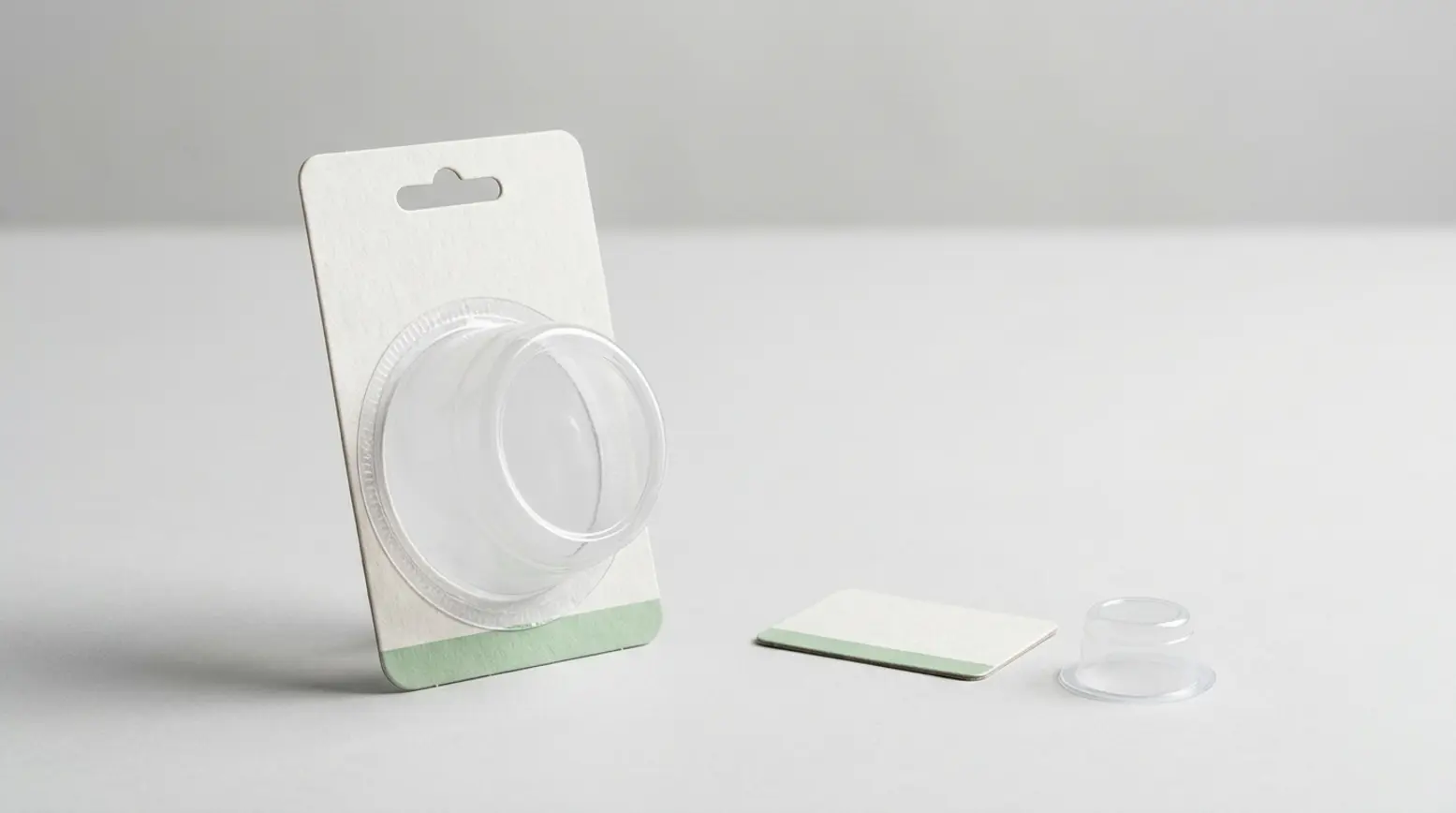
A practical review of PPWR explained for retail packaging starts with a simple mapping of your SKU. What materials are in the pack, and can the consumer separate them easily? This matters for PPWR compliance in blister packaging and PPWR compliance in carton packaging, as the structure often dictates how easy a pack is to sort, open, and process after use. A thermoformed blister on a printed card is a prime example. While it offers excellent product visibility and strong shelf presence, it also results in a two-material pack that demands careful evaluation.
Check component weight and pack size
Next, verify how much each part weighs. Examine the blister cup, card, insert, leaflet, hanger area, and any reinforcements. Then, ask whether the pack uses more material than its function truly requires. This is where packaging minimization becomes highly practical, transitioning the review from subjective opinions to measurable facts.
Check recycled material in plastic parts
If the pack includes plastic parts, clearly identify which ones use recycled material and which do not. This step must be precise, as a single pack can feature several components with completely different material profiles. By doing so, the team can separate broad sustainability claims from the actual realities of the pack design.
Check print space and information density
Artwork is often overlooked at the start, yet it quickly becomes crucial. If additional symbols, sorting details, or product information are required, the team must determine where that content will fit without cluttering the pack. Sometimes, a better layout is the answer. In other cases, multi-panel packaging can provide more usable space through its physical structure, though any added material must still have a clear justification.
PPWR explained for retail packaging: a practical example with a blister pack
Where this format is strong
A thermoformed blister on a printed card is incredibly common in retail because it effectively protects the product while displaying it clearly. It can also accommodate hanging displays, deter theft, and provide tamper evidence. Since these functions remain critical for many product categories, the format continues to serve a clear purpose in stores.
Where the PPWR questions appear
However, this pack also raises direct design questions under the PPWR regulation. The clear blister cup and printed card create a two-material structure, meaning the team must review separability, total weight, functionality, and artwork space. This is highly useful, as it transforms a broad piece of legislation into a concrete packaging exercise rather than an abstract discussion.
When all paper may be worth reviewing
All-paper packaging can be a highly viable option for certain retail concepts. We provide paper blister cups that can replace transparent PET blister cups in specific designs while maintaining similar pack properties. The trade-off is straightforward: paper eliminates full transparency, but strategic cut-outs can still showcase the product, and the printable area increases significantly. Paper is not always the definitive answer, just as plastic is not automatically the wrong one. The best route depends on the product, the shelf concept, the required level of protection, and the customer's material goals. For more background on these decisions, you can read about our sustainability approach in retail packaging within a focused material context.
Where cold seal fits in the material discussion
Cold seal is another prominent option in retail blister packaging. We invented the cold seal process more than 25 years ago. In our cold seal formats, we use highly recycled cardboard alongside a water-based, solvent-free adhesive. This provides packaging teams with a practical material route to review once their compliance team has outlined the pack's requirements. It serves as a technical option for discussion, rather than a legal claim of automatic compliance.
Choosing a packaging route after review
There is more than one technical answer
After the initial review, the next step is to compare realistic design paths. One SKU might remain a blister pack but with a vastly improved balance of materials and function. Another might transition toward a carton, a paper-based construction, or a different retail format entirely. Therefore, it helps to compare retail packaging solutions in a practical manner, based on what the pack must accomplish and the parameters defined by the compliance team.
We design and produce retail packaging ranging from blisters to paper-based formats. We are well-equipped to assist once a customer has established their requirements alongside their compliance team. This sequence is critical because packaging design must follow the agreed-upon legal needs. By following this order, the redesign process remains focused and productive.
Shelf impact and function still matter
Retail packaging must still perform effectively in the store. It might require theft prevention, tamper evidence, easy opening, recloseable features, free-standing stability, dispenser functionality, or extra communication panels. Some packs might also need child-resistant features, though these should be evaluated carefully and implemented only where strictly necessary. Incorporating more information onto a pack does not automatically necessitate a larger size; sometimes, the best solution is a smarter layout, a logical text hierarchy, or an entirely new structure.
FAQ about PPWR explained for retail packaging
Does every PPWR requirement start in August 2026? No. While the regulation generally applies from August 12, 2026, the requirements do not all take effect in the same way or at the exact same time. Certain technical details will also depend on subsequent delegated and implementing acts.
Does PPWR mean every blister pack must become paper? No. The regulation does not mandate that every blister pack transition to paper. The fundamental question is how the pack performs regarding recyclability, recycled plastic content (where relevant), minimization, labeling, and overall functionality.
What should a packaging team review first? Start with your current SKU. Evaluate the materials, separability, component weight, plastic parts containing recycled material, total pack size, and the print space required for mandatory information. This yields a highly practical initial assessment of the pack.
Does more pack information always mean a larger pack? No. A refined layout can often solve the problem. In other cases, a structural modification can yield more usable space, but any additional material must still be fully justified.
Can a single supplier help redesign after compliance requirements are defined? Yes. We can help translate your agreed-upon requirements into an optimized packaging design, complete with components and production planning. We do this as a dedicated packaging partner, not as a legal advisor.
Next step: review the pack you already sell
A practical review checklist
• Material mix: List every material in the pack and note exactly where they are joined, as the material mix directly impacts recyclability and structural integrity.
• Component weight: Weigh the blister, card, insert, and any added parts individually. This granular approach supports a genuine packaging minimization review.
• Separability: Determine whether the consumer can separate the parts without special tools, as this dictates the disposal and recycling routes.
• Recycled content in plastic parts: Confirm which plastic elements contain recycled material and document their sources clearly. This is essential for a proper review of recycled content in packaging.
• Pack size versus real function: Align each feature with a legitimate need, such as protection, hanging, or tamper evidence, to ensure that any added material is thoroughly justified.
• Artwork space: Map the required symbols and text against the current front, back, and interior print areas, since EU packaging labeling needs may demand additional room.
When to discuss redesign
The ideal time to discuss a redesign is after your compliance team has defined the requirements for the SKU and your business role has been firmly established. Once that is settled, the project transforms into a highly practical packaging review focusing on materials, weight, separability, print space, and function. If you would like to discuss a live product, you can contact us for a pack review, and we will gladly help you explore your packaging options without making any legal promises.
Request a free sample now!


