


Designing packaging for recycling is an early screening process that helps retail teams check if a pack fits a realistic recycling route. It works best when you review the full package, because material count, packaging material separation, adhesives, print, labels, foils, and small parts can all change the result. This article provides a simple, practical method for blister cards and other retail packs, allowing you to compare plastic and paper options without relying on weak claims. It is not an official legal assessment under PPWR design-for-recycling rules, and detailed EU criteria for 2030 still depend on delegated regulations. Real recyclability also relies on the collection, sorting, and recycling infrastructure in the target market.
• Start with the whole pack, as the base material alone does not determine its recycling suitability.
• Check what stays attached after use, as mixed components can enter the wrong waste stream.
• Review adhesives, coatings, print, labels, and security features early so that potential problems become apparent before sign-off.
• Compare paper and plastic by function, separation, visibility, and print area, because each route shifts the design landscape.
• Use this design-for-recycling checklist as a practical screen, then confirm local suitability with a market-specific review.
Packaging design for recycling starts with material count
The first step in designing packaging for recycling is simple: count the material families in the pack. This forms the basis of many recyclable packaging design guidelines, because a package with fewer material types is typically easier to understand and assess. Still, mono-material packaging is just a useful design concept; it does not guarantee a successful outcome on its own. In retail blister recycling design, a recycled PET cup paired with printed paperboard utilizes two material streams. That can still be a valid route if the pack performs well and the separation logic is realistic. When you compare that approach with all-paper packaging, the key issue is not the label on the concept sheet. The crucial factor is how the function and separation actually change.
Ask if the pack uses one material family or several
List the main body first, and then add every attached part. Include the cup, card, label, seal area, varnish, foil, hanging feature, and any metal or security components. This makes pack complexity visible very quickly, ensuring that engineers, brand teams, and procurement can compare ideas consistently. A simple count also helps you ask better questions about packaging sortability later in the process.
Failure mode: materials stay attached and enter the wrong stream
A common failure mode occurs when two materials remain joined after use. Consequently, one part may enter the wrong recycling stream, or the entire item might become harder to sort. In a blister card, the cup and the backing card are prime examples. If the consumer cannot separate them, or if the recycling route expects one part to be removed first, the pack may fail to follow its intended path.
Alternative: simplify the construction or improve separation
Reduce the number of materials wherever the pack's function permits. If you need more than one material, check whether hand separation is both realistic and useful. This way, packaging material separation becomes an integral part of the design process rather than a late-stage discussion. Good retail packaging must still protect, display, and open properly, but it should also make the after-use route much easier to follow.
Designing packaging for recycling means checking the main body and attached parts
After counting the materials, look closely at the full construction. Ask what the consumer can separate by hand and what stays attached. This matters because the recycling of small packaging components can affect the outcome far more than teams often expect. A single small part can disrupt the recycling route for the larger package. If you change one main component, the entire picture can shift. For example, paper blister cups can alter the material balance in paper blister packaging, but the full pack does not automatically become a mono-material solution. Seals, coatings, labels, and extra parts still require a thorough review.
What can the consumer separate by hand?
This is a practical test, so use real samples and actual users if possible. Can people remove the card from the cup without tools, or does the pack tear and leave mixed materials stuck together? Additionally, remember that easy opening is a separate user function entirely. A package can be easy to open during use yet still be difficult to separate afterward; therefore, both questions should be addressed during development.
Failure mode: a small part stays attached and disrupts recycling
A tiny label, foil patch, hanging tab, or security element might remain with the main pack and change how the item is sorted. The component may be small, but its impact can be significant because automated sorting systems read the complete item. Tiny loose parts can also be lost entirely during processing, making early review critical.
Alternative: redesign the connection or remove the part
Ask whether each extra component is truly necessary. If it is required, consider whether the connection can be redesigned so the pack becomes easier to separate or sort. Keep theft prevention, tamper evidence, and opening performance in the discussion, as the retail package still needs to function effectively on the shelf and in the consumer's hands.
Packaging design for recycling must review adhesives, coatings, and barriers
The recyclability of packaging adhesives is not a simple yes or no topic. The real question is whether the adhesive, coating, or barrier is compatible with the chosen base material and its likely end-of-life route. Thin layers still matter because they can drastically change how the pack behaves during recycling. We have extensive experience with cold-seal technology in retail blister formats. A cold-seal construction can utilize highly recycled cardboard alongside a water-based, solvent-free adhesive. While this is highly beneficial, the complete pack still requires a full assessment. By doing this, function remains closely linked to realistic recycling logic.
Failure mode: the adhesive or coating interferes with the intended process
An adhesive might hold materials together too firmly, or a coating might alter how the underlying substrate behaves during recycling. A barrier can also introduce complexity if it effectively protects the product but fails to align with the intended after-use route. These issues are easy to overlook due to their thin profile, yet they can severely impact the final recycling outcome.
Alternative: use the minimum functional amount
Apply only the amount the package truly needs, and nothing more. This may involve reduced coating coverage, fewer barrier areas, or a simpler seal design if the product's requirements allow it. The primary goal is to maintain product protection and pack performance while minimizing avoidable complications downstream.
Check systems against the chosen base material and route
Do not assume that a specific adhesive or coating will work safely in every scenario. Always check the system's compatibility with paperboard, PET, or any other substrate, and evaluate it against the likely recycling route after use. Consequently, working with recyclable packaging design guidelines should help you ask the right questions rather than making inflexible promises.
Designing packaging for recycling also includes print, labels, foils, and security elements
Retail packs require clear graphics because shelf impact certainly matters. At the same time, the recycling of packaging inks, labels, sleeves, foils, metal parts, and security elements can heavily affect the sorting and recycling processes. Therefore, decoration should be reviewed exactly like any other component. It serves a specific purpose, but it can also create significant problems if the design goes too far or if extra elements stay attached.
Failure mode: decoration or added elements change how well the pack can be sorted
Full-coverage print effects, metallic layers, or strongly attached labels can disrupt how well the item is detected and sorted by automated systems. A security tag might add an entirely different material that remains affixed to the pack. The problem arises when these added features make the package harder to sort or process within its intended waste stream.
Alternative: keep what is needed and design the rest for separation
Ask what function each feature actually serves. If it supports branding, legal text, tamper evidence, or theft prevention, keep it and evaluate its optimal form. However, if it adds little value, remove it. This approach typically results in a much cleaner pack and a simpler engineering brief.
Functional tradeoffs: tamper evidence and theft prevention still matter
Some features exist for very good reasons. A small, valuable, or easily removable product may absolutely require visible tamper evidence or stronger theft prevention. Good design means keeping these essential functions in view while continually checking the package's route after use. Both aspects are crucial because the pack must successfully sell, protect, and be disposed of in a practical manner.
Designing packaging for recycling should test color, additives, and component size
Color, additives, and size can significantly influence packaging sortability and material value after sorting. These variables are often market-specific, so they must be handled as highly practical questions. What works flawlessly in one country's infrastructure may fail completely in another system. This aspect of designing packaging for recycling is critically important, as teams frequently focus entirely on the main material and forget that smaller choices can still drastically affect the end result.
Failure mode: the pack is hard to sort or gives lower material value after sorting
A very small component might simply fall out of the intended sorting stream. Additionally, a strong color choice or a specific additive could lower the value of the sorted material in certain recycling systems. This does not necessarily mean such choices are always wrong, but it does mean they should be carefully evaluated early in the design phase.
Alternative: simplify choices where the brand and product allow it
If a simpler color or additive still keeps the product safe and the brand's identity clear, it is certainly worth testing. The same logic applies to component size. Avoid incorporating unnecessary tiny, loose parts wherever possible, as they routinely create handling and sorting issues.
Keep these as market-specific checks, not universal rules
This topic should always remain grounded and practical. How well a pack can be sorted depends entirely on the real-world system that processes it. Implementing a good screening method helps teams ask better questions long before formal testing or a local market review, ensuring the overall process becomes both more efficient and more honest.
Blister card example: recycled PET cup or paper blister cup
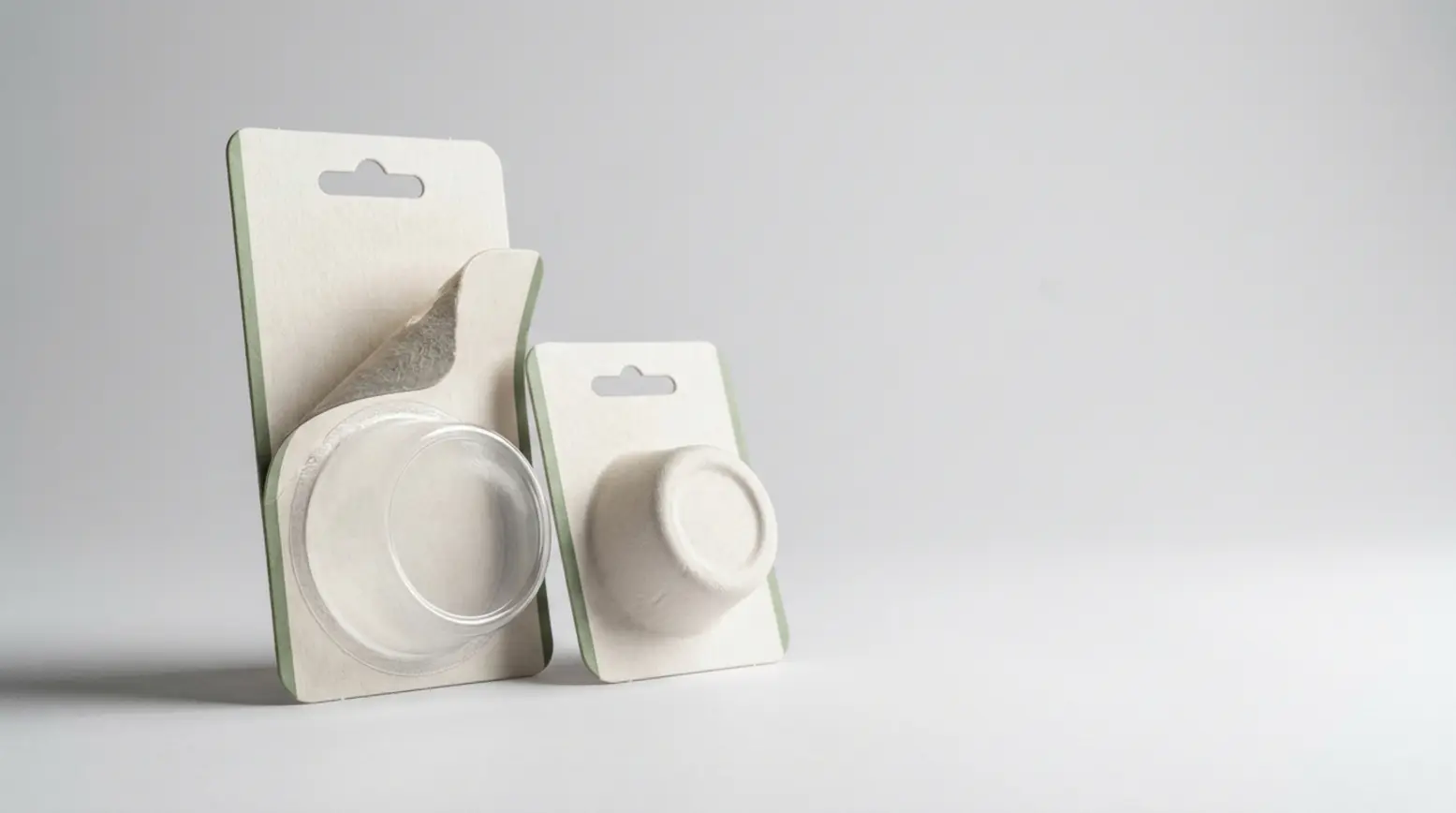
The blister card serves as a strong example because it clearly illustrates real-world tradeoffs. A recycled PET cup combined with printed paperboard provides excellent transparency, so the shopper can see the product easily. However, it also creates two distinct material streams, making separation a highly important design question. A paper blister cup completely changes that picture. The cup shifts from plastic to paper, which can simplify the material narrative and often provides more printable space, though it sacrifices full front transparency. Therefore, designing packaging for recycling should comprehensively compare function, separation mechanics, and user needs together. A plastic pack can be designed exceptionally well, just as a paper pack can be designed poorly. Material choices alone cannot replace thorough engineering. If you want to inspect actual pack connections and separation points, you can request a sample and review the intricate details firsthand.
What stays the same in pack function
Both routes still need to protect the product and present it attractively on the shelf. They may also require hanging features, tamper evidence, and a clear front view. The product category matters immensely here, because a cosmetic item, a toy, a DIY tool, or an electronic accessory may each demand a very different balance of visibility and physical protection.
What changes in separation, visibility, and print area
The PET route utilizes a clear cup, making full product visibility much easier to achieve. Conversely, the paper route can increase the printable area and alter the separation dynamics, but the visual result changes because significantly less of the product is visible from the front. Consequently, determining the better option depends entirely on the primary goal the package must accomplish first.
Why material alone does not replace engineering
You still need to review seals, coatings, labels, opening mechanisms, and all small parts. Additionally, you must verify how the pack is likely to be collected and sorted in the specific target market. This is precisely why a comprehensive blister recycling design review yields far better answers than a simple, blanket material claim.
A practical design-for-recycling checklist for retail teams
Use this design-for-recycling checklist at the concept stage and again just before a redesign sign-off. It works exceptionally well for engineers, brand teams, and procurement professionals because it transforms broad sustainability claims into actionable, working questions. While it does not replace a formal local review, it undoubtedly helps teams spot weak points early in the process.
• Material count: Does the pack utilize one material family or several, and do all those parts truly need to be there?
• Hand separation: Can the consumer separate the main components by hand, and is that separation clear and realistic?
• Adhesives and coatings: Do the adhesives, coatings, or barriers actively support the chosen recycling route, and are they applied only where absolutely necessary?
• Inks and decoration: Are the print, varnish, and visual effects essential, and have you thoroughly checked their likely impact on automated sorting or recycling?
• Labels, foils, and metal parts: Do any added elements remain firmly attached, and can any of them be removed, reduced, or redesigned?
• Color, additives, and size: Could these specific choices potentially reduce sortability or lower the recovered material's value in the target market?
• Function checks before sign-off: Does the redesigned pack still satisfy all visibility, tamper evidence, theft prevention, and opening requirements?
Questions teams should ask before choosing plastic or paper
Always start with pack function. Determine which product features must remain visible, and figure out which claims or instructions require dedicated print space. Assess which components can change without harming overall performance, and verify which local recycling route is actually realistic for the finished pack. Our position is quite simple: plastic is not automatically wrong, and paper is not automatically right. What truly matters is the comprehensive design and the established route after use. If you would like more context regarding the material choices behind recycled PET, recycled cardboard, water-based adhesives, and paper alternatives, you can review our sustainability approach.
Which function is essential on the shelf?
Some products inherently sell better when the item is clearly visible. Others simply need more room for instructions, regulatory warnings, or prominent brand graphics. These factors should heavily guide the concept right from the start, because shelf function influences every subsequent packaging choice.
Which parts need to stay visible?
Ask yourself whether full transparency is truly needed, or whether partial visibility is sufficient. In some packages, a paper cup featuring a completely different front design can still fully support the sales goal. For other items, the product must remain entirely visible to build consumer trust and ultimately reduce return rates.
Which components can be removed or changed?
Critically review every single secondary part. A label, foil, security feature, or insert may seem useful, but it might also be easily replaceable with direct print or a much simpler construction. This evaluation is often where the most practical improvements begin to appear.
Which local recycling route is realistic?
Do not assume you will find the exact same answer in every market. Always ask what the most likely collection, sorting, and recycling route is in the specific region where the pack will be sold. This discipline keeps early packaging decisions tightly tied to real-world systems instead of relying on broad, unsubstantiated claims.
Use a sample to review separation points in the real pack
Before making any final decisions, take the time to inspect a real sample closely with your team. Look specifically at where the materials meet, how the seal is applied, how the pack opens, and what stays attached after consumer use. This simple, hands-on step often reveals critical issues that flat drawings completely miss. Use the physical sample as an orientation tool; it helps you fully understand pack function and structural separation points in a real retail format. However, keep in mind that a sample alone does not guarantee local recyclability, nor does it replace detailed laboratory testing or a market-specific review.
FAQ
Is mono-material packaging always the best option? No. While it serves as a highly useful screening question, it is never an absolute guarantee. If a mono-material pack performs poorly, includes disruptive barrier coatings, or fails to fit the local recycling system, the environmental result may still be quite weak.
Can a paper blister pack be badly designed for recycling? Yes. A paper-based route can still include problematic coatings, unnecessary extra parts, or poor separation points. The same core principle applies in both directions, as a plastic pack can be designed exceptionally well while a paper pack can be designed poorly.
Does easy opening make a pack easier to recycle? Not always. Easy opening during use and clean separation after use are closely related, but they are absolutely not the same thing. Both user functions should be thoroughly checked during the development phase.
Is this checklist the same as PPWR compliance? No. This article provides a practical screen for early design decisions. It is not a final legal assessment, and future regulatory details will still depend entirely on delegated EU rules and the reality of local waste systems.
Request a free sample now!


