

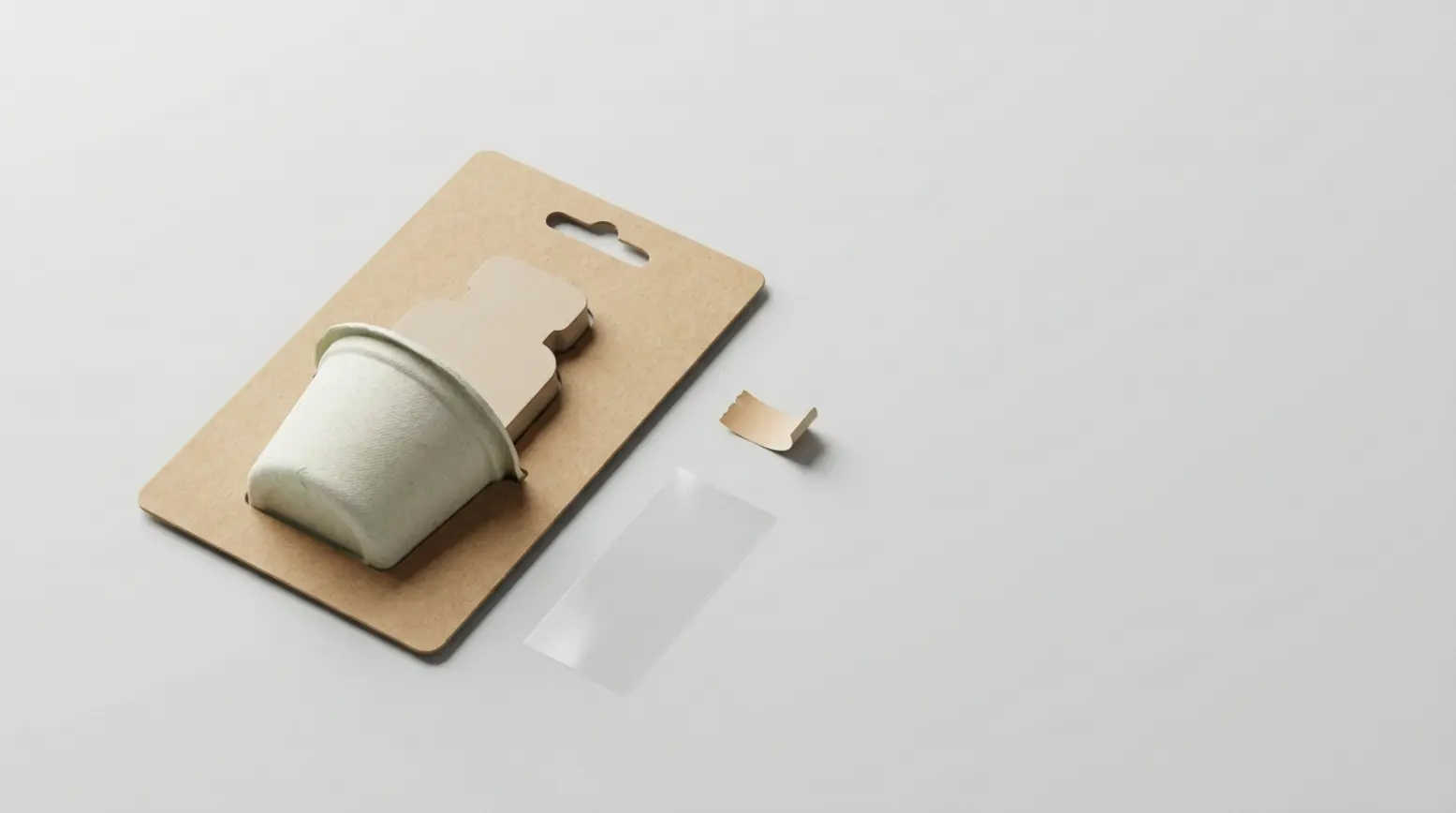

Paper blister packaging can sometimes be recycled, but only when the full pack fits the local system. This means the answer to whether paper blister packaging is recyclable depends on more than just the paper card. You need to examine the full construction, the specific paper packaging recycling stream in the target market, and how people will actually dispose of the pack in real life. A package may be suitable for recycling by design, but that does not always guarantee it will be recycled in practice.
• The full pack matters, because coatings, adhesives, inks, windows, labels, inserts, and closures can alter the end result.
• Local collection and sorting rules are critical, meaning the same package can have vastly different outcomes across various markets.
• A simple, recyclable packaging design often provides a clearer disposal route and lowers the risk of misleading claims.
• Consumer separation only helps when instructions are clear and the local system actively accepts the separated parts.
• Teams should always ask suppliers for detailed component data before making any recyclability claims.
Is paper blister packaging recyclable, or does the answer depend on the full pack?
It ultimately depends on the full pack. When teams ask if paper blister packaging is recyclable, they often start with the paper card because it is the most visible element. While this is a useful starting point, it is only one piece of the puzzle. Real paper blister recyclability should be evaluated at the pack level, as every additional material can impact sorting, repulping, and final recovery.
Why a pack-level review matters
A paper blister pack may feature paperboard, a formed cup, coatings, adhesives, inks, labels, inserts, or closures. Each part serves a specific function, and each may behave differently during coated paper recycling or the mill process that turns used paper back into fiber. Consequently, a format that looks simple from the outside still requires a detailed review before any team can confidently label it as recyclable paper packaging.
All-paper construction versus hybrid construction
An all-paper construction naturally uses fewer non-paper materials. In contrast, a hybrid construction combines paper with another material, such as a plastic cup or a film window. This distinction matters because the material mix directly affects the paper packaging's end of life. Replacing a PET cup with a paper-based cup can significantly improve the starting point for recycling by design. If you want to compare formats like this, you can review our all-paper packaging options to see exactly how the construction changes.
A simple way to approach this topic is to separate design intent from the actual disposal outcome. A package might be designed to fit a paper recycling route, but it still requires the right collection, sorting, and recycling conditions to succeed. Therefore, a full pack review should always precede any broad environmental claims.
Is paper blister packaging recyclable when coatings, adhesives, and inks are added?
Sometimes yes, but these specific details matter a great deal. Small material choices can drastically change how the pack behaves regarding adhesive paper recycling, paper coating recyclability, and the wider paper packaging recycling stream. This is why the question of whether paper blister packaging is recyclable cannot be accurately answered by looking only at the base board.
Coating type and paper recycling
Coatings are often used for barrier needs, print quality, sealing, or protection. The exact type of coating matters because different coatings behave differently during repulping. If a supplier mentions that a pack has a coating, ask what type it is, how much is applied, and why it is necessary. This provides a much better answer than simply asking whether the paper itself is recyclable. It is also why coated paper recycling should always be discussed using pack-specific data.
Adhesive type and coverage review
Adhesives are non-fiber materials, so they require careful review as well. The type of adhesive matters, and the total coverage matters too, as a small sealed area will affect the recycling process very differently than a large sealed area. In our cold-seal packaging, we use highly recycled cardboard combined with a water-based, solvent-free adhesive. However, this is simply material information; it does not serve as a recycling guarantee or a formal recycling grade.
Ink coverage and fiber quality
Ink is quite common in retail packs, but the amount and location still matter significantly. Heavy ink coverage can hinder the recycling process and degrade the quality of the recovered fiber. The key concern is not just whether ink is present; a better question is how much ink is used, where it sits on the package, and how that aligns with the intended paper packaging recycling stream.
Is paper blister packaging recyclable if the pack has a window, label, insert, or closure?
Extra parts can completely change the answer because they alter both the material composition and the way the pack moves through sorting facilities. This is why the answer to whether paper blister packaging is recyclable should never be judged from the blister card alone. Teams need a component-by-component review to determine which parts support the paper route and which parts might hinder it.
Film windows and other non-paper parts
Adding a film window introduces a non-paper component, meaning the pack no longer behaves like a simple paper item. This can disrupt paper packaging sorting systems and impact what happens later in the recycling stages. While separation by the consumer can help in some cases, it only works when instructions are exceptionally clear and the local system actually accepts the separated materials. If these conditions are not met, the practical environmental benefit may be minimal.
Labels, inserts, closures, and small loose parts
Labels, inserts, closures, and tamper-evident features should be reviewed one by one. Size matters because very small, loose parts can be incredibly difficult for collection and sorting systems to capture correctly. Attachment methods matter too, as a part that remains on the pack will behave differently than one that breaks away. Procurement teams should always ask for the material, weight, size, and attachment method for every single component.
Why the blister card alone is not enough
The full package should be assessed part by part. This includes the card, the cup, and every added feature. If you are actively comparing options, our paper blister cups page demonstrates exactly why the cup material also belongs in the overall recyclability review. By taking this approach, teams can work from verifiable facts instead of assumptions.
Is paper blister packaging recyclable in every local paper packaging recycling stream?
No, because local infrastructure plays a massive role in the real-world result. A package can be designed with a paper route in mind and still completely miss that route in practice. This happens because local collection rules differ, sorting systems operate in distinct ways, and consumer disposal habits are rarely consistent. Therefore, whether paper blister packaging is recyclable depends just as much on market reality as it does on material choice.
Collection rules differ by market
What is accepted at curbside, at a drop-off center, or through store take-back programs can vary dramatically by region. One market may accept a certain paper-based format, while another might reject it entirely or require separation first. This means a package that looks suitable in theory can still fail in practice if the local route does not support it. Sustainability teams should thoroughly investigate the target market before approving any packaging claims or disposal wording.
Sorting systems do not treat every item the same way
Sorting systems rely on size, shape, stiffness, and how items physically move through the processing line. Small parts, loose pieces, and unusual formats often behave quite differently than standard paper items. Consumer behavior also plays a pivotal role, as a well-designed package still needs to enter the correct collection route. Consequently, a pack may seem highly recyclable in theory but still suffer from a poor real-world outcome.
Disposal instructions should match the local route
Disposal wording should be finalized late in the development process so it accurately reflects the route that actually exists. First, the team must understand the local collection and sorting path. After that, disposal instructions can be written to match real conditions. This strategy helps reduce overclaiming and makes the messaging far more useful for the consumer holding the package.
Is paper blister packaging recyclable, and what can brands control during design?
Brands cannot control every recycling system, but they can absolutely control their design choices. That matters immensely because simpler construction often creates a much clearer end-of-life path. Solid specification work supports better decisions, allowing teams to improve the starting point for recyclable paper packaging without making promises the market cannot support.
Keep the construction simple
Use only the materials the product truly needs. Reduce extra parts wherever possible, and design for clear material separation when that separation is both practical and useful. A simpler package is easier to assess, easier to explain, and often easier to align with a local recycling route. For broader context on material choices and reduction strategies, you can read more about our sustainability approach.
Ask better supplier questions
Ask for the precise material composition of each component, not just the main paper part. Request specifics on coating type, coating purpose, adhesive type, adhesive coverage, ink coverage, and the material weight of every individual piece. You should also ask if the pack includes a window, label, insert, or closure, and whether any part is meant to be removed before disposal. Gathering these details helps engineers, buyers, and brand teams work from hard evidence.
Build claims from facts
A broad statement such as fully recyclable can be risky if it is not supported by the target market's actual recycling route. It is much better to review the exact construction alongside the intended disposal path. This way, teams can make claims that are careful, useful, and easier to support during an internal review. Ultimately, this approach builds better trust because it directly connects your messaging to real packaging data.
Practical questions teams ask about paper blister recyclability
Is paper packaging recyclable if it has a coating?
Sometimes, yes. The answer depends heavily on the coating type, the amount used, and how the local recycling infrastructure handles that specific material. This is why paper coating recyclability should always be checked against specific construction data rather than relying on a generic yes or no answer.
Does separating parts always improve paper blister recyclability?
No, it does not. Separation only helps if consumers can do it correctly and if the local collection route actually accepts those separated parts. If the instructions are unclear, or if the municipal system does not take the specific components, separation may do nothing to improve the real-world outcome.
Is molded pulp the same question?
No, it is a related topic but involves a different construction and often a very different recycling route. If that is the format you need to review, we explain it separately in our article on whether molded pulp packaging is recyclable. Treating these materials separately keeps the paper blister topic clear and focused.
Supplier checklist for a real-world recyclability review
What to request from suppliers
• Component data: Ask for the material composition of each component, as the full pack matters far more than the front card alone.
• Coating details: Request the coating type, coverage, and purpose, because these factors directly affect coated paper recycling and repulping.
• Adhesive details: Ask for the adhesive type and coverage, since adhesive paper recycling depends heavily on both elements.
• Ink details: Require information on ink coverage and print location; heavy coverage can degrade recovered fiber quality.
• Weight by part: Ask for the material weight of each component so the team can accurately understand the true material mix.
• Added features: Ask whether the design includes any windows, labels, inserts, closures, or tamper-evident features, as each addition can impact sorting and recycling.
• Separation plan: Confirm whether any parts are meant to be separated before disposal, and critically assess whether this step is realistic for everyday users.
• Market route: Identify the target market and intended collection route, because local facility acceptance ultimately decides the real-world outcome.
Simple pack review example
A practical review can easily be conducted using a simple table or worksheet with the following fields: component, material, function, weight, separable or not, and an intended disposal note. This structure helps teams compare their design intent directly against local recycling realities. It also ensures that procurement and sustainability teams are speaking the exact same language during the final approval process.
Next steps
If you are currently reviewing a live package, the best next step is a comprehensive review of its exact construction. We can examine the materials, components, and specific market context alongside you, ensuring the final answer is both practical and highly accurate. When you are ready, contact us to review your pack construction and discuss the fine details that truly affect real-world recycling outcomes.
Request a free sample now!


