

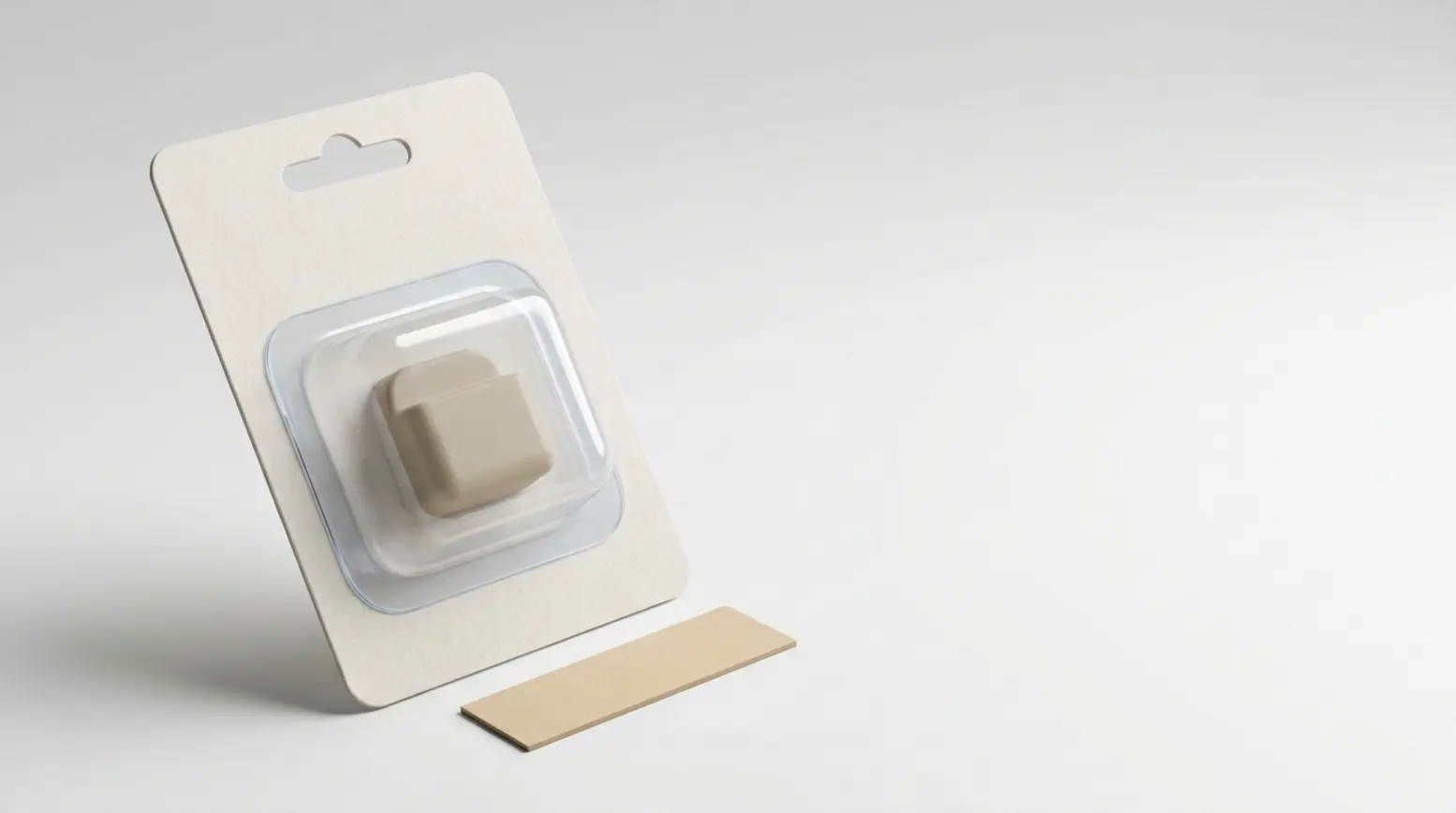

The ideal paperboard for a retail blister card depends heavily on how the packaging must perform in practical use. Start by analyzing pack behavior first, considering factors like product weight, card size, hanging method, sealing route, print requirements, and in-store handling. Then, select a board that meets those specific needs, as a board's grade name alone will not guarantee how the finished pack will perform.
• Define pack behavior before choosing a blister card board.
• Evaluate stiffness, thickness, surface finish, sealing capabilities, and hanging stress together.
• Review print requirements and shelf appearance across all visible faces.
• Test the finished pack with the actual product inside, as flat sheets cannot demonstrate real-world stress.
• Compare recycled and virgin fibers based on specific project needs rather than assumptions.
Start evaluating paperboard grades for blister cards by looking at pack behavior, not board names
When teams ask which paperboard grades work best for retail blister cards, the short answer is simple: choose the board only after defining exactly what the pack must achieve. While a paperboard grade name can be a helpful reference, it represents only one part of the decision-making process. Product weight, card size, shelf display requirements, sealing methods, and shipping conditions all directly influence the outcome, meaning the most reliable choice stems from evaluating the comprehensive pack design.
When analyzing paperboard grades for blister cards, this functional approach helps engineers, design teams, and procurement departments work from a unified set of facts. It also significantly reduces risk, since excelling in one specific property does not guarantee overall performance. In paper-based concepts such as all-paper packaging, the board must consistently match the practical demands of the pack, including how it hangs, prints, and seals.
How stiffness and thickness shape paperboard grades for blister cards
Why stiffness matters on the shelf
Board stiffness is vital in packaging because the card must remain flat and stable while the product hangs in the store. If the card bends too easily, the pack might lean, twist, or look prematurely worn before a customer even purchases it. Heavier products naturally increase this risk, and the card's shape alters the outcome as well. For instance, a narrow card and a wide card will behave quite differently under load, even when carrying the exact same product weight.
This is exactly why paperboard grades for blister cards should always be reviewed with the full geometric layout in mind. The hanging point, the placement of the blister, and the open area of the card all dictate how physical forces move through the packaging. In practice, evaluating board stiffness is never an isolated check; it must be directly linked to the actual design.
Why thickness helps, and where it can create trade-offs
The caliper, or thickness, of the paperboard is important in packaging because it adds rigidity and improves the hand feel of the product. A thicker blister card generally feels firmer on the retail hook and more robust to the consumer. However, thickness alone does not guarantee superior performance. Even a remarkably thick card can fail if the layout, hanging point, or sealing route is poorly designed.
Thickness also directly impacts material usage, die-cutting precision, folding characteristics, and how the board fits with the formed plastic or paper component. This is particularly crucial when selecting cardboard for blister packaging, as the materials must convert flawlessly during production while maintaining a premium appearance on the shelf. Ultimately, thickness should support the overall design goals, not serve as a substitute for them.
Why size, load, and hanging geometry must be checked together
A small card holding a lightweight product generates a completely different physical load than a large card securing a heavy item. Additionally, the distance from the hanging hole to the center of the product load fundamentally shifts the stress distribution, as does the exact location of the blister itself. Because of these variables, the card must be reviewed as an integrated structure. This means closely evaluating the overall pack size, the product's position, and exactly how the weight is carried during both shelf display and transit.
Surface, coating, and print needs when choosing paperboard grades for blister cards
The blister card is also a communication surface
A blister card serves a far greater purpose than merely holding the product securely. It acts as a primary communication surface, displaying essential product details, brand colors, usage instructions, and visual cues that help shoppers make informed decisions. Consequently, blister card printing requirements should be reviewed early in the process, ensuring that high print quality and physical pack performance work harmoniously. While the visible front naturally takes precedence, the back is equally important whenever it can be seen or utilized for printed messaging.
When exploring packaging paperboard grades, the surface choice profoundly affects how the final design is presented to the consumer. A highly smooth face might perfectly support a sleek, modern appearance, whereas a more textured surface could complement a natural or rustic brand identity. The right choice ultimately depends on the comprehensive goals for the pack; therefore, discussions about print capabilities must be integrated into the board selection process right from the start.
What coating changes
Applying a coating to a blister card can produce a vastly different print and finish compared to an uncoated surface, though the exact outcome relies heavily on the overall manufacturing process. Coatings can significantly alter how inks, varnishes, or subsequent sealing layers behave. As a result, any coating decisions should be carefully reviewed with both production efficiency and final appearance in mind. Furthermore, if both sides of the card will be visible to the consumer, both surfaces require equal attention during specification.
This is also where selecting packaging paperboard grades becomes highly specific. While specialized surface treatments often enhance the visual result, they can simultaneously impact paperboard sealing capabilities and end-of-life recycling choices. Because of this interconnectedness, coatings must be treated as a functional element of the entire pack construction, rather than just an isolated stylistic decision.
Include coatings in the full material review
Any extra layers or added materials should be thoroughly evaluated during the material review phase, as they inherently alter the structural dynamics of the finished pack. This does not imply that additions are problematic; rather, it ensures the narrative surrounding the packaging matches its true physical construction. A straightforward material story resonates much more strongly when development teams clearly understand what components have been added, why they were necessary, and how they actively support the pack's end use.
Fiber choice and sealing when selecting paperboard grades for blister cards
Recycled and virgin fiber are both project choices
Both recycled board and virgin fiber board can be excellent packaging choices, depending entirely on the project's specific parameters. Utilizing recycled content often supports strong environmental messaging and corporate procurement goals, whereas virgin fiber is typically chosen for distinct technical performance or visual brightness requirements. The crucial takeaway is that neither option should be selected based solely on assumption. The finalized board must still flawlessly meet all required stiffness, converting, and aesthetic presentation needs.
For a broader perspective on material selection, you can read more about our sustainability approach and learn how to keep your final board choice firmly linked to actual pack performance. By adopting this mindset, sustainability initiatives remain grounded in verifiable material facts rather than vague, generalized claims.
Sealing route affects board selection
The intended paperboard sealing method plays a pivotal role in board selection, as the chosen material must be highly compatible with the final joining process. For instance, a cold seal construction must integrate smoothly with the fully coated card structure and respond reliably to pressure-based processes. Conversely, a heat-sealed construction places entirely different demands on both the surface integrity and the joint design. Therefore, the required sealing route must be definitively known before any board is officially specified.
We proudly developed the cold seal technology, which utilizes highly recycled cardboard paired with a water-based, solvent-free adhesive. If you would like to understand this process in greater detail, you can explore cold sealing on a separate page. This integration is critical because the selected paperboard grades for blister cards must fully support the way the pack will actually be closed, handled, and ultimately displayed in stores.
Weak points to test across different paperboard grades for blister cards
Hanging holes carry real stress
The area around a punched hanging hole in packaging endures substantial physical stress, as the entire product load is concentrated and transferred through a very small section of the card. The distance from the hole to the top edge is incredibly important, as is the exact distance from the hole to the blister itself. Even a minor design modification can drastically improve how gravitational force moves through the card, significantly reducing the likelihood of tearing or unwanted bending.
These dynamics become much easier to comprehend when you evaluate physical single blister cards as true structural components. A simple diagram is often helpful during this phase. By drawing the hook point at the top, marking the product weight below it, and mapping the resulting stress path between the two points, development teams can quickly visualize exactly where potential weak points may emerge.
Edges and corners often fail before flat areas
Cut edges and sharp corners typically show signs of wear long before the flat center of the card. They are prone to scuffing, denting, or losing their visual quality during initial packing, shipping, shelf filling, and routine customer handling. Often, the large flat center area remains pristine while the outer perimeter of the card already looks aged and worn. Recognizing this is critical, as consumers frequently judge the extent of shelf damage by the very first visible marks along the card's edge.
Distribution and repeated hook movement are real test conditions
Retail packs move through dozens of touchpoints before they finally reach the point of sale. They are packed, shipped, unpacked, loaded onto display hooks, reorganized by staff, and repeatedly handled by curious shoppers. Because of this intense journey, the finished pack should always be tested with the actual product secured inside. Simply examining a flat sheet of paperboard on a desk cannot accurately replicate real-world stress, everyday wear and tear, or true hanging behavior.
A useful rule of thumb is quite simple: always test the finished pack, not just the flat sheet. By following this standard, engineers can observe exactly where the load builds up, graphic designers can identify where wear becomes visually apparent, and procurement specialists can accurately judge whether specific material choices enhance or limit the package's overall performance.
Questions to ask before specifying paperboard grades for blister cards
Pack function questions
Begin by analyzing the practical job of the packaging. Consider essential factors: How heavy is the product? Will the final pack hang on a hook, stand independently on a shelf, or need to do both? How large is the overall card? Will the back of the card be visible to consumers? What precise sealing process will be utilized? Answering these fundamental questions clearly defines the real-world requirements before any specific board grade is even discussed.
Brand and material questions
Next, carefully review your brand's appearance and material priorities. Determine what specific print effects are needed and whether the card requires a distinctive surface texture. Ask whether utilizing recycled content is an important buying incentive for your target audience, and decide if the packaging must align with a broader paper-based corporate concept. Addressing these topics actively aligns the design, engineering, and procurement teams, ensuring the final specification successfully supports both premium appearance and robust function. If you want to physically assess handling and presentation characteristics, you can request a sample and review the completed pack in real-world conditions.
Testing questions
Has the finished pack actually been tested with the real product inside? Have all aspects of hanging, long-distance transport, and repetitive shelf handling been thoroughly reviewed? Finally, has the packaging been carefully inspected after repeated hook movement and normal retail contact? Conducting these rigorous checks enables teams to build a much stronger technical specification while dramatically reducing unexpected failures later in the supply chain.
Quick comparison table for blister card board choices
Stiffness: Helps the card resist bending while on the shelf. Review the product weight, card shape, and hanging method together to ensure stability.
Thickness: Adds rigidity and greatly improves the overall hand feel. Carefully review your material usage, converting behavior, and physical pack fit.
Surface and coating: Directly affect the visual appearance and blister card printing quality. Evaluate all visible sides, desired finish needs, and the resulting end-of-life environmental impact.
Fiber choice: Supports both technical performance and the brand's sustainable material story. Review recycled content options, appearance metrics, stiffness levels, and production requirements.
Edge strength: Extremely important, as cut edges and sharp corners routinely show wear first. Closely review the material's resistance to scuffing, denting, and harsh retail handling.
Sealing route: Crucial because the chosen board must seamlessly fit the joining process. Review the compatibility of coated surfaces with pressure or heat sealing methods, and mandate final pack testing.
FAQ about retail blister card board selection
What is the first step when choosing cardboard for blister packaging?
The initial step is defining the required pack behavior. Analyze the product weight, card size, hanging method, sealing route, print needs, and expected retail handling. Once these parameters are clear, choose the board that comprehensively supports those unique needs.
Does a thicker blister card board always perform better?
No. While increased thickness certainly aids rigidity, overall performance heavily depends on the structural layout, hanging geometry, edge strength, and sealing method. Measuring the paperboard caliper is only one facet of a successful packaging decision.
How important is print surface for a coated blister card?
It is exceptionally important, as the blister card functions as a highly visible communication surface. The surface texture and applied coatings dictate the visual appearance, print response, and occasionally even the sealing behavior, meaning they must all be reviewed together.
Is recycled board packaging always the best choice?
Not necessarily. While incorporating recycled content can be a powerful environmental choice for a project, the finalized board must still satisfy all technical and visual demands. The optimal material option always depends on the full requirements of the completed pack.
Why should teams test the finished pack instead of a flat sheet?
A finished, fully assembled pack demonstrates realistic stress, accurate wear patterns, and true hanging performance. Flat sheets of board simply cannot reveal how the live product load, hanging hole positioning, sealing route, and constant hook movement will interact to affect the package in a lively retail environment.
Ultimately, the most reliable method for selecting paperboard for retail blister cards is to specify the necessary pack behavior first. Once the pack's primary job is clearly defined, identifying the right board becomes much easier to confidently compare and rigorously test. This proactive approach keeps the entire development process practical, helping teams perfectly balance shelf impact, sealing integrity, structural strength, premium appearance, and long-term sustainability using authentic material facts.
Request a free sample now!


