


Yes, blister packaging can still be viable under the PPWR. It is not banned as a format. The real question is whether the pack is designed well, uses materials sensibly, and offers a realistic end-of-life route. Because the blister packaging regulation is being phased in over time, teams should review their packs now. This allows them to improve plastic designs, test a paper blister alternative, or utilize both across their product range.
• Blister packaging is not banned; the PPWR evaluates packaging performance and recyclability rather than simply targeting the format's name.
• A PPWR-compliant blister pack should be reviewed part by part, including the cup, card, coatings, added components, separation mechanisms, and cavity size.
• Plastic can still be highly effective when visibility, restraint, or product inspection is important, but its structure should be simplified wherever possible.
• A paper blister alternative can be a strong option for products that do not require full transparency and could benefit from an increased print area.
• Many brands will achieve the best results with a mixed approach, as different SKUs often require distinct packaging strategies.
Addressing the PPWR and blister packaging starts with one simple question: is the pack fit for the future?
Many teams first ask if blister packaging is banned. The short answer is no. In practice, the PPWR and blister packaging regulations focus on how the full pack performs, how much material it uses, and how effectively it navigates the appropriate waste stream after use. Consequently, the format name alone does not determine compliance.
Timing also plays a crucial role. Certain measures need immediate attention because redesigning takes time. By 2028, many businesses will already expect clearer data, simpler structures, and fewer avoidable packaging risks. As recyclability becomes even more critical by 2030, conducting an early review is the safest path. For this reason, teams should not wait until the deadline approaches to take action.
Is blister packaging banned?
No, blister packaging is not banned. A blister format can still be viable if the complete structure aligns with future requirements. Material choices, proper sizing, ease of separation after use, and realistic recycling routes are far more important than the word "blister" itself.
What the blister packaging regulation means in practice
The practical message is simple: review your current packs now. Packaging updates typically require design work, testing, sourcing, and retail approval. Starting early allows brand, engineering, and procurement teams to compare options with less risk, giving them ample time to make sound decisions.
The PPWR and blister packaging should be evaluated part by part
A blister pack is a miniature system comprised of several components that impact both performance and recyclability. When teams assess the pack step by step, they can easily identify where changes will be most beneficial. This detailed approach makes sustainable blister packaging decisions much more realistic, as every part serves a specific purpose and presents a potential trade-off.
Start with the cup
First, examine the cup material and determine whether it is appropriate for the product and its role on the shelf. When teams review plastic blister cups closely, they can assess if the cavity uses more plastic than necessary and explore whether a recycled PET blister might suit the application. While this does not guarantee compliance on its own, it forms a vital part of a comprehensive design review.
Clear visibility remains essential for many retail products, as shoppers frequently prefer to inspect items before purchasing. Therefore, plastic can still make perfect sense when a product requires structural support, multi-angle visibility, or a firm hold inside the packaging.
Then assess the card
Next, review the blister card. Check the board weight to see if the design uses more material than strictly necessary. Additionally, evaluate any coatings, inks, varnishes, finishes, and adhesives, as these elements can significantly impact blister card recyclability and the overall end-of-life result. Because the card typically carries legal text, product details, instructions, and marketing messages, every added layer must serve a clear, justifiable purpose.
Check how the cup and card separate after use
Mixed-material packs require a realistic end-of-life route. Consumers need to easily understand what to do with the packaging after opening it. If the cup and card do not separate cleanly, the technical design intent may clash with actual user behavior. For this reason, material separation should always be reviewed alongside easy opening features; improving user handling naturally supports better recycling outcomes.
Review labels, sleeves, and added parts
Small additions can have a substantial impact. Labels, sleeves, inserts, and decorative elements can alter sorting performance, unnecessarily increase material usage, and reduce the space available for future labeling requirements. Consequently, every extra component must truly earn its place within the packaging structure.
Look at cavity size and overall material efficiency
Next, compare the cavity size to the product's actual dimensions. If the cavity is significantly larger than the product, the packaging may be wasting material without adding functional value. Right-sizing the cavity is frequently one of the easiest ways to improve a recyclable blister packaging design while simultaneously reducing avoidable waste.
The PPWR and blister packaging can still succeed with an optimized plastic route
Plastic still holds a valid place in many retail applications. The more pressing question is how to improve the design so that it utilizes the material efficiently and simplifies separation after use. In many cases, the future of plastic blister packaging relies on structural simplification, right-sizing, and better material choices, rather than a complete elimination of plastic.
When a plastic blister still makes sense
A plastic blister can still be the optimal choice when a product requires multi-angle visibility, when on-shelf inspection is crucial, or when an item's shape demands stronger restraint and support. These requirements remain entirely valid in the retail space, meaning the design review should always stay balanced and product-led.
How to improve the plastic route
Start with practical modifications. Reduce unnecessary materials, contour the cavity more closely to the product, eliminate added parts that offer little value, and simplify the overall structure wherever possible. Next, assess whether incorporating suitable recycled content might help, and ensure that post-use separation is as clear as possible. These steps support a stronger review of the PPWR and blister packaging, avoiding the assumption that a single material choice can solve every challenge.
Where cold seal blister can support this route
We bring over 25 years of experience to discussions surrounding cold seal blisters and the PPWR, having invented this specific blister format. Our cold seal packaging uses pressure to seal cardboard with a water-based, solvent-free adhesive. It can also incorporate highly recycled cardboard, requiring significantly less energy than traditional heat sealing. As a result, it provides teams with a practical way to review pack construction in detail, maintaining a strong focus on material usage, functionality, and end-of-life handling.
The PPWR and blister packaging also open the door to a paper blister alternative
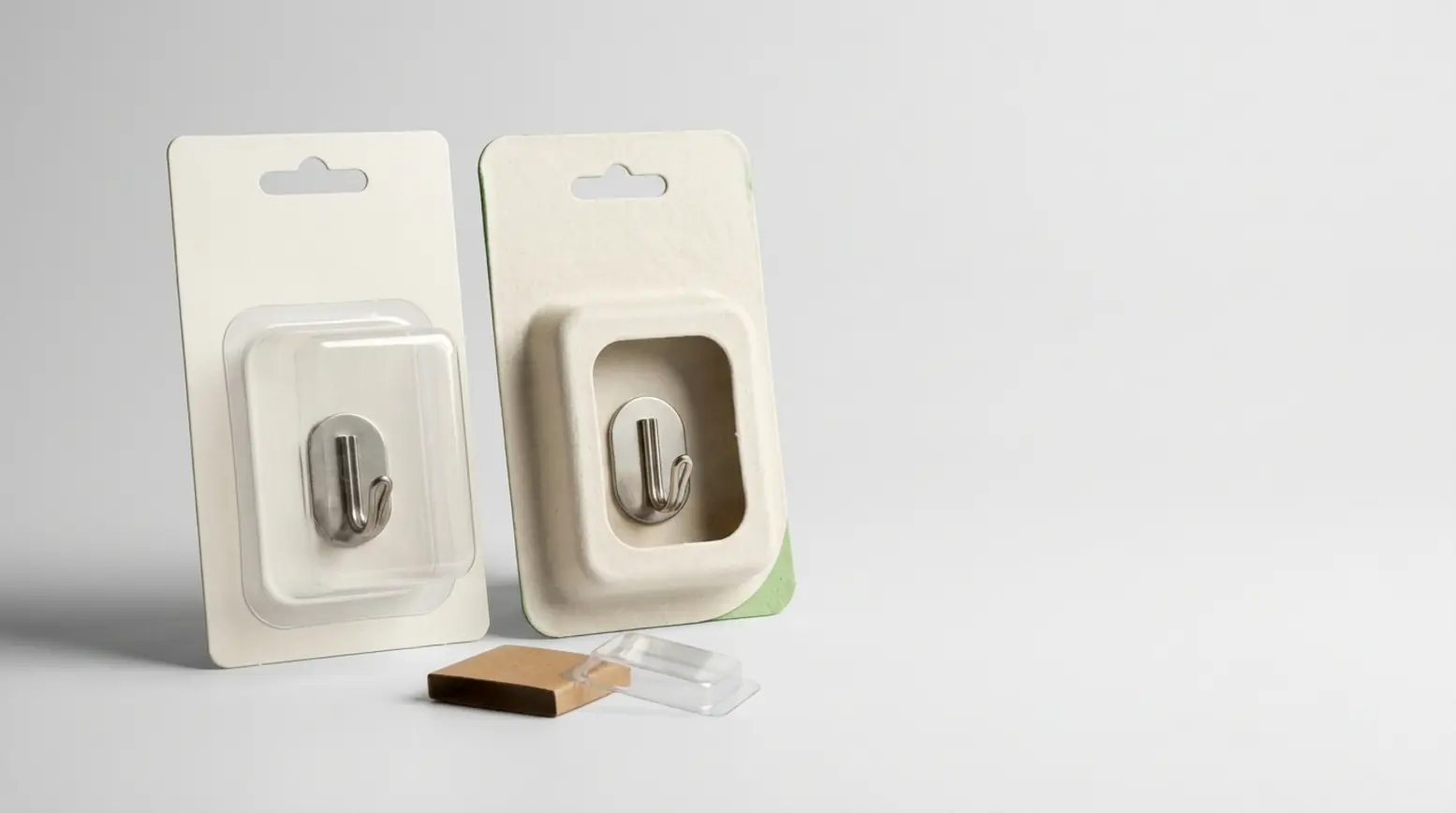
A paper route can also serve as a highly effective solution. For certain products, transitioning to paper can preserve essential retail functionality while completely replacing the plastic cup. If you would like a closer look at this format, our comprehensive guide to paper blister packaging explains exactly how it works and where it fits best.
When an all-paper solution is a good fit
An all-paper design works exceptionally well when full transparency is not essential, when a die-cut window provides sufficient product visibility, or when a brand requires additional print space for instructions and shelf communication. In such scenarios, a paper blister alternative effectively supports both visual presentation and a sustainable material shift.
What changes when the blister cup becomes paper
The most significant change is visibility. While you typically lose the crystal-clear view provided by plastic, you gain a considerably larger printable area and a distinct aesthetic on the shelf. For many products, the packaging's retail impact remains strong, though it will naturally vary from item to item. Therefore, paper formats should always be tested against the physical product and its specific retail requirements.
Cases that require further technical evaluation
Certain products necessitate a deeper review before transitioning to paper. This typically includes heavy or sharp items, products requiring firm restraint, goods that need moisture protection or a specialized barrier, and items that benefit from multi-angle visibility. These factors do not automatically rule out paper; rather, they emphasize that the packaging structure must be carefully aligned with the product's needs before a final decision is reached.
The PPWR and blister packaging may lead to a split portfolio, which is often the smartest route
Many businesses do not need a single answer for every SKU. In fact, a mixed portfolio is often the most realistic strategy, as different products have varying functional demands, price points, and shelf roles. As a result, some items may remain in optimized plastic packaging, while others successfully transition to paper.
Why a mixed portfolio can reduce redesign risks
This approach allows teams to retain plastic for items where visibility or structural support is paramount, while shifting suitable products to paper where it makes functional sense. By doing so, a business can improve its product range step by step, avoiding the pitfall of forcing a single material strategy onto every item.
How teams can compare routes across the product range
Brand teams can review shelf impact, visibility, and the available print area. Meanwhile, packaging engineers can assess fit, support, material combinations, and end-of-life separation. Procurement and retail teams can then compare costs, sourcing logistics, timing, and future regulatory risks. Operating this way transforms the decision into a collaborative review rather than a rushed material switch.
• Improved plastic blister: The main benefits are clear visibility and superior structural support. The primary limitation is that mixed materials require careful consideration for end-of-life disposal. It is best suited for products that demand a clear view or strong restraint. Key design checks include cup material, cavity size, recycled content, and ease of separation.
• All-paper blister: The main benefits include a reduction in plastic and an expanded print area. The primary limitations are reduced transparency and potential challenges with heavier or sharper items. It is the best fit for products that do not require a fully transparent display. Key design checks involve product support, board structure, visibility requirements, and protective capabilities.
• Split portfolio: The main benefits are a tailored fit across diverse SKUs and reduced pressure during the redesign phase. The main limitation is the need for more extensive internal comparisons. It is an ideal fit for broad product ranges with varied packaging requirements. Key design checks involve aligning brand goals, engineering specs, purchasing objectives, and shelf roles.
Common questions regarding the PPWR and blister packaging
Is blister packaging still viable under the PPWR?
Yes, it remains highly viable provided the entire pack is assessed carefully. The critical factors are material usage, product fit, ease of separation after use, and a realistic recycling route.
What is the future of plastic blister packaging?
Plastic still holds a strong future for products that require visibility, visual inspection, or robust support. The primary focus moving forward will be better design, as simplified structures and efficient material utilization will become increasingly important over time.
Can a recyclable blister packaging design still use plastic?
Yes, it certainly can. Plastic is not inherently excluded by the regulations. Ultimately, a successful outcome depends on the entire pack, including the cup, the backing card, coatings, added components, and how easily these parts separate after use.
What affects blister card recycling?
Board weight, coatings, print inks, varnishes, finishes, adhesives, and labels can all significantly impact recyclability. Because of this, teams should evaluate the card just as rigorously as they do the plastic cup.
When is a paper blister alternative worth testing?
A paper alternative is well worth testing when a product does not rely on full transparency, and when paper can still hold, protect, and present the item effectively. Physical samples generally make this transition easier to evaluate, allowing teams to directly compare visibility, structural support, and overall shelf appeal.
Next steps for a packaging review
The clearest next step is to compare real-world samples. Samples enable brand teams to accurately judge visibility and presentation, while engineers can thoroughly inspect the product's fit and material separation. Furthermore, physical examples help procurement and retail teams align before major redesign work begins, ensuring that all decisions are rooted in practical comparisons rather than assumptions.
If you are ready to move from theory to practice, you can request a sample to compare our plastic and paper options side by side. We design the packaging, produce the components in-house, and manage both primary and secondary packaging needs. By partnering with a single, comprehensive supplier, teams can evaluate their options confidently and make well-informed, low-stress decisions.
Request a free sample now!


