

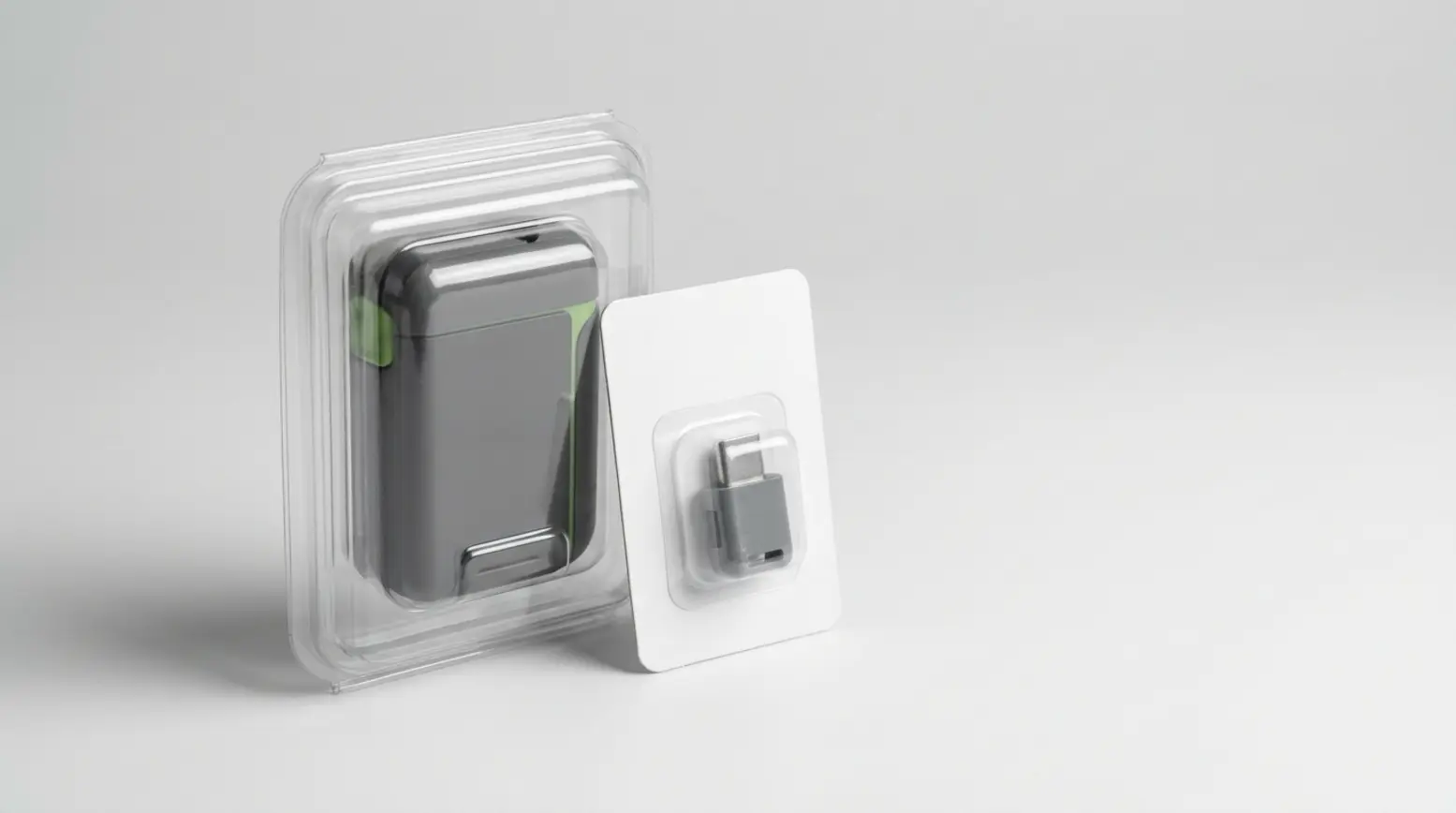

If you are reviewing clamshell packs under PPWR regulations, approach the redesign in this order: start with function, right-size the shell, review the material and thickness, check the construction, and only then compare carded blister or paper options. This approach works because PPWR focuses on reducing unnecessary weight and volume while ensuring the pack remains fit for its intended purpose. In many cases, clamshells still make sense for visibility, protection, and store security. Therefore, the primary question is usually how to improve the current design before completely replacing it.
• Start with the product and its retail purpose, as this clearly outlines what the pack must continue to achieve.
• Reduce empty space, shell depth, and wide edges first, as these elements often add excess material very quickly.
• Review thickness and construction only after right-sizing, ensuring you do not solve the wrong problem.
• Evaluate any clamshell alternatives that retail buyers are considering using the same checklist: function, material quantity, recyclability, opening experience, and security.
• Test physical samples before finalizing changes; a concept that looks great on paper can still fail during handling, display, or opening.
Why evaluating PPWR and clamshell packaging starts with function
Clamshell packaging is still used in retail because it solves clear problems. It can display the product from multiple angles, protect it during transport and on the shelf, and support store security. Some formats also function without a separate blister card, meaning the shell carries much of the packaging's functional burden itself. Because of this, navigating PPWR and clamshell packaging should begin with the question of what the pack must do before any material is removed.
When teams ask us about clamshell packaging solutions, we usually start with the product, the shelf setting, and the primary risks associated with the item. This keeps a clamshell redesign practical. Consequently, the review remains focused on actionable pack design choices rather than treating clamshell packaging regulations as a simple yes-or-no issue.
What clamshells do well in retail
Clamshells offer excellent visibility, which is highly important for electronics accessories, cosmetics, hardware parts, and small tools. Shoppers typically want to see the shape, color, and size of an item before they buy. This format is also ideal for holding awkwardly shaped products that sit poorly on a flat card. Furthermore, a theft-resistant clamshell can help deter quick in-store access for high-risk items, proving that the format still serves a clear retail purpose.
What PPWR asks you to review
PPWR requires companies to reduce unnecessary packaging weight and volume while maintaining overall functionality. Therefore, the goal is not to create the smallest possible pack at any cost, but rather a pack that perfectly fits the product and fulfills its retail task. A recyclable, right-sized clamshell may ultimately be a better solution than a rushed format change that leads to increased product damage, reduced visibility, or compromised shelf security.
Where PPWR and clamshell packaging often use more material than needed
A clamshell design deserves an early review because a large, transparent shell can accumulate excess material very quickly. Oversized cavities, excessive depth, wide sealing edges, and empty display space frequently increase both the weight and volume of the pack without delivering proportional value. In plastic clamshell packaging, additional labels, inserts, and security features can also build up over time, resulting in a finished pack that is heavier and more complex than necessary.
This is exactly where sustainable clamshell packaging initiatives typically begin. The team does not need to abandon the entire format right away; instead, they can review the shell's shape, outer footprint, cavity size, and any added components. As a result, material reduction can often start with simple, highly effective design adjustments before a full format switch is even considered.
Common signs of overdesign
One clear indicator of overdesign is too much air surrounding the product. If a battery accessory, a lip balm, or a small hardware item sits in a large cavity with entirely unused space around it, the pack requires a review. Another sign is a broad edge that adds little functionality, especially when a smaller border could adequately seal the pack or hold its shape. Excessive depth is also common when a shell design has simply been copied from a different product without verifying the actual spatial requirements.
Why mixed materials need attention
Some packs combine plastic, paper, labels, adhesives, and extra security features. While this does not automatically make the packaging flawed, it does mean the design requires careful review, as a higher number of components can make separation much harder after use. If your team needs a simple refresher on formatting before modifying the shell or card structure, our guide to clamshell containers can help explain standard format choices in clear, plain language.
A PPWR and clamshell packaging redesign hierarchy for buyers
The most effective review method involves making changes one level at a time. This structured approach helps engineering, procurement, and brand teams compare their options fairly. For PPWR clamshell decisions, a practical and logical order is: right-size the pack first, review material and thickness, check the construction, explore carded blister options, and finally assess all-paper alternatives.
Step 1: Right-size the pack
Start strictly with the product. Review the cavity, the shell profile, and the total footprint of the pack. Determine exactly which dimensions are necessary for visibility, hanging, protection, and theft resistance. Then, identify any dimensions that remain solely due to legacy design choices. This initial step frequently yields the fastest sustainability gains, as it immediately removes volume that serves no functional purpose.
Step 2: Review material and thickness
After optimizing the size, carefully review the plastic type and its thickness. Base this decision entirely on testing, as shell strength relies just as much on structural shape as it does on material gauge. A thinner shell might perform perfectly in one design but fail completely in another. This is also the ideal time to weigh production requirements, costs, and recycling considerations together, ensuring the pack uses only the amount of material necessary for the job.
Step 3: Review the construction
Construction directly impacts material usage, filling, closure, display, and the consumer's opening experience. A bi-fold shell and a two-part shell behave quite differently, meaning the better choice heavily depends on the specific item and the retail brief. When the discussion transitions into shell details, you can explore our clamshell blister components to support the move from an initial concept to a highly realistic pack structure.
Step 4: Check a carded blister
If the product does not require full enclosure on every side, a carded blister might significantly reduce plastic use while still maintaining front visibility. This format works particularly well for smaller, lighter items and provides ample room on the card for branding, instructions, and barcodes. However, the packaging must still align with the product's risk level, so the review process should thoroughly evaluate side visibility, hanging performance, and overall security before a final decision is made.
Step 5: Check all-paper options
For products that do not require full transparency or a rigid plastic shell, all-paper options are certainly worth testing. We provide paper-based packaging formats that can successfully replace a PET blister cup with a paper alternative in selected retail applications. This is highly suitable for items where reduced visibility is acceptable and where a paper structure still offers robust protection. Even then, the final decision should remain practical and product-specific, as paper is not always the universally superior answer.
How PPWR and clamshell packaging balance security and opening
One of the most challenging design choices is striking the right balance between store security and the consumer's opening experience. Stronger closures, complete enclosure, and tamper-evident details all support vital retail needs. Concurrently, buyers still expect an easy-opening clamshell that can be accessed safely at home. Because this is a fundamental packaging design issue, it must be integrated into the brief right from the start. It is not a problem caused by PPWR alone, nor is it solved simply by switching from plastic to paper.
Our work in theft-secure packaging functionality focuses heavily on this balance, understanding that a retail pack must perform just as well in the store as it does after purchase. Therefore, security and opening usability should always be tested together whenever teams evaluate format changes.
When theft resistance changes the design brief
Certain product categories face a much higher risk of loss than others. Small electronics accessories, batteries, razor blades, and compact hardware parts frequently demand stringent shelf control. In these instances, moving to a more open format can drastically alter the security outcome; thus, the design brief must explicitly state that theft resistance is a mandatory function. This clarity helps teams compare different options based on actual retail needs rather than solely on material reduction.
Why easy opening is a separate design goal
Ease of opening requires its own dedicated review because it dictates the shell's shape, the closure style, and the overall user experience. If this aspect is ignored until late in the development process, the final pack may successfully protect the item but ultimately create massive frustration for the buyer. Consequently, the opening experience should be reviewed right alongside security, not as an afterthought. By doing this, the packaging can successfully support retail control while ensuring a positive home use experience.
Comparing PPWR and clamshell packaging with retail alternatives
The optimal format always depends entirely on the product itself. A realistic review compares an optimized clamshell, a carded blister, and an all-paper option against the exact same set of requirements. The identical checklist should be applied to each iteration: visibility, protection, material quantity, recyclability considerations, theft resistance, and the opening experience. This remains the simplest and most effective way to compare clamshell alternatives that retail teams are actively discussing, without forcing a single, blanket answer across every product category.
• Optimized clamshell: High visibility. Strong protection for a wide variety of shapes. Material quantity can often be reduced significantly through better sizing. Recyclability depends on the material mix and ease of separation. Store security is generally strong. The opening experience relies on closure methods and smart design.
• Carded blister: Good front visibility. Reliable protection for many small items. Plastic usage is typically lower. Recyclability requires review since paper and plastic are combined. Store security can remain robust. Opening is often much easier to guide.
• All-paper format: Lower full-product visibility. Protection varies greatly depending on the product. Plastic use may be completely eliminated. Material recovery relies on the full structural design and local recycling routes. Store security is highly dependent on the structure. The opening experience hinges on specific design choices.
Example 1: Small, lightweight items
A small cosmetic item or a light tool accessory generally does not require a large, rigid shell. A compact blister or a paper-based design may perform the job perfectly if front visibility suffices and the product is not particularly fragile. In such cases, reducing the shell's size or shifting away from full coverage is a highly sensible step.
Example 2: High visibility or awkward shapes
Some products truly need to be viewed from multiple angles, or they feature an irregular shape that simply does not sit well on a flat card. A transparent shell may still be the absolute best answer here. The most practical question is whether the current shell is appropriately right-sized and efficient, as a complete format change might drastically reduce visibility or protection without offering a sufficient sustainability benefit.
Example 3: High-theft retail items
A small, highly valuable accessory may absolutely require a pack that actively slows down quick in-store access. In these scenarios, a theft-resistant clamshell is still entirely justified. The correct review question to ask is whether the shell utilizes only the exact size, edge width, and material thickness needed to achieve that function. This keeps the redesign tightly focused on what matters most.
Questions buyers ask about PPWR and clamshell packaging
Is a clamshell always a bad choice under PPWR?
No. The core issue is unnecessary material usage and weak design choices, not the format name itself. If a clamshell is properly right-sized and maintains all necessary retail functionality, it remains a highly valid option.
Is all-paper always the better option?
No. Teams must compare visibility needs, product protection, material quantity, recyclability, and damage risk comprehensively. While paper fits some retail products exceptionally well, it simply will not suit every item.
What should we change first in a plastic clamshell packaging review?
Start with right-sizing the pack. Next, review the material and its thickness. Following that, analyze the construction. Then, compare the design to a carded blister, and finally, test paper options if they suit the specific product. This specific order keeps functionality at the forefront while systematically reducing unnecessary material.
How should teams compare clamshell alternatives?
Utilize a simple, consistent checklist with the actual physical product: function, material quantity, recyclability, opening ease, and store security. If one option excels in one area but fails in another, rigorously test physical samples before changing the final specification.
Next steps for a pack review
If you are actively reviewing your current packs now, start with a single live SKU and run it completely through the five-step hierarchy. Measure any empty space, review the cavity depth, check the shell thickness, and definitively confirm whether the construction still matches the product's needs. Then, compare one improved version directly against one alternative format, ensuring the final decision remains grounded in handling and real-world performance rather than assumptions alone.
• Review checklist: product function, pack size, thickness and material, construction, visibility, store security, opening experience, and damage risk.
If you wish to compare rigidity, shape, and opening functionality in practice before officially changing specifications, you can request a sample and review the physical pack with your team utilizing real products and genuine shelf requirements.
Request a free sample now!


