


To prove PPWR packaging minimisation, start with the pack’s actual job. Record what each part does, measure its weight and size, test whether a lighter or smaller version can still work, and write down why a change is or is not possible. This turns packaging minimisation requirements into a practical design review, generating evidence that teams can use across multiple SKUs. This article provides a straightforward method for conducting that review. Please note that this is practical guidance only and does not constitute legal advice.
• Start with function, because weight and volume can only be judged against what the pack is required to do.
• Record each component, its dimensions, its weight, and the reason it exists so that your review remains clear and repeatable.
• Challenge empty areas, excess depth, duplicate parts, and loose shapes, as these factors often drive packaging weight and volume reduction.
• Keep trade-offs visible, because reducing material is only useful when the pack still effectively protects, handles, informs, and secures the product.
• Use one concise record per packaging format to make heavy or oversized outliers easier to compare across your range.
What PPWR packaging minimisation means in practice
PPWR packaging minimisation means that a package should use no more weight and volume than is strictly necessary for its function. In simple terms, the pack should be as light and compact as possible while still doing its job. This is why PPWR minimisation is fundamentally a design question. Teams need to examine their current packaging, ask what each part must accomplish, and then decide whether the same result can be achieved with less material or space.
This requirement should remain separate from other initiatives. Empty space rules, for instance, focus specifically on unused volume. General sustainability work might concentrate on recycled content, recyclability, or broader PPWR packaging optimisation projects. Here, the focus is much narrower: are the chosen weight, volume, shape, and components truly necessary? That is why conducting a clear packaging functionality assessment matters. It helps teams justify their design choices in practical terms rather than relying on broad claims.
Another critical point is the rationale behind the design. Marketing appeal or consumer acceptance alone are weak justifications for using extra material. While a pack may need to be transparent, easy to shop, and simple to understand, merely making it visually larger should not justify excessive retail packaging. The stronger test is whether a specific size or component supports a genuine technical or retail function.
Why PPWR packaging minimisation starts with packaging function
You can only evaluate material usage accurately when you start with function, as the same feature might be essential for one product but unnecessary for another. A retail pack may need to protect the product, support safe handling, provide tamper evidence, reduce theft risk, hang on a peg, carry instructions, or facilitate transport. For broader background on packaging functions in retail, we cover that topic separately. In this article, the focus remains strictly on which functions can justify weight and volume.
Which functions can justify material
Some functions clearly require structure and material. Product protection is a primary example, especially for fragile, sharp, small, or challenging items. Safe handling can also justify material usage when a product requires support during use, transport, or display. Other valid reasons might include tamper evidence, theft prevention, hanging features, mandated instructions, free-standing formats, recloseability, or multi-panel designs, provided they solve a genuine technical need. If a component performs more than one job, that should be documented, as it may explain why it cannot be reduced any further.
Where teams should be careful
Shelf presentation certainly matters in retail, but a bigger pack is not automatically a better one. If extra board area or added depth primarily serves to make the product look larger, it should be challenged. Teams can often improve visibility through clever printing, unique shapes, cut-outs, or finishing techniques instead. This approach makes it possible to reduce retail packaging material without losing clarity on the shelf.
Trade-offs frequently arise during this process. A smaller pack might save material but leave insufficient room for instructions. A lighter structure could reduce cost and weight but compromise product security. Therefore, the goal is not simply to create the smallest possible pack in every scenario. Instead, the aim is to use the least amount of material necessary to successfully perform the required job.
A practical PPWR packaging minimisation method for multiple SKUs
The most effective method is both simple and repeatable. Apply it to one packaging format at a time, and then use the same recording format across your entire range. This approach supports right-sizing and lightweighting your retail packaging while making it easier to compare similar products. It also ensures that procurement, engineering, and brand teams are all working from the same set of facts.
Step 1: list every function of the current pack
Write a short line for each function, keeping the wording specific. Good examples include protects the nozzle, hangs on a peg, carries safety text, supports tamper evidence, makes theft harder, stands independently on the shelf, or allows for easy opening. This initial step is vital because vague phrasing can easily mask weak justifications for excess material.
Step 2: map each function to a component
Next, link each function to the specific part that provides it. This might be the backing card, formed cup, insert, seal, closure, or outer carton. If a single part performs multiple functions, record that clearly. A component that protects, hangs, and carries instructions naturally justifies more area than a part that merely adds visual bulk.
Step 3: record current weight and main dimensions
Use consistent measurements every time so that comparisons remain fair. Record the component's weight, height, width, depth, and any critical formed dimensions or sealing areas. This builds a foundation of packaging design evidence that can inform packaging weight and volume reduction decisions later on. It also makes oversized formats much easier to identify.
Step 4: challenge each component
Ask direct, critical questions. Can it be lighter? Can it be smaller? Could the shape conform more closely to the product? Could one part replace two? Is there an alternative material that maintains the required protection, handling, hanging, or opening performance? This is where PPWR packaging optimisation becomes practical, as the team shifts from general intentions to concrete design options.
Step 5: document why a change is or is not possible
Record the alternatives reviewed and the reasoning behind the final decision. If a lighter card bends too easily, write that down. If a shallower blister allows the product to shift, note it. If a smaller format eliminates necessary space for instructions, document that as well. Many teams skip this step, but it is central to PPWR packaging minimisation because it clearly demonstrates how decisions were reached.
Creating one concise record per packaging format is usually enough to get started. When consistent fields are used across multiple SKUs, excessively heavy packs and large outliers become visible much faster. Consequently, teams can focus their efforts on the formats that offer the best opportunities for meaningful improvement.
SKU Example 1: PPWR packaging minimisation for an oversized blister card
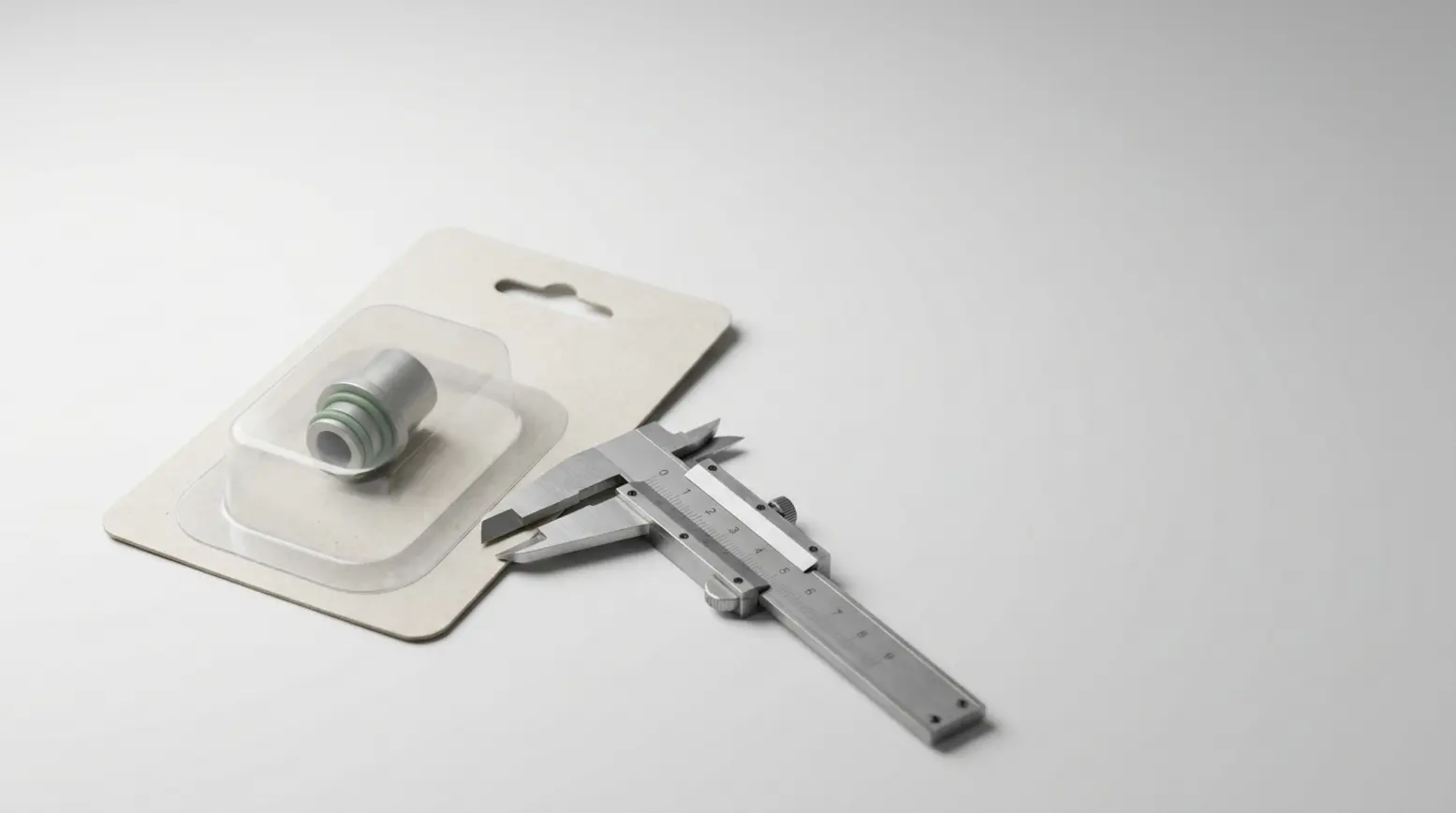
Consider a small DIY item packed on a large blister card. This is a common scenario where the pack might serve several valid functions, yet the board area remains larger than necessary. A thorough review evaluates each part individually, which is especially important for single blister cards that combine print area, sealing space, hanging features, and handling support.
Questions to ask about the card area
Determine exactly how much of the card is needed for the hanging hole, sealing area, instructions, warnings, handling, and protection. Then, ask whether any remaining area exists solely to make the pack appear larger. If a small product is mounted on a card with wide, empty borders, there is a clear opportunity to test a more compact format. This is a highly common route for right-sizing packaging.
The answer, however, might still be mixed. Some extra area might be necessary to ensure the pack hangs straight or to accommodate legally required information. That is why the review must remain strictly factual: reduce what is unnecessary, but keep whatever serves a clear, functional purpose.
Questions to ask about the formed cup
Next, review the blister cup itself. Can it follow the product's contours more closely? Is the current depth, width, or flange larger than necessary? Can theft prevention remain effective with less surrounding material? If the cup sits loosely around the product, there might be room for volume reduction without compromising a secure hold. In many retail formats, we redesign constructions around these exact functional questions. Options like cold seal packaging make this review highly practical, as the card and the formed cup can be evaluated as separate components with distinct jobs.
How to maintain shelf impact without empty dimensions
If the card is reduced in size, shelf impact does not have to suffer. Strong graphics, clear branding, smart shaping, cut-outs, and specialty finishes can effectively maintain visibility. By leveraging these techniques, teams can eliminate wasted space while keeping the pack easy to shop and understand. This is crucial because while shelf presence is undeniably important, it should never become a default excuse for oversized packaging.
SKU Example 2: PPWR packaging minimisation for double blisters or rigid inserts
A second common scenario involves a pack featuring a double blister or an extra rigid insert. While these formats can solve real packaging challenges, they demand close scrutiny because duplicate or heavy parts add weight very quickly. The key question is whether every single formed part supports an essential function.
Review whether one formed component can do the job
Ask whether the product truly requires two formed parts. Could a single formed piece hold it securely? Can tamper evidence, product stability, and presentation remain at the required standard with just one component instead of two? If yes, you have a direct path to reducing packaging weight. If no, the reasoning should be clearly recorded so the retained material has a well-documented purpose.
Compare materials by required function
In some instances, a rigid plastic insert can be compared against a formed paper tray. We can provide paper-based packaging that replaces a PET blister cup with a paper alternative in certain applications, but this change is only viable when the product allows it. The alternative must still protect, hold, and present the item properly. Material substitutions should therefore follow function; a lighter or reduced-plastic option is only beneficial if performance remains acceptable.
Trade-offs that must be recorded
Document any trade-offs in plain language. While lower weight and reduced volume are desirable outcomes, they are not the only factors that matter. Product stability, tamper evidence, ease of opening, and recloseability (where required) should all factor into the final decision. If an alternative saves material but results in damage, poor handling, or a weak display, it must be documented as an option that ultimately failed.
When PPWR packaging minimisation and retail security pull in different directions
Teams must exercise caution here, as cutting material without fully understanding its purpose can quickly create issues in a retail environment. Because some products and stores genuinely require security features, theft-secure packaging serves a very real function. Even so, security should not be used as a blanket excuse for oversized packs or unnecessary duplicate components.
A more precise question to ask is: what is the absolute minimum amount of material that still provides the necessary security? If an extended blister edge, a thicker card, or a specific closure mechanism is retained specifically to deter theft, that rationale should be documented alongside the other options reviewed. In doing so, the design remains evidence-based and is much easier to justify during internal reviews.
What your PPWR packaging minimisation evidence should include
Keep your records concise and useful. One file or line item per packaging format is typically sufficient, provided the same fields are applied consistently across all products. This standardisation supports a comprehensive packaging functionality assessment across numerous SKUs and helps teams compare similar packs fairly.
| Field | What to record |
|---|---|
| SKU or format name | Name of the product or shared packaging format |
| Pack type | Blister card, carton, insert pack, or other format |
| Components | Card, cup, insert, seal, outer carton, and any other part |
| Weight per component | Measured weight for each part |
| Main dimensions | Height, width, depth, and key formed dimensions |
| Function per component | What each part is required to do |
| Alternatives considered | Lighter, smaller, reshaped, or substituted options reviewed |
| Reason selected design was kept or changed | Short technical rationale for the decision |
| Date and owner | Who reviewed it and when |
This type of record helps teams identify heavy packs, oversized formats, and repeating design habits. It also provides sourcing, engineering, and product teams with a shared foundation for discussion. If two similar SKUs use vastly different board areas or component weights, the discrepancy becomes apparent much faster.
There is one important limitation that must be stated clearly: this is not an official PPWR template, and completing it does not inherently prove compliance. Your compliance team must ultimately determine what documentation is legally sufficient for your specific product, market, and pack type.
Questions readers often ask about PPWR packaging minimisation
Is smaller packaging always better? No. Smaller packaging is only better when the pack still protects the product and successfully performs its intended job. If a redesign results in damage, poor handling, awkward hanging, or weak tamper evidence, it is not a practical improvement.
Can shelf impact still matter? Yes. Shelf impact is a very real consideration in retail, but visual enlargement alone is a weak justification for using extra material. Clever printing, distinctive shapes, cut-outs, and specialty finishes can often maintain high visibility with a smaller footprint.
Can paper always replace plastic? No. A material change only succeeds when the new material effectively performs the required job. The correct choice depends entirely on product shape, protection needs, handling requirements, and the retail environment.
What is the best way to start across many SKUs? Start by creating one evidence record per packaging format, using consistent fields across your products. This makes comparisons straightforward and helps heavily oversized formats stand out.
How does this differ from empty space rules? Empty space rules focus strictly on unused space inside or around the product. This review method is much broader, as it asks whether the entire pack design, including every individual component, uses only the material and size strictly necessary for its actual functions.
Review a real pack with our team
If you want to turn this method into an actionable packaging review, start with your current specifications. Bring the dimensions, component weights, and required functions so the discussion remains practical and evidence-based. You can review your current pack with us and explore whether a different construction or component set can accomplish the same job with less material. The end result should be a technically viable design option that your own team can evaluate further.
Request a free sample now!


