


PPWR recyclability requirements mean one simple thing at the pack level: a package must work within a real recycling system after use. For blister cards, this means you need to evaluate the entire pack, rather than just a single material. The cup, card, seal area, inks, coatings, labels, and small added parts can all influence collection, sorting, separation, and the final recycling output. This is why the PPWR recyclability requirements should be translated into practical design questions before making any compliance claims.
• A pack is not recyclable simply because one part is made of PET or paper; the full system path ultimately determines the result.
• Separability is a crucial first check, especially in blister card recycling, where the cup and card may need to come apart after use.
• Small features such as adhesives, coatings, inks, labels, and metal parts can significantly impact packaging sorting design and the final recycling output.
• A recycled PET route and an all-paper route each change the pack's story, but neither provides an automatic answer to recyclable packaging requirements.
• Cold seal changes the sealing process, but the PPWR recyclability requirements still depend on the complete construction.
What the PPWR recyclability requirements mean for a retail pack
In simple terms, PPWR recyclability requirements mean your packaging must support real-world recycling after use. A blister card is a useful example because it combines visibility, protection, and mixed-material packaging into one retail format. A clear cup, a printed card, seal areas, and surface finishes can all change the end-of-life result. Because we design retail packaging across blisters, cartons, all-paper formats, and child-resistant solutions, we know the best approach usually involves reviewing the full pack as a cohesive system.
This matters to several teams simultaneously. Packaging engineers need a practical packaging recyclability assessment, while brand managers need to compare visibility, print area, and shelf impact. Meanwhile, procurement teams must understand material choices, future risks, and how designing packaging for recycling might change sourcing decisions.
Why the PPWR recyclability requirements involve more than a material name
A pack does not meet recyclable packaging requirements simply because one part is made of paper or PET. The real test is what happens after use. Can the pack enter the collection stream? Can it be sorted into the correct material fraction? Can parts be separated where needed? Can the material be recycled into a useful output? These are the practical questions behind PPWR recyclability, and they matter far more than a basic material label.
Recycling systems differ by market, meaning the same pack may perform differently from one country to another. Because of this, a lab result or a material claim helps, but it does not provide the full answer. For additional background, our article on why plastic recycling is more complex explains why technical possibilities often differ from real-world systems.
Designed for recycling versus recycled at scale
This distinction is essential. A pack can be designed to support recycling, but that does not guarantee it is recycled at scale today. The PPWR separates designing packaging for recycling from the question of actual recycling performance in practice. The primary design milestone is set for around 2030, so teams should not treat today's common waste handling capabilities as the final PPWR test.
Why today’s local rules are not the final PPWR test
Current local guidance still matters because it demonstrates how systems operate right now. It helps teams understand present collection and sorting conditions. However, future PPWR criteria will shape the final methods in a much more formal way. Therefore, it is better to treat current local guidance as a single input rather than as definitive proof for a compliance claim.
How the PPWR recyclability requirements start with separability
A strong first check is material separability in packaging. This means asking whether the components of a pack can be separated realistically after use. For blister packs and other mixed-material packaging, this often matters more than the material name itself, as poor separation can send useful materials into the wrong waste stream. This is why the PPWR recyclability requirements should always start with pack construction.
The blister card example: cup and card
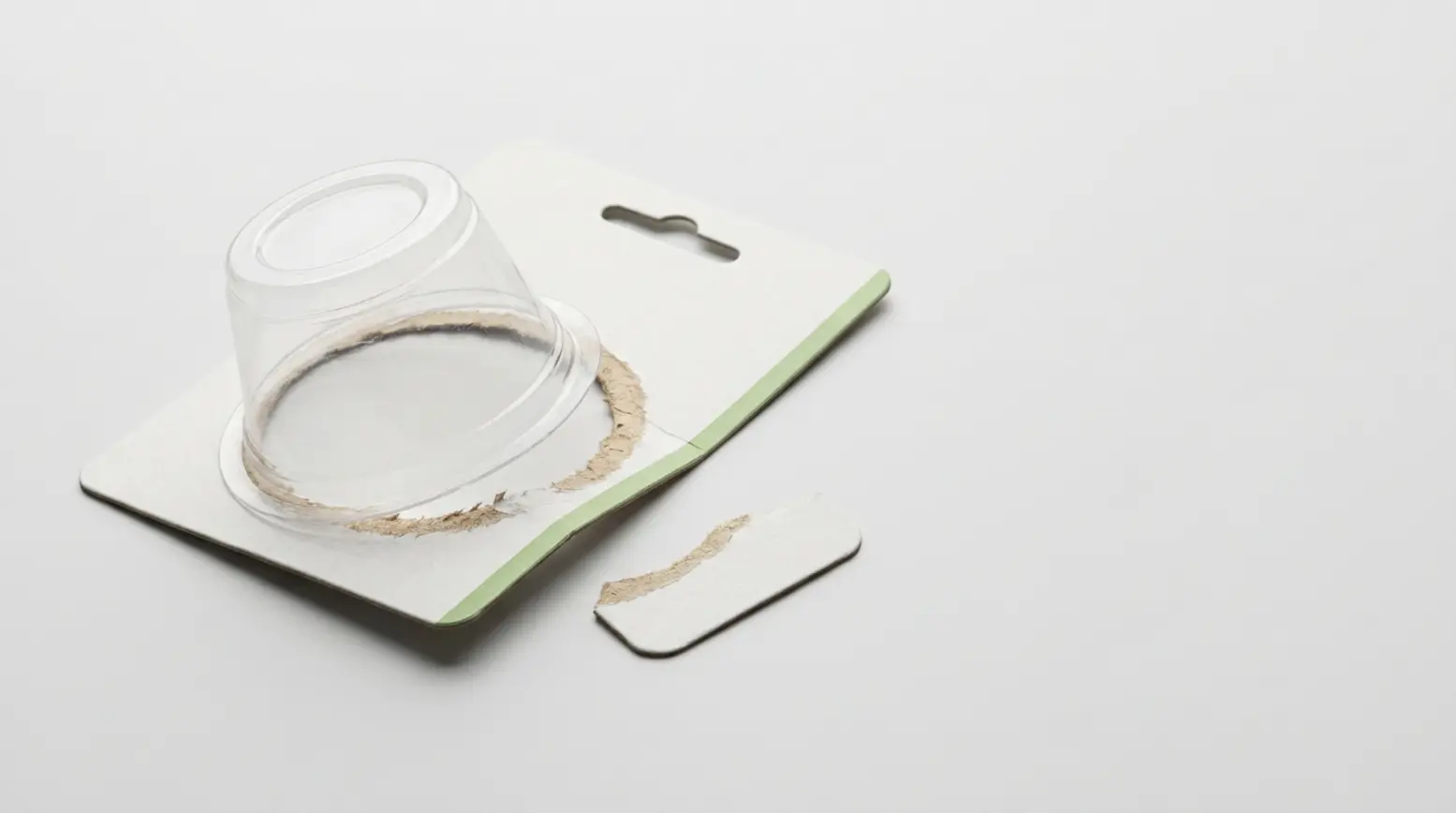
A typical blister card uses a transparent PET cup and a printed paperboard card. This format protects the product while presenting it clearly on the shelf, keeping it highly relevant in categories like cosmetics, hardware, and small electronics. At the same time, this format combines different materials. If the consumer needs to separate the cup from the card before disposal, that specific step must be reviewed early in the design process.
When separation fails, a technically recyclable material may still end up in the wrong waste stream. Therefore, whether blister packaging is recyclable is never just a question about one material. It is a question about the full construction and how it behaves after use. If you want to compare an alternative route, our page on all-paper packaging illustrates how the primary material can change, even though the full pack still requires review. A more specific example is the paper blister cup, which replaces the transparent PET cup with a paper alternative and fundamentally changes the separation dynamic.
Questions to ask during a packaging recyclability assessment
A practical packaging recyclability assessment should begin with a physical pack right in front of you. The goal is to map every component and review how the entire pack behaves after use. This approach supports packaging sorting design by focusing on what actually happens during collection, separation, and recycling.
• What are all the components used in the pack?
• Which parts can users easily separate by hand?
• Which parts remain attached after use?
• Where is each part likely to end up within the target market?
• Can the pack be sorted into the correct material fraction?
• Can the material be recycled into a useful output?
Where the PPWR recyclability requirements get harder with mixed-material packaging
Mixed-material packaging is not automatically a bad choice. Many retail packs require different materials to protect the product, deter theft, or help shoppers see the item clearly. However, each added material or feature can alter the recycling path. Because of this, the PPWR recyclability requirements become much harder to meet when more parts, finishes, and attachments are involved.
How adhesives, inks, coatings, and labels affect the main material stream
Small features can have a surprisingly large effect. Adhesives, coatings, inks, varnishes, sleeves, labels, metal parts, and small added pieces may disrupt sorting or recycling, depending on the target material stream and local infrastructure. The question is not whether a single feature is inherently good or bad. The real issue is how that feature interacts with the main material stream and whether it negatively impacts the useful output.
This is why we do not recommend relying on a simple banned list. A coating on paper, a label on plastic, or a metal staple can each change the outcome in entirely different ways. Procurement teams should request a clear bill of materials, and engineers must review every connection point. In this way, the pack is assessed as a real, physical object, providing far more value than a broad marketing claim.
Why theoretical recyclability can fail in real systems
A material may appear recyclable in theory because it can be processed under the right laboratory conditions. But that is only one part of the story. The pack still needs to be collected, accurately identified by sorting systems, and directed into a stream capable of creating a useful output. If even one step fails, recycling at scale may not happen. For a broader example involving paper-based formats, our article on molded pulp recyclability provides useful background without repeating the entire topic here.
Comparing the PPWR recyclability requirements across a PET route and a paper route
For many retail packs, the main decision is about construction. Teams often need to balance product visibility, protection, branding, and recycling potential. A direct comparison helps because it shows what changes in real use. This is more helpful than broad claims about recyclable blister packaging or paper packs in general.
Route one: a recycled PET cup with a separate card
A recycled PET cup maintains strong product visibility. This is highly useful when the product itself helps sell the package. The card carries brand information, instructions, and graphics, while the cup provides shape and display value. For teams asking whether blister packaging is recyclable, the careful answer is that while some formats may use recyclable materials, proper separation and sorting ultimately decide the outcome.
In this route, the cup and the card remain distinct materials. Therefore, successful blister card recycling still depends on how the two parts are attached and how they move through the target market’s collection and sorting systems. While this route delivers excellent shelf impact, it still requires a comprehensive full-pack review.
Route two: a paper blister cup instead of PET
A paper blister cup completely changes the material mix because the transparent plastic cup is replaced with paper. This can support a different packaging story and naturally alters the material separability questions. However, because full transparency is lost, the shelf approach usually relies more on strategic cut-outs, structure, and larger printed areas. Brand teams must weigh this tradeoff carefully, as the visual message inevitably changes alongside the material.
This route is helpful when a team wants to transition away from clear plastic cups, but it does not conclude the assessment. The card, adhesive areas, print, and surface finishes still matter. If you want to review a physical concept before making broader packaging decisions, you can request a sample to compare the pack in hand.
What changes, and what still needs checking
In both routes, fundamental questions stay the same. You still need to map every component, understand what parts separate, and review the likely collection and sorting paths. The primary difference lies in the cup material and the necessary tradeoff between transparency and print space. Because of this, neither route should be treated as an automatic answer to the PPWR recyclability requirements.
Cold seal and the PPWR recyclability requirements: what the sealing method changes
Cold seal technology matters because the sealing method directly affects how the pack is manufactured. We invented the cold seal process and have over 25 years of experience perfecting it. In simple terms, cold seal uses cardboard with a water-based, solvent-free adhesive that closes using pressure rather than heat. This fundamentally changes the production process and can support much lower energy consumption than traditional heat sealing.
At the same time, cold seal does not determine recyclability on its own. It does not automatically create a mono-material pack, nor does it remove the need to assess the card, cup, print, coatings, or other added features. The exact combination of components still dictates performance, meaning a careful pack review is always required.
A practical review path for your next pack
If your team is evaluating a blister card now, keep the review simple and factual. Start with the physical pack, as this helps avoid broad claims and overlooked details. Then, move through the packaging step by step so that engineers, brand teams, and procurement professionals can all work from the same clear picture.
Map every component, connection, and finish
List the cup, card, seal areas, coatings, inks, varnishes, labels, and any added parts. Then, carefully note how each piece is attached. This creates a shared understanding of the construction and helps teams identify which visible or structural features might impact end-of-life performance.
Check what separates, what stays attached, and where each part goes
Ask what a user can separate by hand and what inevitably stays attached after use. Next, determine where each part is likely to go within the target market. Can the pack enter the collection system? Can it be sorted into the correct stream? Will the output still be useful after processing? These are the core questions behind a realistic, effective pack review.
Verify local guidance and future PPWR criteria before making a claim
Local guidance is useful, but it does not represent the final PPWR methodology. Teams should review current market practices while closely following future criteria before making any compliance claims. This matters even more with mixed-material packaging, where a minor design change can dramatically shift the result. A careful review today can significantly reduce the risk of forced redesigns later.
Common questions about the PPWR and blister card recycling
Is blister packaging recyclable? While some blister formats contain recyclable materials, the complete design ultimately dictates the real-world outcome. Separation, sorting capabilities, attached parts, and local infrastructure all play crucial roles. Therefore, the answer depends on the full pack, rather than just the cup or card material.
Does all-paper packaging automatically meet recyclable packaging requirements? No. A paper-based pack can improve the overall material story in some cases, but it still requires a full assessment. The package must successfully navigate collection and sorting while yielding a useful recycling output.
Does cold seal make a pack recyclable? No. Cold seal simply changes the sealing method by using pressure and a water-based, solvent-free adhesive instead of heat. The recyclability of the pack still depends entirely on its complete construction.
What should teams review first under the PPWR? Start by mapping every component, connection, and finish. Then, clearly identify what separates, what stays attached, and where each part is likely to end up after use. This process provides a sound foundational review before you make any claims regarding compliance.
Request a free sample now!


