


Yes, paper-based retail packaging can protect many products and support their shelf life when the design aligns with the product, the retail journey, and the storage climate. The key point is simple: first, check whether the pack can survive transport, hanging, and handling, and then check whether it can protect the product from moisture, dust, light, or other outside conditions. This is the most practical way to assess paper packaging protection and shelf life, because while paper offers good mechanical support, it is not a sealed barrier by default.
• Start with two questions: can the packaging survive the retail supply chain, and can it protect the product from the environment?
• Paper packaging protection often works best for dry and durable products that primarily require support, position control, and a clean shelf appearance.
• Humidity risks in paper packaging are real because moisture can reduce stiffness and alter performance during storage and transport.
• Small weak points, such as hanging holes, corners, and cut edges, often lead to transit damage more quickly than failures on the main panel.
• The final decision should rely on a physical sample and product-specific testing to ensure the format is evaluated under authentic retail durability conditions.
Paper packaging protection and shelf life start with two distinct questions
Buyers often ask one broad question: will paper protect my product? In practice, this should be split into two separate checks. First, can the pack stay strong through shipping, storage, hanging displays, and repeated handling in the store? Second, can it protect the product to meet the required retail packaging shelf life? These are different tasks, so they should not be conflated. In decisions concerning paper packaging protection and shelf life, this simple division provides a clearer path by keeping the focus on actual risks rather than a preferred material.
What protection means in this article
Here, protection means the pack keeps the product secure, presentable, and fit for sale during normal retail use. This includes movement inside shipping cases, stacking in storage, hanging on a hook, and regular handling by store staff and shoppers. It also encompasses basic tamper control and stable product positioning. This primarily relates to the mechanical protection and structural construction of the paperboard, rather than functioning as a hermetically sealed barrier.
Why shelf life can mean different things
Shelf life can mean shelf appearance for one team and product stability for another. A brand manager may care most about clean presentation. A packaging engineer may focus on the retail packaging's board strength and its weak points under load. A procurement or retail team may prioritize storage climate, damage rates, and ease of display. Because these needs differ so widely, a single format may work perfectly for one product yet fail for another.
Paper packaging protection and shelf life regarding mechanical durability in retail handling
Paper-based retail packaging can perform exceptionally well when the primary requirement is mechanical support. This includes resisting bending, tearing, crushing, and shifting inside the pack. Good paper packaging protection does not come from the paper material alone. It results from the complete structure, as board grade, thickness, layout, and optimal product fit all influence final performance.
Board stiffness, thickness, and construction
Stiffness helps the pack resist bending, while thickness can add significant strength if the structure utilizes it well. Construction matters just as much. Fold lines, cutouts, product cavities, the position of hanging holes, and reinforcement zones can drastically alter the outcome. A pack may feel strong when held flat on a desk, yet still fail on a store hook if the load pulls heavily on one small area. Therefore, decisions regarding retail packaging board strength should always be tied to the actual product shape and its intended display method.
The product itself changes the load pattern. A light, compact item may place little stress on the card. Conversely, a long or heavy item may shift the load upward, exerting more pressure on the hanging zone. Sharp edges can also concentrate force at corners and narrow material bridges, meaning localized damage can begin early even when the main panel still looks flawless.
How a formed paper cup supports the product
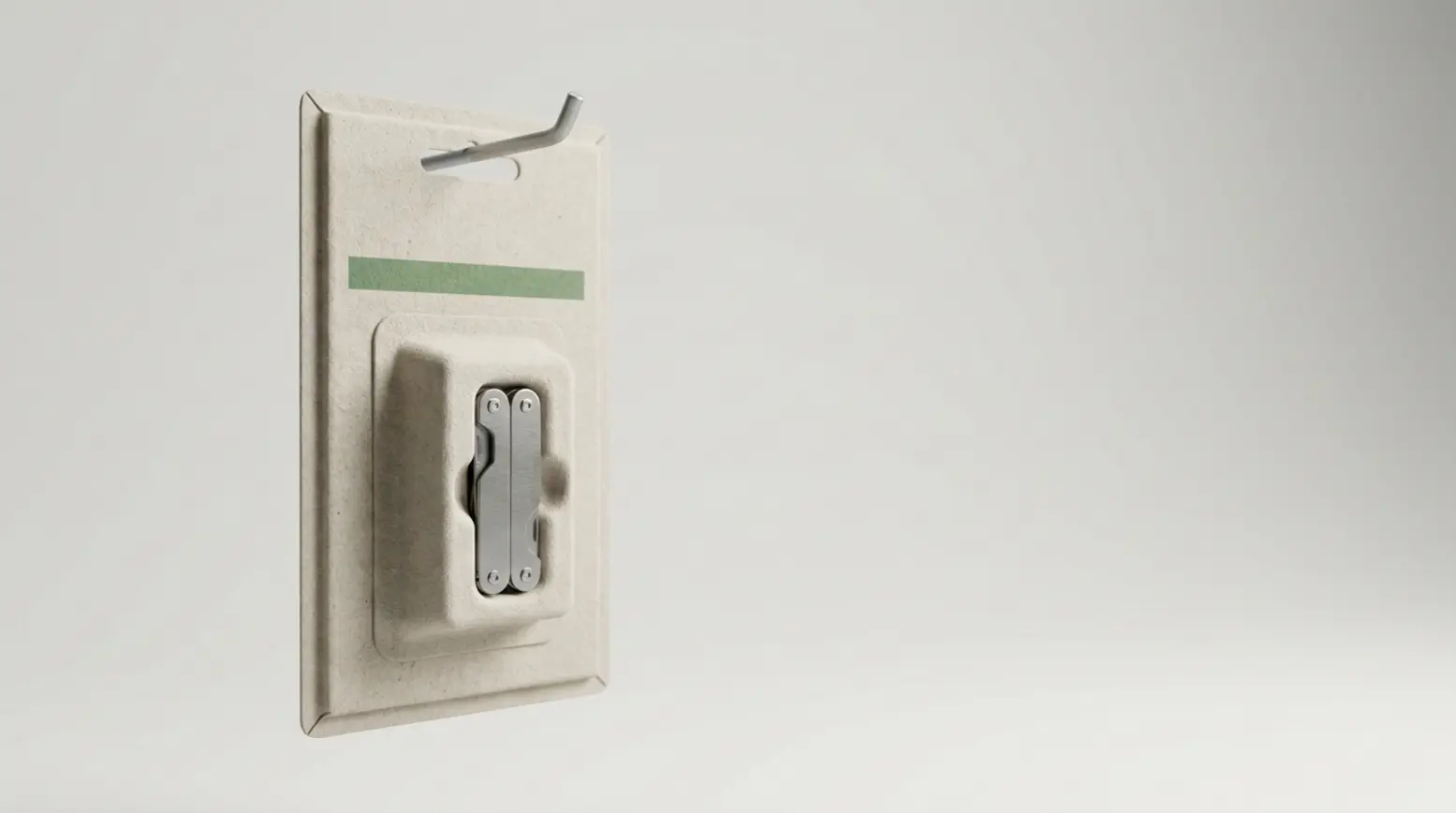
A formed paper cup can help secure the product in place, distribute the load, and minimize direct contact with exposed card edges. Consequently, paper blister protection can stem just as much from shape control as from board thickness. A formed component may also reduce internal movement during shipping, which lowers the risk of abrasion and localized tearing.
We design packs that use shaped paper parts for exactly this purpose, and our paper blister cups demonstrate how geometry can support fit and pack stability in real retail formats. This approach does not imply that every product is suited for paper. Rather, it shows that structures can be engineered to enhance support whenever the product and the retail supply chain permit.
Stress points that need extra attention
The hanging hole is one of the most common failure points in retail packaging because the card must carry the full load when the product hangs on a hook. If the item is heavy, off-center, or handled frequently, the hanging area can weaken long before any larger panel shows visible damage. Corners, punched edges, slots, and narrow cut bridges also deserve close review because stress typically accumulates there first. This is a key reason why transit damage to packaging should be assessed at these structural weak points, rather than only at the overall pack level.
Paper packaging protection and shelf life under transit, hanging, and store conditions
A packaging format should always be evaluated within the actual supply chain because a retail pack encounters multiple types of stress. It is packed, shipped, stored, unpacked, placed on a shelf or hook, and then handled repeatedly. Evaluating paper packaging protection and shelf life should therefore include practical checks with the actual product inside, allowing the team to observe potential outcomes prior to launch.
Tests to consider
A practical test plan can include drop, vibration, compression, hanging, and handling checks. Drop tests reveal how the pack reacts if it falls during packing or stocking. Vibration checks help uncover product movement during transport. Compression checks illustrate how the format behaves when shipping cases or pallets apply top load. Hanging tests are vital because many retail formats spend extended periods on hooks, while handling checks matter because shoppers and store staff repeatedly touch, lift, and replace packs. Together, these checks provide a practical framework for ensuring retail packaging durability.
Why packaging transit damage often starts at weak details
Transit failure rarely occurs as a single large event. In many instances, it begins with a small split at a cut edge, a crushed corner, or a tear near the hanging area. The pack can still look entirely acceptable at first, yet the weak point continues to grow with each subsequent move or touch. This is especially common when the product has weight, sharp features, or space to shift inside the packaging. Consequently, testing should focus on likely failure points instead of just examining the broad surface area.
Paper packaging protection and shelf life given the environmental limits of paper
While paper can mechanically support many products, it should never be treated as sealed by default. This matters for retail packaging shelf life decisions because some products primarily need physical support and presentation, whereas others require robust moisture protection packaging or alternative barrier controls. Assessments of paper packaging protection and shelf life should therefore account for the storage and transport environment right from the start.
Moisture and humidity effects
Paper naturally absorbs and releases moisture, so its performance fluctuates when humidity changes. Higher moisture levels can reduce stiffness and compromise mechanical strength. A pack that feels rigid in a dry climate may behave entirely differently in a humid warehouse or along a damp transport route. This is why the effects of humidity on paper packaging should be treated as a core component of the design brief rather than a minor detail.
Temperature swings and storage climate
Temperature changes can alter the moisture conditions surrounding the pack, even when the product itself remains stable. A format may move from a cool, dry area to a warmer, more humid environment, and that shift can progressively degrade the board. Therefore, transport routes, warehouse conditions, and shelf climates must be discussed early in the process. If those conditions remain unclear, accurately judging real-world performance becomes much harder.
Light, dust, windows, and cutouts
Opaque paper effectively blocks light, which is useful for products that require protection from direct exposure. However, windows and cutouts negate that benefit by leaving part of the pack open. While a fully closed paper structure can reduce dust exposure, it should still not be described as sealed or hermetic. If the product demands a high level of environmental barrier protection, an alternative construction is necessary.
Paper packaging protection and shelf life: when paper is sufficient and when a hybrid is better
Paper is often highly suitable when the product primarily needs mechanical support, stable presentation, and basic tamper control. A hybrid blister packaging approach can be preferable when visibility, contoured shape support, or enhanced localized protection is necessary. The ideal choice depends entirely on product weight, geometry, display style, climate, and the actual level of risk.
Where paper may be suitable
Dry and durable items like tools, hobby supplies, toys, stationery, and electronics accessories often suit paper well, particularly when the main requirement is shelf support or hook display. For example, many products that utilize DIY retail packaging mainly need mechanical support, position control, and an attractive front presentation. In those cases, an all-paper packaging format can be a fantastic option once testing confirms the design is robust enough for the entire supply chain.
When a hybrid blister packaging route is better
A hybrid blister packaging format makes sense when you wish to retain a paper card but the product simultaneously requires visibility, shaped support, or supplementary local protection. This is particularly helpful for accommodating complex product geometry or items that shoppers prefer to visually inspect on the shelf. If you would like a broader overview of this approach, our paper blister packaging guide explains exactly how paper cards and formed parts can work together successfully in retail formats.
When stronger barrier needs call for another construction
If the product demands strong moisture protection packaging, strict gas barrier performance, or another sealed form of protection, paper alone is rarely sufficient. In such cases, the packaging construction should be selected based primarily on the actual barrier requirements, and only then reviewed for retail presentation and handling. This strategy keeps decisions practical and drastically lowers the risk of choosing a format that looks visually appealing but fails to protect the product adequately.
What to test before you decide
The most reliable answers come from evaluating the product, the pack design, and the actual transport route together. A generalized claim is rarely sufficient because paper packaging protection and shelf life always depend on the specific item, the environment, and how the pack is handled. The best next step is to clearly define the real risks and review a physical sample before finalizing any material decisions.
Questions to answer before choosing the material
A comprehensive review should cover product weight, shape, hanging loads, edge stress, drop risks, transport vibration, compression during shipping, warehouse humidity, temperature swings, light and dust exposure, and required visibility. A simple way to utilize this list is to ask four defining questions: what must the product be protected from, for how long, in which climate, and in which display format? Addressing these points simplifies comparisons by shifting the conversation from assumptions to hard evidence.
• Mechanical support: Check bending, crushing, hanging load, product movement, and opening behavior.
• Environmental exposure: Check humidity, temperature changes, dust, and light exposure across the actual route.
• Weak points: Review hanging holes, corners, slots, cut edges, and narrow material bridges.
• Product fit: Check whether the product sits securely and whether localized pressure builds up around sharp shapes.
• Visibility needs: Decide whether the product must be seen clearly on the shelf, as this heavily influences the required pack format.
Simple comparison for pack choice
Primary need: mechanical support and pack stability. Can paper help? Yes, often through board design, shape, and optimal product fit. Limits to check: hanging load, edge stress, product movement, and humidity effects. When to test a hybrid or alternative construction: when the product is heavy, complex, or remains unstable in a standard paper format.
Primary need: light and dust reduction. Can paper help? Yes, especially via closed, opaque designs. Limits to check: windows, cutouts, and open areas. When to test a hybrid or alternative construction: when visibility is required alongside stricter product control.
Primary need: robust moisture or gas barrier. Can paper help? Only to a limited degree in standard retail formats. Limits to check: climate exposure and product sensitivity. When to test a hybrid or alternative construction: when the product demands hermetically sealed protection or strict environmental stability.
Why a physical sample matters
A sample allows the team to review stiffness, fit, edge quality, hole placement, opening behavior, and overall handling with the real product placed inside. It also makes localized stress much easier to spot because structural weak points become immediately apparent when the pack is held, loaded, and hung realistically. If you want to transition from theory to a practical review, you can request a sample and evaluate the format against your own product and supply chain conditions.
The final answer comes from product-specific testing
No supplier should promise identical shelf life results for every single retail pack. A format that functions beautifully for one item may prove entirely unsuitable for another because variations in weight, shape, climate, display style, and handling shift the associated risks. Therefore, the final decision should always arise from testing the chosen construction with your specific product under your unique transport and store conditions.
FAQ
Can paper-based retail packaging protect products in transit? Yes, it can, provided the structural construction matches the product and the shipping route. Product weight, shape, board stiffness, pack geometry, and local weak points all play crucial roles. Transit protection should always be evaluated using drop, vibration, compression, hanging, and handling tests, as these checks reveal how the format actually behaves in real use.
Does paper packaging provide moisture protection? While paper can reduce environmental exposure in certain designs, it does not act as a sealed barrier by default. It naturally absorbs and releases moisture; consequently, high humidity can compromise its stiffness and strength. If your product requires stringent moisture control, an alternative construction is likely more suitable.
Is an all-paper format always the best sustainable option for retail? No. The packaging still has to protect the product, remain saleable, and function reliably throughout the retail supply chain. Your material choice should fully support the actual use case, as a damaged product or a failed package is never a sustainable outcome.
When should I choose a hybrid blister pack? A hybrid design can be the superior option when you want the aesthetic of a paper card but also require product visibility, contoured support, or enhanced localized protection. It is also beneficial when a purely paper format fails to provide the proper fit for the product's shape or unique display requirements.
Request a free sample now!


