


The Packaging and Packaging Waste Regulation (PPWR) changes cosmetics packaging in a highly practical way. It pushes design teams to reduce pack weight and volume wherever possible, all while maintaining essential functions. For PPWR cosmetics packaging, this usually means carefully reviewing card sizes, cartons, sleeves, windows, cups, inserts, and finishes one by one to ensure the pack remains protective, clear, and perfectly suited for retail.
If you are looking for broader context first, we explain why sustainable cosmetic packaging matters in a separate article. This page, however, focuses strictly on what packaging teams can change within the pack itself, as that is where many of the most significant improvements begin.
• Start with function: prioritize protection, information, visibility, theft prevention, and retail handling.
• Reduce size and eliminate extra parts where they add little value, as oversized presentations are increasingly difficult to justify.
• Compare transparency and paper honestly; both materials can be the right choice depending on the product and the specific shelf goals.
• Review windows, foils, sleeves, and inserts carefully. Decorative or secondary components often introduce unnecessary material complexity.
• Test real samples before finalizing any changes to a retail pack so that appearance, fit, and protection can be evaluated together.
PPWR cosmetics packaging starts with a size and function check
While cosmetic products are often quite small, their retail packs can be significantly larger because they must perform several jobs at once. A pack may need to protect the item, carry legal and marketing text, enhance shelf presence, and reduce the risk of theft. Under the new regulatory context, each of those jobs still matters; however, PPWR cosmetics packaging guidelines require teams to reduce both weight and volume wherever possible.
For many items within cosmetics packaging, the best first step is a thorough function check. Ask what the pack absolutely must do today. Then, identify features that exist simply because the format has been used for years. This practical approach helps teams move from broad sustainability goals to real design decisions that support recyclable, eco-friendly packaging for daily retail use.
Why cosmetics are a useful PPWR case study
Beauty and personal care packs carry far more than just the product itself. They typically display claims, ingredients, instructions, shade details, branding, and a certain level of security. Consequently, even a minor packaging change can impact retail performance. That is why the beauty industry serves as such a useful case study for PPWR in cosmetics. The broader regulatory discussion becomes much easier to understand when it is tied to tangible components like cards, windows, cartons, and cups.
What counts as a necessary function
Necessary functions typically include product protection, clear information, efficient retail handling, and security tailored to the specific sales environment. For some products, visibility is also critical because shoppers want to visually confirm the item before making a purchase. For others, a unique shape, high-quality print, and a strong brand image can do the heavy lifting, making full product visibility less vital.
Where oversized presentations become harder to justify
A large backing card or outer carton designed primarily to boost shelf presence requires close scrutiny. The exact same visual impact can often be achieved using a smaller format paired with a better layout, stronger color contrast, and clearer messaging. By optimizing these elements, cosmetic secondary packaging can effectively support the brand while using significantly less board and taking up far less physical space.
How PPWR cosmetics packaging impacts card, carton, and sleeve decisions
Secondary formats are usually the first place teams should look for optimizations. A deep carton, a large blister card, or an extra decorative sleeve might enhance presentation, but each component adds unnecessary material. PPWR does not mandate that every secondary pack disappear. Instead, it challenges teams to ask if the exact same result can be achieved with a simpler structure. As an added benefit, simpler packs are often much easier to optimize for recyclability.
Smaller cards and stronger artwork
A smaller card can easily stand out when the printable area is planned well. A logical text hierarchy, bold color contrast, and a strong product image can drastically improve recognition without relying on a wide, empty border around the item. This approach is especially useful for lip balm packaging and other small cosmetics, where card sizes have historically increased for visual display reasons rather than functional necessity.
When an extra sleeve adds value and when it does not
A secondary sleeve makes sense when it groups multiple products together, adds tamper-evident security, or provides dedicated space for market-specific text. However, if the sleeve merely repeats the information already printed on the main carton, its necessity should be reviewed. Removing redundant sleeves reduces material usage, simplifies artwork management, and makes the final structure much easier for procurement and production teams to handle.
Using the main carton as the primary brand carrier
For many projects, the main carton is perfectly capable of carrying the brand's full message on its own. It can consolidate branding, product claims, instructions, and future recycling information all in one place. This consolidated approach matters because harmonized sorting labels are planned to roll out in phases starting in 2028. Therefore, it is highly practical to keep enough artwork space available today when designing new structural formats.
PPWR cosmetics packaging and the choice between transparency and paper
This represents one of the most practical decisions discussed in this article, primarily because product visibility and material reduction often pull in opposite directions. Transparent formats allow shoppers to see the actual product, which builds brand trust and reduces the likelihood of in-store pack opening. Conversely, paper-based cosmetic packaging reduces plastic consumption and provides a much larger printable area, but it inherently offers less visibility. In the context of PPWR cosmetics packaging, the better option ultimately depends on the specific item, the retail setting, and the role that visibility plays in the consumer's purchase decision.
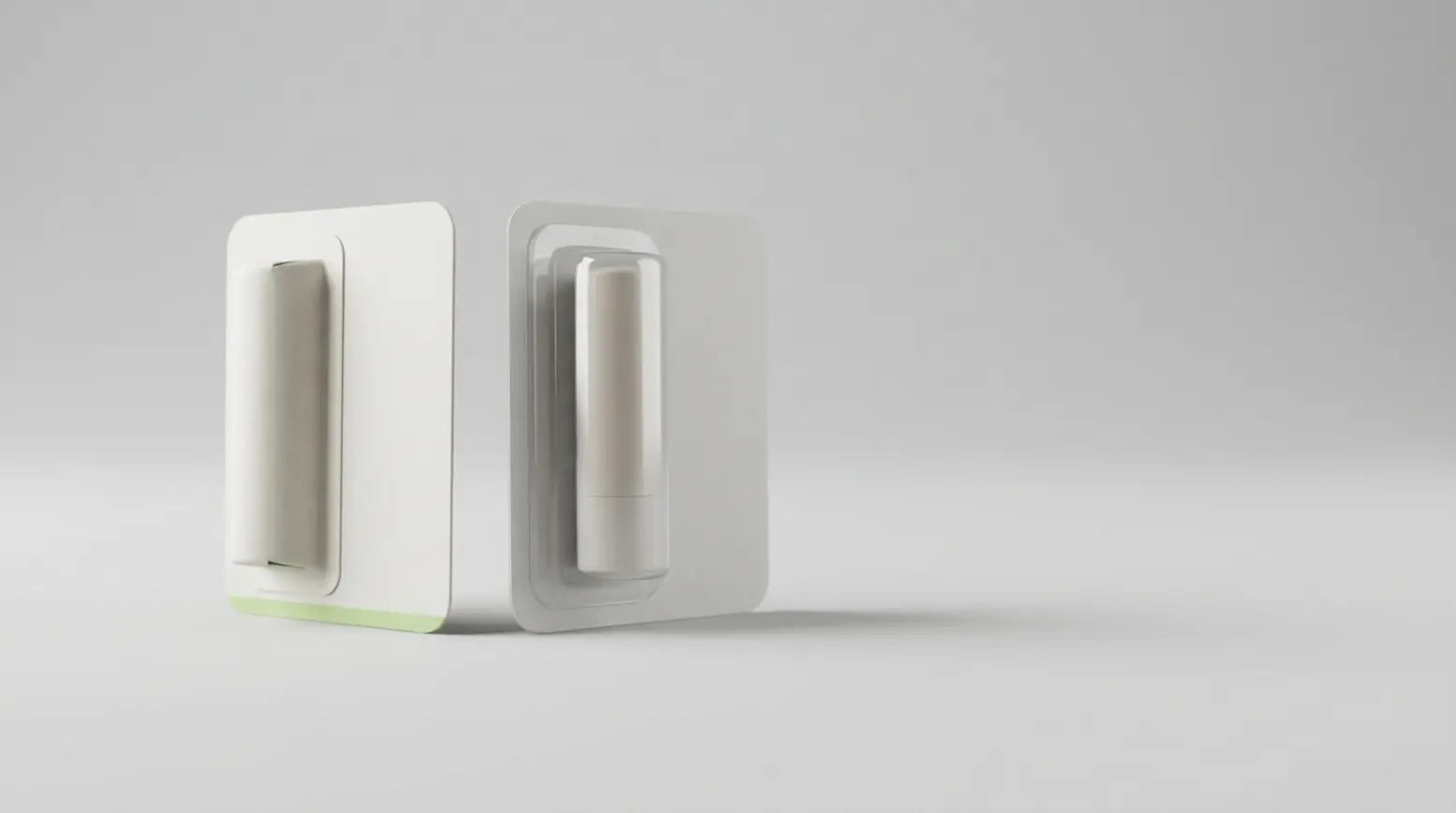
For suitable small items, our all-paper packaging is certainly worth testing. It effectively replaces the traditional PET blister cup with a sustainable paper alternative while keeping the pack's overall functionality familiar to the consumer. We also provide paper blister cups for specific formats where a formed paper component perfectly fits both the product and the retail environment. This solution suits selected small cosmetics, beauty accessories, and various lip balm packaging formats, though it may not be the perfect answer for every single item.
When transparent blister packaging still makes sense
A transparent blister can often be the superior route when the visual appeal of the product directly drives the sale. This holds true whenever the exact shade, finish, or shape must be clearly visible to the shopper. Transparent plastics also provide excellent security and maintain a highly stable product position inside the pack. With more than 25 years of experience in cold-seal thermoformed blisters, we understand that cosmetic blister packaging still plays a highly valid role when both visibility and physical product control are essential.
When a formed paper cup is worth testing
A formed paper cup is well worth testing when the item is small, structurally stable, and not fully dependent on front-facing visibility to attract buyers. It serves as an excellent option for selected lip balms or small accessories, especially when the card design and the cup's shape can hold the product neatly in place. Naturally, this creates a clear trade-off: while the format supports a more paper-focused structure and yields a larger print area, it will inevitably show less of the physical product.
How structural openings and strategic print can replace visibility
Reduced transparency does not necessarily equate to lower shelf impact. A smartly designed die-cut opening can reveal just enough of the product, while strategic print easily explains the rest. Strong photography, clear shade naming, and highly direct benefit claims help shoppers understand the item quickly. This is exactly why premium recyclable packaging remains highly attractive, even when it features far less plastic visibility than legacy formats.
Decorative finishes in PPWR cosmetics packaging need a value check
While a premium appearance matters deeply in the cosmetics industry, any added visual effects must have a clear reason to remain in the design. Foils, decorative films, plastic windows, laminations, and other layered finishes inherently make the material structure more complex. This does not mean they should all be universally removed. Rather, it means each finish must be evaluated for its true value; some effects genuinely improve the pack's performance or appeal, while others merely add unnecessary material.
Which premium effects complicate recyclable cosmetic packaging
Certain premium details make structural simplification considerably harder by introducing extra parts or mixed materials. For instance, a clear window in a carton undoubtedly helps with product confirmation, but it also introduces a completely separate component. Similarly, decorative films can create beautiful shine or texture, yet they simultaneously make the pack structure much more difficult to evaluate when teams are actively aiming to produce fully recyclable cosmetic packaging.
Print and structural options that maintain shelf impact
In many cases, a truly premium look can be achieved simply through deliberate board choice, unique pack shapes, embossing, debossing, or exceptionally strong print design. These alternative routes maintain the desired shelf feel without requiring an additional laminated film layer. As a result, the packaging remains highly expressive while simultaneously becoming much easier to streamline and recycle.
How to review windows and layered materials
When reviewing added details, always ask a simple question: what specific job does this feature do? If a plastic window genuinely helps the shopper confirm the product's attributes, it may absolutely deserve its place in the design. However, if it merely repeats what high-quality imagery or clear text already communicates, then removing it is entirely possible without harming consumer confidence at the shelf level.
PPWR cosmetics packaging for testers, multipacks, and inserts
In-store testers, grouped multipacks, and interior inserts require a separate review process because their primary purposes differ vastly from that of a single retail pack. A tester must actively invite consumer handling while remaining highly presentable. A multipack must clearly group items together and survive the retail supply chain without sustaining damage. Above all, an insert must protect the product; reducing material volume is only beneficial if it does not inadvertently create secondary waste through breakage, leakage, or customer returns.
Testers with less secondary material
Testers frequently rely on oversized structures to attract consumer attention. While some of that display space is indeed useful, much of it can be safely reduced through better layout strategies and stronger messaging on the primary visible panels. A cleaner, more focused design can effectively guide the shopper's experience while utilizing significantly less board or plastic in the overall display structure.
Multipacks and grouped presentations
When dealing with grouped items, always review whether a single shared outer structure can effectively replace several repetitive internal parts. The correct answer depends entirely on the specific items, the retail setting, and whether the individual units truly need physical separation. Even a minor reduction in redundant material becomes highly significant when a seasonal promotion or holiday gift line runs at a massive volume.
Protection first, presentation second for internal inserts
Internal inserts should always be judged primarily by how well they protect the enclosed product. If they actively prevent excessive movement, leaks, transit damage, or costly returns, they are likely necessary. Conversely, if their main function is simply to elevate the item for visual display while offering negligible protection, simpler options must be tested. This approach keeps the design process honest, as a lighter pack is ultimately counterproductive if product waste increases as a result.
A practical PPWR cosmetics packaging comparison for a lip balm pack
Consider this simple example: imagine a small lip balm sold in a physical retail store, where the packaging requires strong visibility, anti-theft support, and ample room for product claims and instructions. Under PPWR cosmetics packaging guidelines, one viable option is to keep a traditional transparent blister cup alongside a larger presentation card. A second option, however, reduces the overall card size and relies on stronger print graphics combined with a formed paper cup, provided the specific product is suited to that structural format.
Option A: Transparent cup with a larger presentation area
This option offers incredible product visibility and allows for immediate item confirmation. It works exceptionally well when the balm's distinct color, finish, or physical shape directly drives the sale. The inevitable trade-off, however, is that the backing card may consume far more presentation space than strictly necessary, especially if the format was historically upsized purely for visual display reasons rather than actual functional needs.
Option B: Smaller card with a paper cup and stronger print
This alternative inherently reduces full product visibility, but it significantly lowers total material usage and supports a cleaner, paper-focused structure. It also successfully migrates more of the brand's story directly onto the primary card, meaning that an extra decorative sleeve may no longer be necessary. For design teams looking to accurately compare look, feel, and functional fit in real-world retail conditions, it always helps to request a sample before making a final production decision.
Questions a packaging team should ask before choosing
Start by asking whether shoppers truly need to see the full physical product to make a purchase. Next, ask exactly how much space the artwork requires today, and consider how much space it might need in the near future. Finally, ask whether protection, security, and retail handling remain robust enough after the proposed redesign. Prioritizing these rigorous checks generally leads to far better decisions than blindly starting with a strict material preference and testing actual functionality only at the very end of the project.
| Pack option | Visibility | Artwork space | Material structure | Protection | Best use case |
|---|---|---|---|---|---|
| Transparent cup with larger card | High | Medium to high | Can be more complex | Good product hold and display | Items where seeing the real product heavily supports the sale |
| Smaller card with paper cup | Partial | High on printed area | More paper-focused | Depends on product fit and pack design | Suitable small cosmetics and selected lip balms or accessories |
FAQ
Does PPWR mean cosmetic packs must become smaller? No. It simply means that pack weight and overall volume should be reduced wherever possible, all while retaining any necessary functionality. Some packs will naturally become smaller, while others might stay relatively close to their original size because protection, security, and mandatory information space still matter.
Are windows and foils always a problem? Not necessarily. These features should be reviewed on a case-by-case basis. If they actively support a functional packaging job, they may still make perfect sense. However, if they merely add decoration and unnecessary recycling complexity, a simpler option is likely better.
Can paper cosmetic packaging still look premium? Absolutely. A highly premium appearance can stem from a unique structural shape, excellent print quality, high-grade board choices, and smart die-cut openings. Paper-based concepts should always be judged by the final design result, not just by the raw material's name.
When is a paper cup suitable for lip balm packaging? A paper cup is highly worth testing when the lip balm is small, structurally stable, and does not strictly depend on full front visibility to drive sales. Ultimately, the final decision should always be based on product fit, transit protection, and realistic retail needs.
Request a free sample now!


