


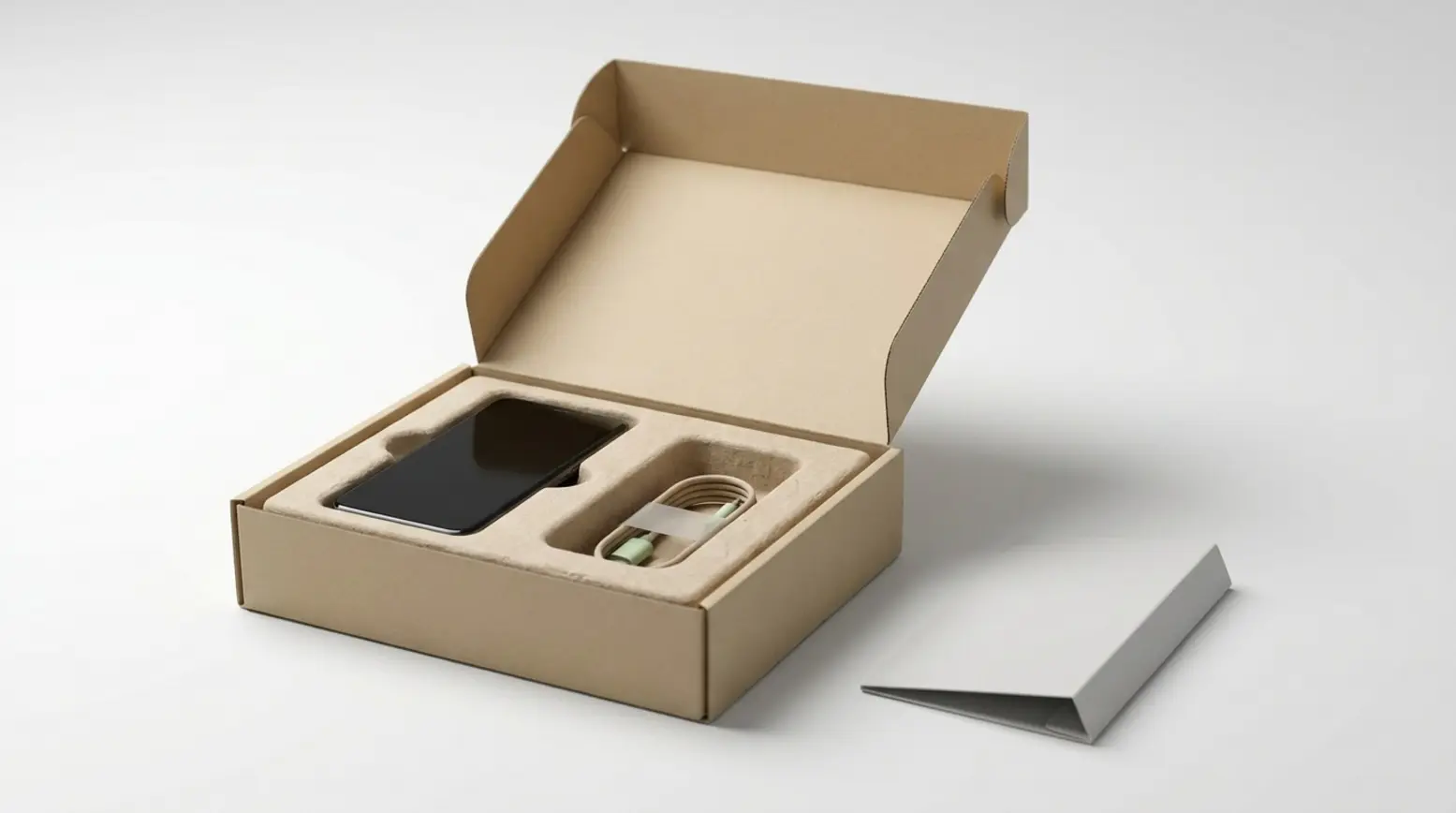

Complying with PPWR in electronics packaging means reducing packaging weight and volume where possible, while keeping the pack safe, useful, and fit for retail. In the electronics sector, this process starts with the real jobs of the pack: protecting a fragile or valuable product, supporting theft resistance, and delivering a clear premium presentation. A practical review typically begins with the insert or tray, as it often determines the fit, empty space, outer box size, and material choice.
• Start with the insert or tray, as it usually has the most significant effect on pack size and material use.
• Keep any empty space that protects the product or separates accessories, but carefully review empty space that mainly serves to make the box look larger.
• Compare paper, pulp, and plastic based on function first, because a single material rarely fits every electronics pack.
• Simplify the full pack system, including the box, sleeve, window, labels, and internal parts, ensuring that both recycling and packing logic become clearer.
• Define technical needs early, such as product sensitivity, moisture requirements, weight, and retail security, before attempting to reduce material.
Why PPWR in electronics packaging is a real issue for retail electronics
Retail electronics packaging often has to perform several jobs simultaneously. It must protect the device during handling and transport. Additionally, it may need to reduce theft risks in-store and support a premium shelf look or a memorable unboxing experience. Because of these demands, electronics retail packaging can become large or complex very quickly. If you want more background on this market, you can explore our electronics packaging for retail products pages to see how these needs come together in practice.
PPWR pushes teams to reduce packaging weight and volume wherever they can. However, this does not mean removing material without checking its function first. In protective packaging for electronics, a tray may hold the product in place, keep a cable apart from the device, or help the carton stay stable. If that function is genuine, the material may still be necessary. Therefore, the primary task is to remove avoidable complexity while keeping the parts that truly support protection, retail handling, and daily use.
How to review PPWR for electronics packaging from the inside out
The best review process often starts inside the pack. The insert or tray usually determines how the product sits, where accessories go, and how much total volume the pack requires. Consequently, a small change to the interior can reduce outer dimensions, lower material use, and improve assembly. This inside-out method is particularly useful for packaging engineers, procurement teams, and brand managers because it provides a clear path for redesign.
A practical review can follow a simple order. First, inspect the insert or tray. Next, review the full pack as a complete system. After that, check whether the outer dimensions still match the true protection and presentation needs. This method supports sustainable goals in electronics packaging because it focuses on the components that drive weight, volume, and material mix.
Start with the insert or tray
Begin with a direct set of questions. What is the insert made from: plastic, paper, pulp, or another material? Is it thicker, wider, or deeper than necessary? Does it hold the product firmly, or does it use extra shape and volume without adding clear value? In many consumer electronics packaging design projects, the interior has more influence on the final pack than teams initially expect.
It also helps to assess the insert as its own standalone component, as this makes trade-offs easier to spot. Our protective interior components show how fit, support, and presentation can be improved in a highly focused way. This is often where teams find their first realistic chance to simplify the pack or move toward recyclable packaging insert options, provided the product allows it.
Then review the full pack as one system
Once the interior layout is clear, review everything around it. Look at the outer box, sleeve, window, labels, leaflet, and any extra fitments collectively. A premium electronics pack can become overly complicated when each added layer has a small reason behind it. One part might improve appearance, another might support a hanging display, and a third might separate accessories. Together, these elements can result in excess material, additional assembly steps, and less clarity for recycling.
This broader system review is where many useful changes become apparent. For example, two parts may perform the same job, or one decorative feature may increase volume without actually improving protection. By taking this approach, the team can simplify recyclable electronics packaging without making broad assumptions. The ultimate aim is to keep functionality clear and remove structural overlap wherever possible.
Where PPWR in electronics packaging allows empty space, and where it does not
Empty space is not always waste. In electronics packs, some empty volume serves a real purpose because it protects the product from impact, creates room for cables and chargers, or prevents accessories from rubbing against the main device. In a bundle containing a device, a cable, and a small accessory, this space can help separate components and improve overall pack stability. Therefore, empty space should always be judged by its function first.
Other types of empty space mainly exist to create a larger shelf presence or a more dramatic unboxing effect. That type of volume deserves a closer review, as it can often be reduced without harming safety or presentation. PPWR encourages teams to make this distinction clearly. It is also important to remember that empty space measures are phased toward 2030, meaning they act as a strategic redesign direction today rather than one simple rule for every retail box right now.
Material choices under PPWR for electronics packaging: paper, pulp, or plastic
Material choice should always follow product needs, pack functionality, and retail reality. Some teams want to move quickly toward sustainable targets in electronics packaging, but the better route is to compare realistic component options. A paper insert or a molded pulp electronics tray may work exceptionally well in cases where the interior mainly holds, separates, or presents the product. In other scenarios, plastic may still be the better option because the physical demands placed on the interior are much higher.
It also helps to think about the complete material system. A pack may become easier to sort after use if the overall material mix is simpler. That said, recyclable electronics packaging only works well when the structure, handling needs, and user experience also make practical sense. Therefore, an honest comparison is far more useful than sticking to a fixed material preference.
When a molded pulp or formed paper interior may help
A formed paper or pulp interior can be highly effective when the insert mainly positions the product, separates accessories, and supports a simpler material mix. This approach typically suits right-sized electronics packaging, as a well-designed paper-based interior may reduce unnecessary volume and keep the layout clear. We also provide paper and pulp transport trays for projects where formed components are an important part of the discussion. If you want broader background on this material route, our molded pulp packaging guide explains the wider topic.
Still, these materials are not automatic solutions. Product shape, product weight, surface expectations, and retail display needs all matter. A molded fiber part may be an excellent fit in one pack and a poor fit in another. Because of this, teams should compare real physical samples and evaluate true pack layouts before making a final decision.
When a plastic interior may still be the better choice
Some electronics products have specific needs that a general article cannot settle on its own. Static-sensitive items may require specialized anti-static features. Moisture-sensitive products might need dedicated barrier materials. Similarly, heavier devices may need a stronger tray or more robust support points. Because of these limitations, plastic remains a valid option under PPWR for electronics packaging when the design genuinely requires it.
This is precisely why careful review matters. Reducing material is incredibly useful, provided it does not remove a necessary function. A better pack is ultimately one that balances fit, protection, presentation, and realistic material choices. By keeping this balance, the project remains practical and easier to defend across engineering, procurement, and retail teams.
How PPWR in electronics packaging supports right-sized design without losing function
Right-sized electronics packaging often begins with a smarter internal layout. If the insert holds the product more efficiently, the outer carton may also become smaller. This shift can reduce unused volume, improve pack stability, and lower the total number of required parts. As a result, the design typically becomes easier to pack, easier to understand, and much more efficient in terms of material use.
A right-sized pack must still protect the product and fully support the retail format. Therefore, size reduction should follow evidence drawn directly from the layout and structure, rather than relying solely on a rigid target to make the box smaller. In many redesigns, the best results come from improving the insert first and then adjusting the outer carton around it. That is often the most reliable route to achieving truly right-sized electronics packaging.
Questions to ask before reducing size
• Does the product shift around in the pack, or does the current insert already hold it securely?
• Do accessories require separate placement so they do not mark, scratch, or press against the main device?
• Is the larger carton providing actual structural protection, or is it mainly increasing the visual size on the retail shelf?
• Can clever folds, paper structures, or a different interior layout replace the extra volume without hurting handling or presentation?
Limits and next steps for electronics teams
Before reducing material, clearly define your technical needs. Product sensitivity, moisture requirements, total weight, accessory layouts, and the level of theft resistance expected by the retailer should all be established early in the project. This preparation gives the team a safer foundation for decisions because it separates essential packaging functions from avoidable volume or complexity. It also helps different departments agree on exactly what the pack must achieve before they even begin discussing material changes.
If you want to compare plastic and formed paper components for a live project, we can review the pack with you, starting with the insert. Examining a physical sample often helps because teams can inspect fit, presentation, and material feel together. You can request a sample as a practical next step, and then test what works best for your specific product and retail format.
FAQ
Does PPWR mean every electronics pack must use less material?
No. It means the pack should reduce weight and volume wherever possible, while strictly maintaining the functions that are truly necessary. If a component protects the product, separates accessories, or reliably supports retail handling, it may still belong in the final design.
Can molded pulp replace a plastic tray in electronics packaging?
Sometimes, yes. A molded pulp interior can work beautifully when the main task is simply to position and separate the product. However, it is not right for every pack; teams should carefully review product shape, overall weight, handling needs, and presentation standards before committing to a material change.
Is empty space always a PPWR problem?
No. Some empty space performs a vital function, such as providing impact protection or creating necessary room for cables and accessories. The key question is whether the empty space actively supports the product or mainly exists to make the box look larger on the shelf.
When should a plastic insert stay in the design?
A plastic insert may still be the better choice when the product has specific technical needs that paper or pulp simply cannot meet in a given design. Static sensitivity, moisture requirements, and a higher overall product weight are common reasons to conduct a careful review before changing materials.
How can a premium electronics pack be simplified?
Start with the insert, and then systematically review the full pack system. Many premium packs can be beautifully simplified by improving the product fit, reducing layered parts, and shrinking the outer box wherever possible. This comprehensive approach helps lower complexity while ensuring that both protection and presentation remain clear.
Request a free sample now!


