

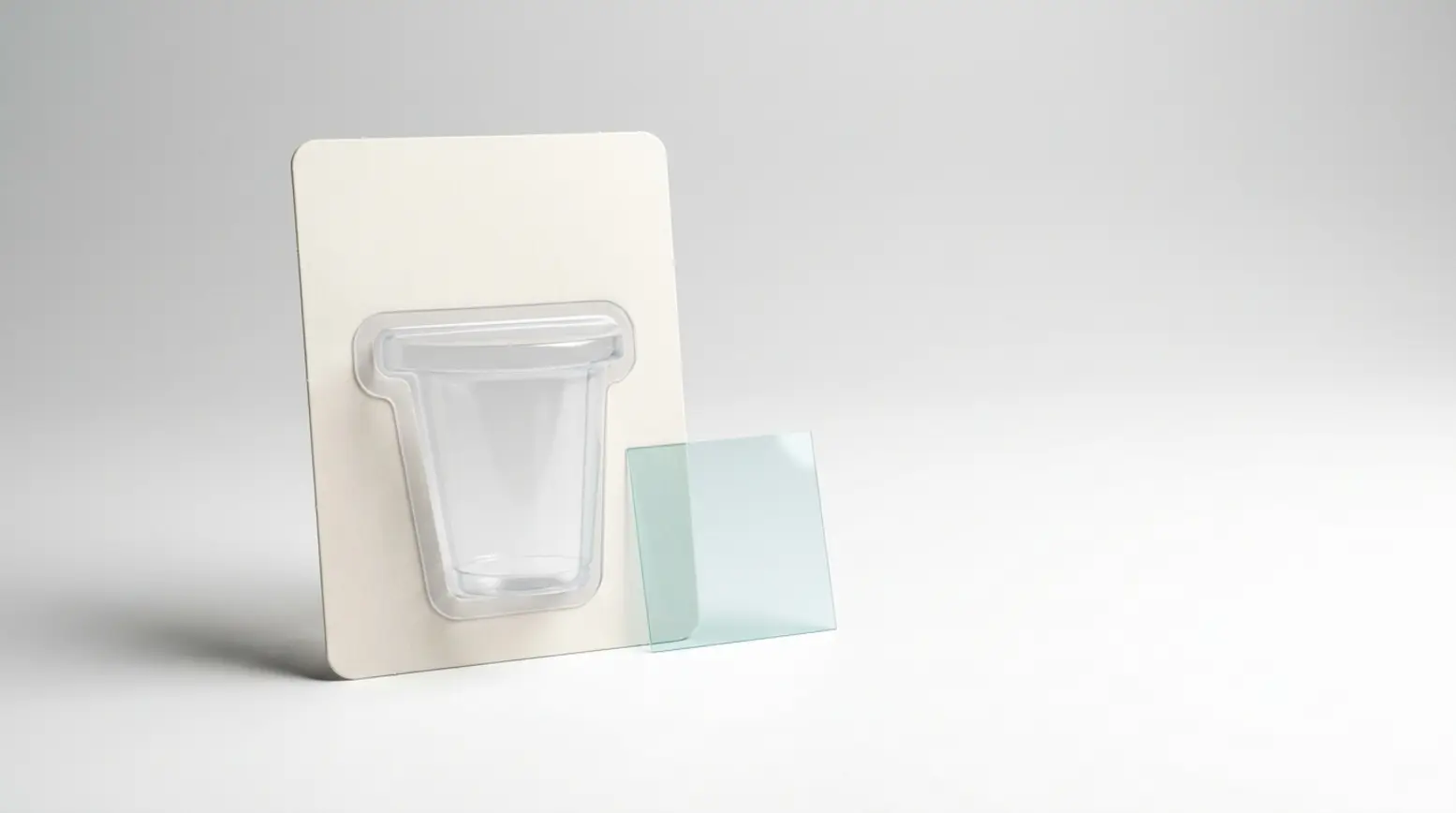

PPWR recycled content targets for blister packaging apply to the plastic portion of the pack, rather than the total weight of a mixed-material pack. Therefore, if a blister pack uses a paperboard card and a clear PET cup, the paperboard does not reduce the recycled content requirement for the plastic cup. In practice, this means teams should first determine the plastic packaging category, then review what that classification implies for recycled PET sheet, forming, clarity, and documentation. If you need a broader overview, our article on recycled content in packaging explains the general topic in more detail.
• The PPWR rule concerns the plastic packaging component, meaning more paper in the pack does not lower the target for the blister cup.
• The correct target depends on the packaging category, as contact-sensitive packaging and other plastic packaging may be subject to different 2030 levels.
• Post-consumer recycled content in PET can affect clarity, color, consistency, and thermoforming behavior, making testing crucial before initiating a specification change.
• A paper blister cup represents a completely different approach because it removes the PET cup from that part of the construction, but it also alters visibility and design choices.
• Engineering, procurement, and brand teams should collectively review the category classification, supplier evidence, tool performance, and shelf appearance.
What PPWR recycled content targets mean for a blister pack
This article explores one specific packaging scenario: a transparent blister cup attached to a card. It remains focused on what PPWR recycled content targets mean for a thermoformed blister specification, rather than attempting to cover the full scope of the PPWR in detail. The main point is straightforward. Recycled content packaging requirements apply to plastic packaging by category. Consequently, a team should review the blister cup as the plastic component first, and then apply the correct target to that specific part.
A blister pack often combines paperboard and plastic into a single retail unit. Both parts work together, yet they serve entirely different purposes. The card provides print space, brand messaging, and structural support, while the cup holds and displays the product. In this way, the legal review remains strictly linked to the plastic portion, even when the complete pack includes board. This is particularly relevant across many retail formats, including cold seal blister packaging, because the final pack must still protect the product and present it clearly on the shelf.
Keep the legal principles simple
The PPWR does not set a single recycled percentage for every mixed-material pack. Instead, it establishes targets based on specific plastic packaging categories, though scope and potential exclusions still require careful review. Therefore, teams should not estimate a target based on the full pack's weight or assume that a large paper card alters the rules for the plastic cup. Any compliance discussion must start with the plastic component itself and its relevant regulatory category.
Why a blister requires component-level thinking
When a pack consists of a printed card and a clear PET cup, each part serves its own unique function. The paperboard provides structure and communication space, whereas the PET cup offers product visibility and physical securement. Since the recycled content question specifically concerns the plastic portion, adding extra board does not lower the recycled content requirement for that cup. This represents one of the most straightforward ways to understand PPWR recycled content targets within a real-world retail pack.
How PPWR recycled content targets apply to plastic packaging categories
When teams discuss PPWR recycled content targets, the first step is to definitively confirm the packaging category. This is essential because the 2030 framework for plastic recycled content does not mandate a single percentage for every type of pack. A clear formed blister cup should only be assigned a target after the customer and compliance team determine whether it falls under contact-sensitive packaging or another plastic packaging classification. If the category is incorrect, the target may also be wrong; thus, this verification must occur prior to sourcing materials or making any recycled content claims.
While the 2030 framework is often summarized briefly online, the category details are what ultimately drive accurate decisions. In plain language, the framework is structured as follows:
• Contact-sensitive PET packaging: 30 percent
• Other contact-sensitive plastic packaging: 10 percent
• Single-use plastic beverage bottles: 30 percent
• Other plastic packaging: 35 percent
For a formed blister cup, the practical question is whether the plastic portion falls into a contact-sensitive PET route, another contact-sensitive classification, or a general plastic packaging category. This is exactly why teams should avoid making assumptions based on broad headlines regarding EU rules for recycled plastic packaging. The formal category check must always come first, followed by the material strategy.
The 2030 framework in plain language
The four target guidelines listed above serve as a helpful initial reference, but they still require proper context. A packaging team should view them as a framework for category evaluation, rather than an automatic answer for every blister pack. Therefore, the target must be closely linked to the correct classification of the plastic packaging component.
Do not assign a target before confirming the category
This is exactly where many mistakes originate. A team might find a single percentage online and apply it broadly across all blister formats. In practice, PPWR recycled content targets depend on the category, potential scope limitations, and the precise application of the pack. As a result, a blister cup specification should only be updated after the category verification process is fully complete.
Why PPWR recycled content targets do not change because a blister has more paper
Mixed-material packs can sometimes confuse procurement and brand teams because they combine different substrates within a single retail format. A simple example helps clarify this. Imagine a blister pack featuring a paperboard backer card and a clear PET cup. The card may be large, heavy, and essential for striking graphics, but it does not reduce the recycled content requirement for the plastic cup. The regulatory rule strictly follows the plastic component and utilizes its own designated calculation logic.
This distinction is crucial because teams occasionally review the entire pack and mistakenly assume that the paper alters the target. It does not. Although the board and the cup function seamlessly together, the PPWR recycled plastic targets still apply exclusively to the relevant plastic packaging component. Therefore, adding more paperboard will not dilute the target applied to the PET cup.
Simple example: Card plus PET cup
If a razor, lip balm, battery, or small accessory sits inside a PET cup sealed to a printed card, the PET cup remains the sole plastic component under review. The paperboard still plays a vital role in structural integrity and branding, yet it does not lower the required recycled percentage for the PET portion. This serves as one of the clearest practical examples of how recycled content packaging requirements operate within mixed-material packs.
Why this matters in cold seal retail packaging
In cold seal retail packaging, the entire pack must function as a unified system. It needs to securely hold the product, support high-quality graphics, and enhance visibility on the shelf. Because of this, both pack design and compliance reviews should be conducted simultaneously. However, the legal questions surrounding recycled content remain strictly linked to the plastic portion, rather than the total mix of materials used throughout the pack.
How PPWR recycled content targets connect to post-consumer recycled PET
In this context, recycled content typically refers to post-consumer recycled plastic that is reintroduced into plastic packaging under the PPWR calculation framework. Post-consumer recycled content begins with material that has already been used, collected, sorted, and processed into viable recycled feedstock. For PET, this feedstock can then be used to manufacture new sheets for recycled PET packaging, including blister cups. This represents the fundamental pathway behind many rPET blister packaging formats and various thermoformed rPET applications.
Understanding this process is highly beneficial because the history of the recycled feedstock can directly influence both the sheet's appearance and its processing behavior. This does not imply that recycled PET is a poor choice; rather, it highlights that the material must be specified clearly and tested rigorously. Since we produce transparent blister cups from recycled PET, this aspect of the discussion reflects the practical realities of our daily work with retail packaging components.
Contact-sensitive packaging requires an additional level of verification. Certain applications may fall under stricter safety and process control requirements, so teams should confirm these details early on if they apply. This article intentionally keeps that specific topic brief, as the primary focus is on blister specifications rather than serving as a comprehensive guide to food contact or medical regulations.
What post-consumer PET is
Post-consumer PET is derived from used material recovered directly from the market. Following collection and sorting, it is processed into recycled feedstock. That material can then be reintroduced into plastic packaging, provided the intended use, quality controls, and documentation are all fully suitable. For a blister project, this generally means the PET sheet supplier must clearly explain the material's source and provide solid evidence to support any recycled content claims.
Contact-sensitive packaging requires extra checking
Certain types of packaging require closer scrutiny due to the nature of the products they touch. Therefore, the team should ask early in the process whether the blister cup falls into a contact-sensitive packaging category under the relevant regulations. Addressing this upfront helps prevent costly delays later during sourcing, validation, and documentation, particularly when the project involves products subject to stricter usage conditions.
What PPWR recycled content targets can change in a blister specification
This is precisely where regulatory requirements transition into practical engineering work. Once a team identifies the most likely category, the next step involves checking how the recycled PET sheet behaves within the actual pack. Since recycled PET already serves as the base material for our transparent blister cups, practical discussions typically revolve around specification details, thermoforming performance, and the final shelf appearance. This is the exact point where PPWR recycled content targets shift from broad policy language into tangible material and processing decisions.
For engineers and buyers, the necessary checks are straightforward. They must review optical clarity, monitor for possible color variations, and verify batch consistency. It is also important to evaluate stiffness and mechanical behavior at the selected thickness. Furthermore, teams should test the heating range, the forming window, and how well the sheet draws into the tool. Because feedstock quality and processing history can directly impact the final physical properties, these elements should be thoroughly tested using the actual part and tool combination. If you wish to examine the component type itself, our page on plastic blister cups illustrates the exact parts discussed here.
Clarity and color
A clear blister generally requires excellent shelf visibility, as seeing the product itself often drives consumer purchases. Formed rPET can exhibit differences in clarity or display a slight color shift when compared to another sheet source or grade. For this reason, the team should define an acceptable visual range prior to final approval. In some projects, a minor shift in tone might be perfectly acceptable, while in others, the visual tolerances will be much tighter because the pack relies heavily on absolute transparency.
Batch consistency
Because recycled feedstock can naturally vary, material consistency should be monitored over time rather than judged solely on a single sample run. This evaluation must encompass visual consistency, overall sheet quality, and processing stability. Procurement teams should proactively ask suppliers what documentation they can provide, as stable inputs are essential for maintaining stable and reliable outputs during production.
Stiffness and behavior at a given thickness
The same nominal thickness does not always feel or perform identically across different material setups. Sheet stiffness and mechanical responsiveness can influence product securement, the overall feel of the pack, and everyday handling performance. Therefore, the current gauge should be carefully tested using the newly intended material, rather than simply assuming that the previous thickness will remain optimal after a material update.
Heating, forming window, and draw into the tool
As a PET sheet moves through the thermoforming process, its response to heat can significantly alter the final result. The required heating range might need adjusting, and the optimal forming window could become wider or narrower. Additionally, the manner in which the material draws into the cavity may change, particularly with deeper cups or highly intricate shapes. These are standard process considerations in thermoformed rPET manufacturing, meaning they must be fully validated before any live specification is permanently altered.
Final properties depend on feedstock and processing history
Two different sheets can both be labeled as recycled PET yet still behave quite differently in practice. The initial feedstock quality, prior processing steps, and specific sheet production conditions can all heavily influence the final part. Consequently, a team should always validate the actual material alongside the actual tool and product setup. Taking this comprehensive approach provides a far better foundation for making decisions regarding recycled content in blisters than simply relying on broad assumptions about how recycled materials typically behave.
A practical example for high-visibility retail packs
A cosmetics blister pack serves as an excellent example because product visibility and a flawless finish typically matter a great deal on the retail shelf. In cosmetics packaging, a minor change in clarity or tone might be acceptable for one brand, whereas another brand might demand much tighter visual control. This perfectly illustrates why gathering recycled content data and securing appearance approvals must proceed hand in hand during the development phase.
This example also highlights exactly why packaging categories should never be left to guesswork. Certain products may raise questions regarding contact-sensitive packaging, while others may not. Therefore, the legal review and the visual assessment should run in parallel, even though they remain entirely separate decisions. By structuring the workflow this way, the team can expertly safeguard both regulatory compliance and long-term shelf performance.
A paper blister cup is a different route
Switching to a paper blister cup fundamentally changes the discussion because it completely removes the PET cup from that specific part of the construction. At the same time, it radically alters visibility since paper lacks the transparency of PET. This option can facilitate a completely different shelf aesthetic, provide more printable area, and support a strongly paper-led design. However, it must be evaluated as an entirely new packaging concept, rather than simply viewed as a convenient shortcut around a plastic reduction target.
In practical terms, the primary trade-off is incredibly simple. A clear PET cup offers a direct view of the enclosed product. Conversely, a paper cup changes how the item is displayed, meaning the team might need to incorporate windows, structural cut-outs, or an entirely different graphic strategy. Ultimately, this decision requires careful consideration of product presentation, structural integrity, physical protection, merchandising capabilities, and the complete user experience on the shelf.
What changes when the PET cup is removed
The most immediate and obvious change is the total loss of full transparency in the cup area. Consequently, the pack may require alternative methods to showcase the product. This can certainly be achieved through structural cut-outs, clear windows, or much stronger printed communication, but each of these avenues necessitates its own dedicated design review and rigorous package testing.
Design value of paper blister cups
Paper cups can successfully deliver a distinctly different visual message while generating significantly more printable surface area. This approach can work exceptionally well within certain retail categories and for specific brand styles. Nevertheless, the choice must still be carefully evaluated against the need for product protection, optimal product visibility, and high-quality in-store presentation, as these practical considerations remain central to overall packaging performance.
Questions to ask before you update a blister specification with PPWR recycled content targets in mind
When PPWR recycled content targets transition into a live project, the most effective next step is a concise review involving the engineering, procurement, and brand teams. Begin by analyzing the current cup specification. Then, determine what recycled content data the supplier can reliably document, whether the pack is deemed contact-sensitive under the relevant rules, and exactly which category applies to the plastic portion. After addressing those points, proceed to performance checks covering tooling behavior, thickness, clarity, and overall consistency. Following this structured approach makes the project far easier to manage, ensuring that legal, material, and shelf-presentation questions are handled in the proper sequence.
If your team would like to turn these questions into a practical discussion about blister packs, you can contact us. We can expertly help translate your packaging requirements into a workable conversation regarding components and pack design, while your own compliance team works to confirm the final regulatory position.
Supplier and documentation questions
• What is the current cup material specification, including the exact material and thickness currently in use?
• What specific recycled content data can the supplier clearly document for this sheet or component?
• How is post-consumer recycled content officially defined and evidenced for this particular material?
Regulatory and category questions
• Is the pack considered contact-sensitive under the relevant regulations?
• Which specific plastic packaging category applies to the blister cup in question?
• Are there any scope limitations or exclusions that the compliance team still needs to verify?
Tooling and performance questions
• Does the current tool still perform optimally with the newly intended material?
• Is the current thickness still appropriate for ensuring proper stiffness, secure product hold, and an ideal pack feel?
• Does the optical clarity remain completely acceptable for premium shelf presentation?
• Does the sheet still process smoothly within the required heating and forming windows?
FAQ about blister packs and PPWR targets
Does the PPWR recycled content target apply to the entire blister pack? No. In a mixed-material pack, the relevant rule specifically concerns the plastic packaging portion under its applicable category. Using a paperboard card does not lower the target required for the PET cup.
Can we simply switch to rPET and assume compliance? No. While recycled PET may successfully support your path toward a target, you still need to thoroughly check the packaging category, any possible exclusions, and all documented material data.
What should we test first in an rPET blister project? You should start by evaluating clarity, color, batch consistency, thickness performance, and forming behavior. Afterward, confirm that your current tooling and overall pack design still deliver the specific shelf results you need.
Does adding more paper to the pack reduce the plastic target? No. The total amount of paper used does not reduce or dilute the recycled content requirement placed on the plastic cup.
Why is the category check so important? This check is critical because the final target heavily depends on the specific plastic packaging category. If a team applies the wrong category, they may inadvertently assign an incorrect recycled content requirement to their blister cup.
When is a paper blister cup worth considering? A paper blister cup is worth considering whenever a brand desires a distinctly paper-led aesthetic or a fundamentally different pack construction. However, it must be evaluated as an entirely separate design route, as transparency, product visibility, and overall pack presentation will drastically change.
Request a free sample now!


