

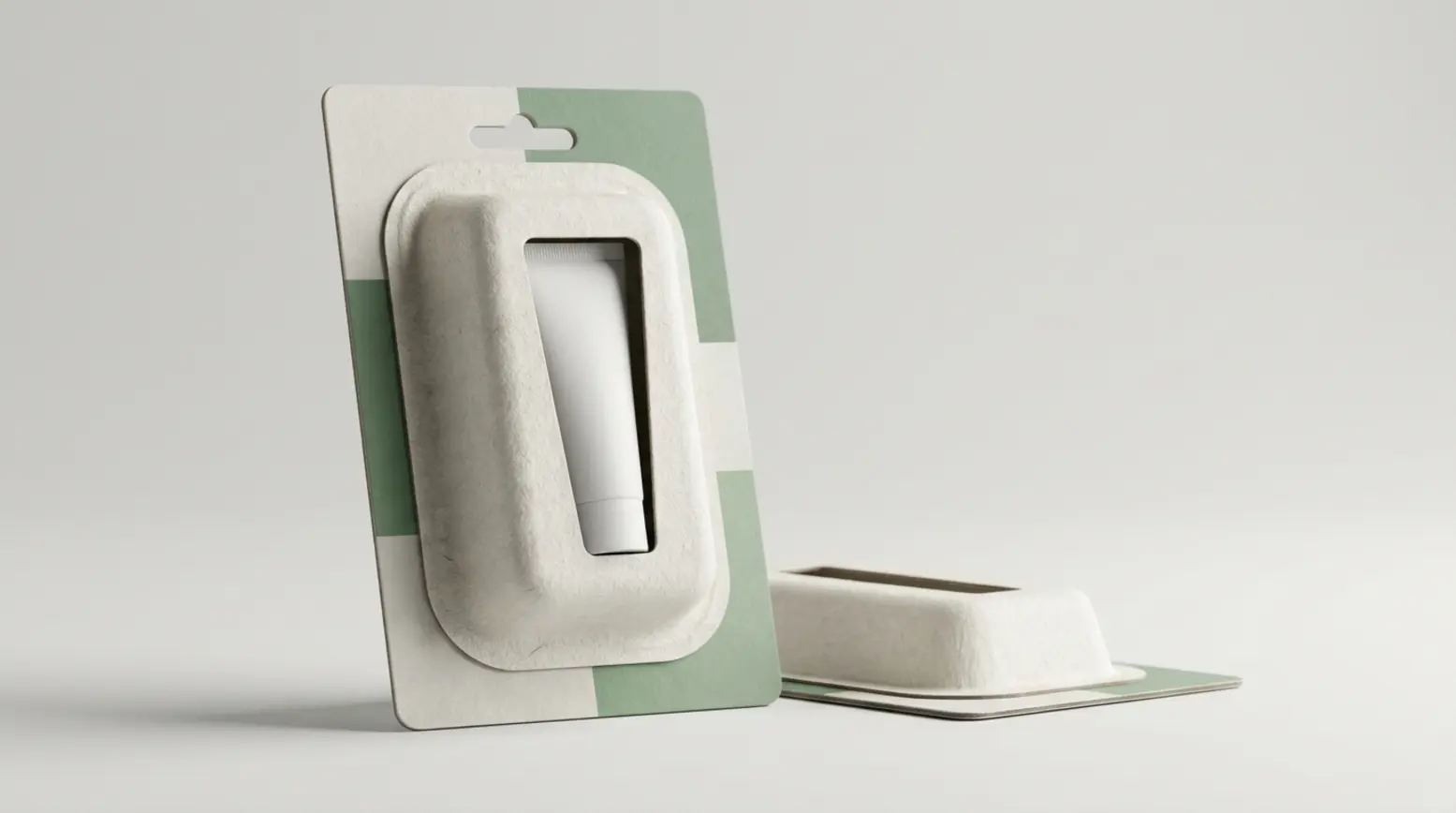

Paper blister packaging is a retail format that uses a formed paper cup and a paperboard card to hold, protect, and present a product. When understanding what paper blister packaging is, the main difference from a standard blister is simple: the clear plastic cup is replaced with paper. As a result, the pack keeps the familiar blister concept but operates with different materials, forming limits, and sealing choices.
• It has three main parts: a formed paper cup, a paper blister card, and a sealing system.
• Depending on the product and packing process, it can be constructed using a paper blister cold seal or heat seal.
• It usually suits light to medium retail products, such as cosmetics, DIY items, office products, hobby items, and smaller consumer goods.
• While it provides a larger printable paper surface, it does not offer the same full product visibility as a clear plastic blister.
• It is always best to review the product's shape, shelf visibility, opening requirements, and sealing method before choosing this format.
What paper blister packaging is: a simple definition and basic construction
Paper blister packaging is a retail format made from three main parts: a formed paper cup, a printed card, and a joining layer or sealing system. The cup is the shaped 3D component that holds the product securely in place. The card provides strength, print space, and retail features such as a hanging hole. The sealing system joins the parts into a single pack, ensuring the product remains secure during handling, transport, and shelf display. For more background information after this initial explanation, our all-paper packaging solutions page shows how this format fits within a broader paper-based offering.
When people search for what paper blister packaging is, they usually want a direct answer first. The short answer is that it works like a traditional blister pack, but the product sits in a formed paper shape instead of a clear plastic cavity. You may also encounter terms such as all-paper blister, blister paper packaging, paper blister pack, or 100% paper blister packaging. Because these names can be used in slightly different ways across the market, checking the exact material build is essential.
What makes it different from a standard plastic blister
The basic retail function remains quite similar because both formats successfully hold and showcase the product on a card. The main difference lies in the cup material. A standard blister often uses clear PET, whereas paper blister packaging uses a paper-based formed cup. Consequently, a paper pack typically shows less of the product from all angles. At the same time, it provides a larger paper surface for branding, instructions, marketing claims, and design elements. For readers seeking a more comprehensive overview, our paper blister packaging guide explains the format in greater detail.
What paper blister packaging is made of: the cup, card, and sealing layer
The first component is the paper blister cup, which is the shaped cavity that holds and positions the product. The second part is the paper blister card. This flat board provides stiffness and acts as the primary print surface. The third element is the joining layer or sealing system. This layer closes the pack and keeps the cup securely attached to the card, ensuring the final structure functions as a single cohesive unit on the shelf and during use.
Each part influences the final result. The cup affects fit, depth, and product stability, while the card determines the print area, structural strength, and overall presentation. Additionally, the seal impacts pack durability and opening behavior. If you want to look more closely at the formed component, you can explore our paper blister cups page to compare different shapes and depths.
How the paper blister cup is formed
The cup starts as a paper-based material and is shaped into a cavity that perfectly matches the product. The cavity is simply the hollow area that holds the item. Although this is a type of formed paper packaging, paper does not behave like thermoformed PET. It does not stretch in the same way, meaning the geometry must be specifically designed for paper from the beginning. This distinction is crucial because a shape copied directly from a plastic blister may not form properly or hold the product securely. The best results come from designing with paper behavior, product shape, and overall pack function in mind.
What paper blister packaging is in production: cold seal and heat seal routes
There are two common construction routes for this format: a paper blister cold seal and a paper blister heat seal. Both methods work remarkably well, but they serve different purposes within the pack's structure. This choice affects the number of components, the joining method, the final appearance, how the pack opens, and the required production setup. Therefore, it should be carefully reviewed early in the development phase.
Paper blister cold seal
In a cold seal build, the formed paper cup sits between two paper layers. Pressure joins the coated paperboard layers, allowing the bond to form without the need for sealing heat at that stage. This route is ideal for designs where the cup must be fully enclosed within the board structure. It also alters the appearance of the edge area and influences how the pack ultimately opens.
Paper blister heat seal
In a heat seal build, the paper cup is placed directly onto a card. Heat and pressure are then applied to create a strong bond between the cup and the card. This approach can reduce the number of paper layers in the final pack, a feature that may better suit certain product designs. Additionally, it changes the overall pack construction, meaning the opening feel and appearance will differ from those of a cold seal version.
How to choose the right route
There is no single best option for every product. The right route depends entirely on product geometry, required strength, shelf appearance, opening behavior, and the packing process itself. As a result, it is highly beneficial to compare both options early on and test real physical samples. Doing so ensures that the final pack closely aligns with both the product and the intended production method.
What paper blister packaging is on the shelf: visibility, print, and brand impact
The shelf impact differs significantly from that of a clear plastic blister. A paper blister pack does not provide full transparency, meaning shoppers may not be able to see the product from every angle. This limitation matters when the product itself is the primary selling point and buyers want to inspect it closely before making a purchase. Consequently, this is one of the main trade-offs to understand early in the design process.
At the same time, the card and paper surfaces create additional space for graphics, instructions, marketing claims, and brand recognition, allowing the pack to communicate far more through print. Shaped cutouts can also be used to reveal specific parts of the product when partial visibility is necessary. While a window can sometimes be added, including extra film complicates the simple all-paper material story, meaning that choice should only be made for a clear, specific reason.
What paper blister packaging is at home: opening and user experience
The opening experience depends heavily on the overall pack design rather than just the paper material itself. Card construction, perforations, tear lines, and sealing choices all heavily influence how the user opens the pack at home. Because of these variables, it is incorrect to assume that every plastic-free blister opens more easily than a traditional plastic one. The end result can vary significantly between designs, making early discussions and sample testing incredibly important.
If easy access matters for your product, reviewing easy-opening packaging early in the project is highly recommended. This step is useful because the opening experience must carefully balance user accessibility with the pack strength required for transport, handling, and retail display.
What easy opening depends on
Several specific details matter. These include where the pack naturally starts to tear, how the board layers are constructed, how strong the seal must be, and how securely the product is held inside the cavity. When these critical choices are discussed from the very beginning, the final user experience is typically much clearer and more consistent.
Where paper blister packaging is a strong fit
Paper blister packaging is generally an excellent fit for light to medium retail products that can be held securely inside a formed paper cup. Common categories include cosmetics, DIY items, office supplies, hobby products, and smaller consumer goods. These items frequently benefit from the stable positioning, strong print impact, and premium paper-based retail presentation that the format provides.
Suitability also depends heavily on the product's shape. If the item sits neatly within the cavity, the final pack will look highly organized on the shelf and remain perfectly stable during handling. For this exact reason, product geometry should always be thoroughly reviewed during the initial concept stage.
Where paper blister packaging is a weaker fit
This format is certainly not right for every product. It can be a weaker choice when shoppers need to inspect the item from every angle before buying, primarily because paper does not provide full 360-degree visibility. Heavy or sharp products can also prove problematic, depending entirely on the overall structure and the specific load placed on the formed area.
Moisture protection is another critical point to review carefully. By itself, paper blister packaging does not provide strong moisture resistance; therefore, if the product requires a robust barrier, an alternative solution will be necessary. Similarly, any recyclable retail packaging claims should be kept highly specific and factual. While replacing a PET cup with paper strongly supports a sustainable material story, it does not automatically make the format the absolute best choice in every single case.
Questions to ask before choosing paper blister packaging
Before moving into active development, it helps to ask a few highly practical questions. What is the product's shape, and can a formed paper cup hold it securely? How much of the item must remain clearly visible on the shelf? How should the pack ultimately open at home? Finally, which sealing route best fits both the product and the overall packing process? In defining what paper blister packaging is, these important questions help commercial and technical teams evaluate the exact same pack in a unified, clear way.
It is equally useful to evaluate a real, physical sample in your hand, as the structure, print surface, and opening feel are far easier to judge in person. If you are ready to take that next step, you can request a sample to better compare the format against your specific product needs.
Common questions about paper blister packaging
Is paper blister packaging the same as 100% paper blister packaging?
Not always. Different suppliers frequently use these terms in slightly different ways. The safest approach is to carefully verify the exact material build, the specific sealing method, and whether any extra film or protective layer is included.
Can a paper blister pack replace every plastic blister?
No. The product's shape, visibility requirements, weight, and necessary protection levels all play a critical role. Paper must be purposefully designed around its own unique material behavior, meaning it cannot serve as a direct, one-to-one copy of every standard plastic blister format.
Is a plastic-free blister always the best choice?
No. While replacing the plastic cup with paper strongly supports a paper-based material story, the right format still depends heavily on the specific product, shelf requirements, opening design, and the overall level of protection required.
Does paper blister packaging always open more easily?
No. The opening experience relies entirely on construction details such as perforations, board composition, tear lines, and the chosen sealing method. That is precisely why thorough sample testing is so important prior to final approval.
What products are usually a good fit for blister paper packaging?
Light to medium retail products generally represent the best fit, particularly within cosmetics, DIY, office supplies, hobby items, and smaller consumer goods. The most important factor is whether the product can be held securely by the formed cup while still presenting beautifully on the shelf.
Request a free sample now!


